Home is familiar — and where we often miss risks
I once saw a clip of a two-year-old pushing a car key into an outlet and bursting into tears. It stayed with me.
For little ones, the most familiar place is where we relax our guard. Babies learn to roll, crawl, stand and toddle at home — and that’s also where outlets, sharp corners, climbable drawers, and tiny loose parts quietly live.
Let’s walk through those “looks harmless” corners and make simple, realistic fixes.
Living room · where bumps happen most
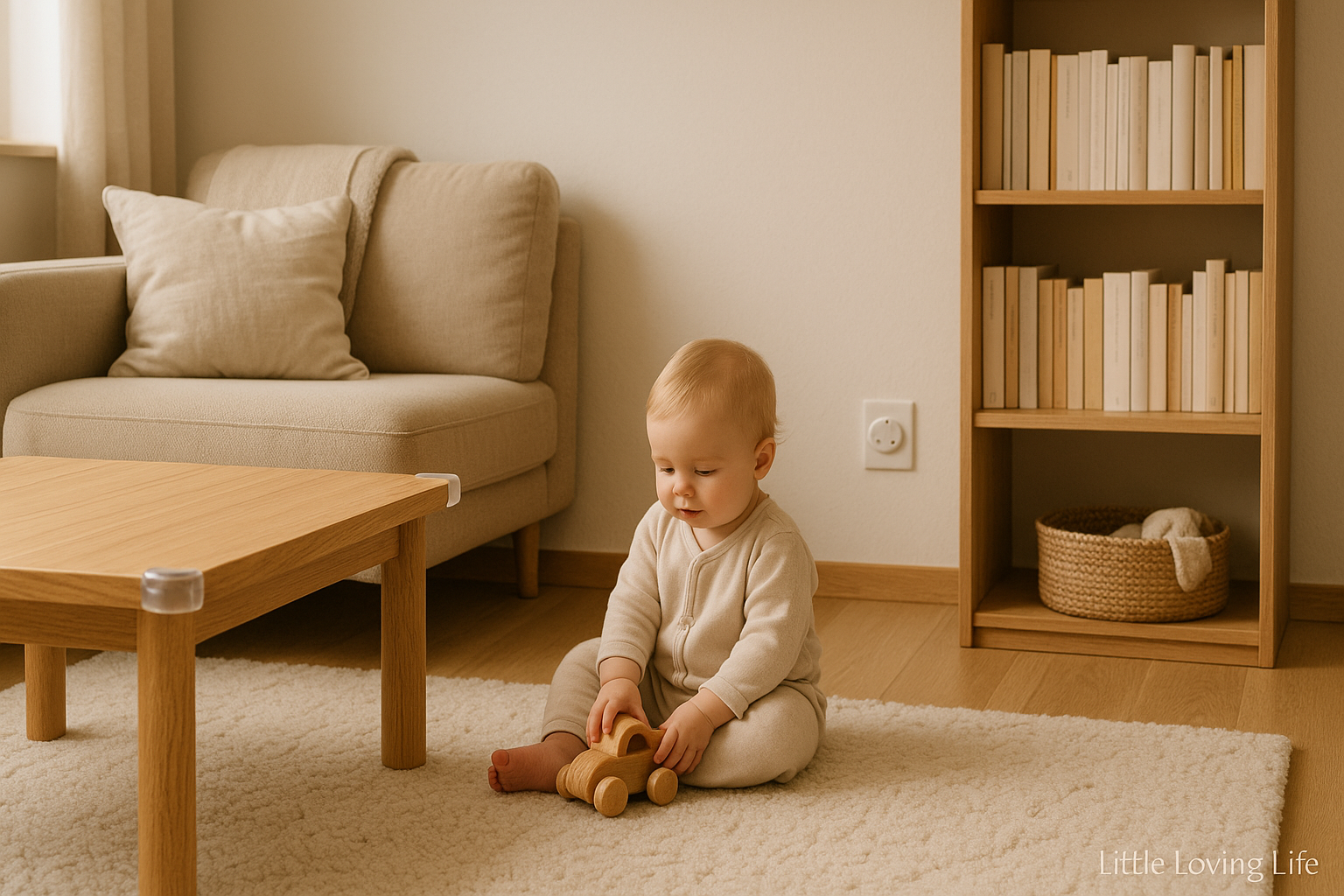
- Anchor furniture: TV, dressers and bookcases fixed to the wall. Drawer-climbing can tip things fast.
- Pad sharp edges: Silicone corner guards on coffee/side tables and media units.
- Outlets & cords: Outlet covers; route cables into channels or boxes so they’re not pullable.
- Blind cords up high: Tie and secure on a cleat; don’t park sofas under windows.
If you have a floor lamp, purifier or speaker, check whether the power cable can be tugged. Add anti-slip tape under rug edges.
Kitchen · the tempting “mystery lab”
- Turn pot handles inward: Hot soup and frying pans — handle-in, out of reach.
- Sharp/chemical items go high: Knives, scissors, detergents above 40 in / 1 m. Keep tiny magnets/fridge pins out of low zones.
- No holding baby while cooking: Even boiling water can spill; set a doorway boundary.
- Dry floor: Anti-slip matters when you’re carrying a child.
A “safe cupboard” with wooden spoons and light containers lets your baby “cook” nearby without danger.
Bedroom · easy to underestimate
- Crib stays minimal: No pillows, plush toys or heavy blankets.
- Skip crib bumpers: Many pediatric societies (incl. AAP) advise against them.
- Sleep sack over thick quilts: Less overheating, less airway cover risk.
- Keep cords/outlets away: Tie blind cords high; no reachable outlets near the crib.
Tight-fit mattress with a snug sheet — no gaps for tiny arms or legs.
Bathroom · small room, big risk
- Non-slip mats: In the tub and on the floor.
- Water at 100–104°F / 38–40°C: Use a thermostatic mixer or a thermometer; test before baby goes in.
- Products up high: Cleansers and bath items out of reach.
- Outside-operable lock: Prevent accidental lock-ins; unplug dryers/shavers after use.
- Prep before bath: Towel, diaper and clothing ready so you never step away mid-bath.
Even a few seconds can be risky. Keep one hand on your baby throughout bath time.
Hallway & balcony · last lines of defense
- Rails & netting: Balcony gaps under 4 in / 10 cm; remove climbable furniture.
- Baby gates: At stair tops/bottoms and room thresholds where needed.
- Small things off the floor: Tidy toys, stash chargers, shorten or secure long cables.
Door backs, stair turns and storage closets are easy to forget — add them to your regular patrol.
Easy-to-miss but high-risk details
- Button batteries & magnets: Make sure battery doors are secure; swallowed button batteries can burn tissue quickly.
- Hair tourniquet: During changes/baths, check fingers, toes and diaper area for stray hair/threads.
- Medicines & gummy vitamins: They look like candy — keep them locked.
- Low glass/mirrors: Leaners and frames can tip or shatter; keep high or anchor.
- Chargers & extension cords: Pulling can topple devices or expose live parts; use shorter, secured routes.
- Old toy parts: Recheck sewn eyes/buttons; loose bits are a choking hazard.
Quick-check table (print-friendly)
| Area | Common hazard | Simple fix |
|---|---|---|
| Living room | Sharp corners, tip-overs, loose cords | Corner guards + wall anchors + cord channels/boxes |
| Kitchen | Outward pot handles; low sharp/chemical items | Handles inward + store high + doorway boundary |
| Bedroom | Pillows/plush in crib; bumpers; nearby cords | Clutter-free crib + skip bumpers + tie cords high |
| Bathroom | Slips; hot water; accidental lock-ins | Non-slip mats + 100–104°F water + outside-operable lock |
| Balcony/Hallway | Wide gaps; climbable items; no gate | Safety net/closer gaps + remove climbables + baby gate |
Before you go
Since becoming parents, many of us sleep lighter and can’t finish stories about children getting hurt.
Raising a child safely is hard. Global research shows unintentional injuries are a common threat — and many risks don’t come from outside. They hide at home.
Not the road. Not the park. Often, it’s the living room, the nursery, the bathroom.
Instead of fear, build habits. Every corner guard, outlet cover and anchored dresser adds one quiet layer of protection.