How to Keep Balance in a Multi-Child Family
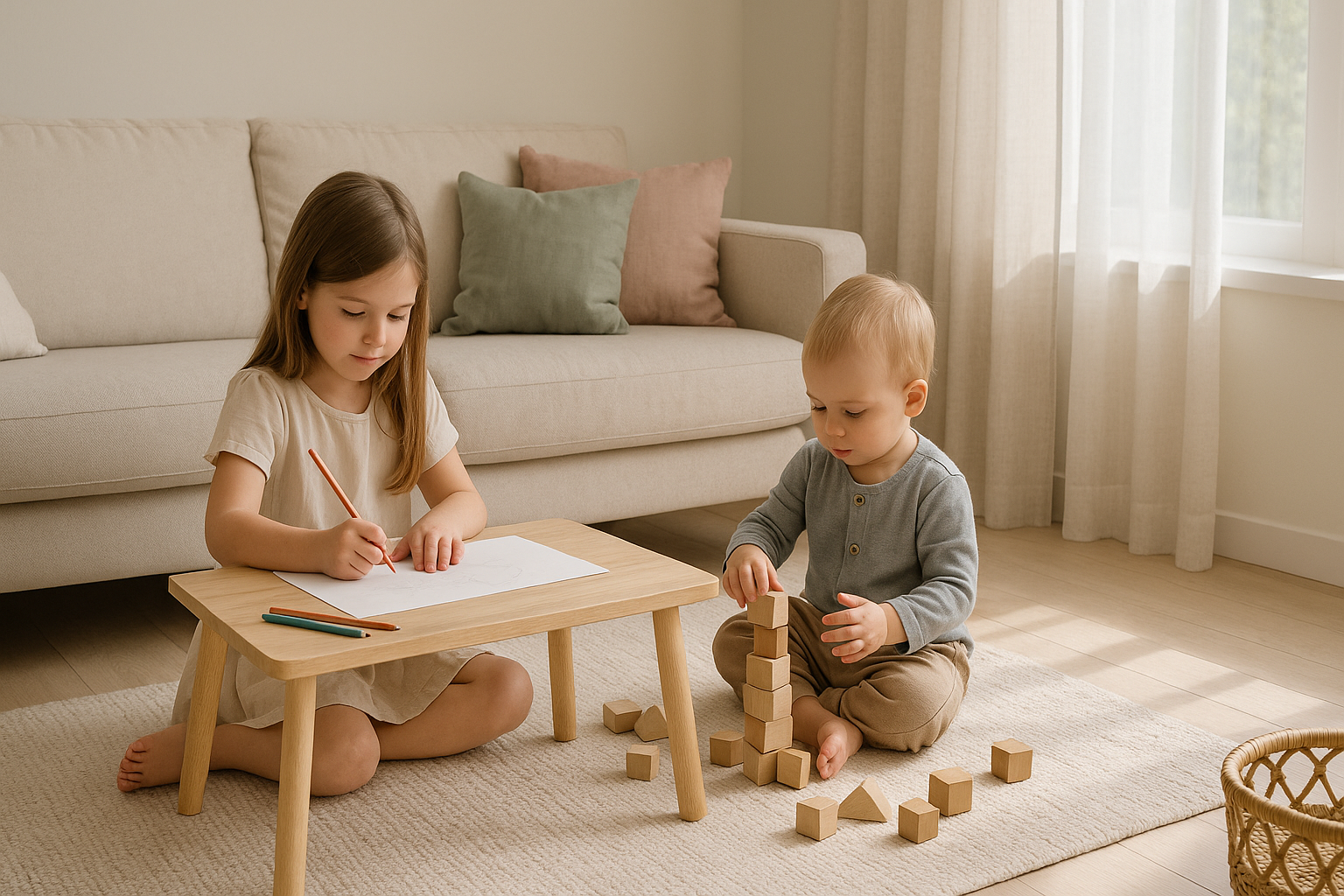
That morning, you were helping your oldest put on shoes. The youngest was crying to be held. As you turned around, the one in the middle called out, “Mom, my socks are gone!”
You gave a tired smile—one arm holding, one hand searching, mind still half on whether to make porridge first. Moments like this play out in countless multi-child homes every day. People often say that once there’s more than one child, the house is never quiet again. It’s true: life becomes louder, messier, and somehow warmer too.
Yet in the middle of that warmth, a quiet thought sometimes appears—Was I too harsh with someone? Did I overlook someone else? Because balance isn’t about dividing time evenly. It’s about letting each child feel truly understood.
Why Balance Feels So Hard
When a family grows from one child to two or three, the hardest part isn’t the logistics—it’s the emotional tug-of-war.
- The oldest longs to be recognized: “I wish you’d praise me too.”
- The youngest wants to be held: “I’m still little—look at me.”
- Parents, caught in between, worry constantly about being “fair enough.”
Psychology has long shown that children don’t measure fairness by minutes or turns. They feel it in the quiet sense of being seen. A child who feels noticed softens; one who feels overlooked uses emotion to remind you they exist.
Fair, but Not Identical
To be fair, we often try to divide everything equally—one toy each, ten minutes of reading each. Yet arguments rarely stop. Real fairness isn’t sameness; it’s attunement.
- Some children need praise.
- Some need hugs.
- Some just need you to finish listening to their story.
Fair doesn’t mean identical—it means appropriate. When you begin to love each child differently, gently and intentionally, they feel safer and compete less for your attention.
Simple Ways to Help Every Child Feel Seen
1. One-on-One Time
Even ten minutes a day that belong entirely to one child can make a difference. Maybe you wash fruit together, walk to throw out the trash, or share a quick joke. The moment matters because, for those minutes, it’s only them.
“Mom’s your audience right now.” “When you finish, I’ll call your brother for dinner, okay?” These little exchanges become the soft corners of their hearts.
2. Say “Thank You” Out Loud
In multi-child families, the oldest helps and the youngest receives help—but gratitude often gets lost. A simple “thank you” means recognition:
- “Thanks for handing me the towel.”
- “Thanks for waiting for your sister.”
- “Thanks for reminding me about that.”
It’s not just manners—it’s affirmation. Children shift from “being required” to “being trusted,” and family warmth grows naturally.
3. Catch Feelings Before Fixing
When a child cries, “You’re unfair!” it’s tempting to explain, “No, I love you all the same.” But what they need isn’t explanation—it’s understanding.
“You feel like I’ve been with the baby more lately, don’t you? No wonder you’re upset.”
Sometimes one empathetic line repairs more than ten minutes of reasoning.
Teaching Sibling Love
Sibling love isn’t automatic—it’s a language children learn with time and modeling.
1. Teach Them to Take Turns
Start small: “It’s your brother’s turn now. When the timer rings, it’s yours.” Predictability builds security far better than possession does.
2. Catch Cooperation
When they build a tower or share candy, even briefly, praise it instantly: “That tower you made together looks amazing.” “I saw you help your sister with her puzzle—that was kind.” Being seen for kindness makes them repeat it.
3. Let Everyone Be Needed
The oldest can read aloud; the youngest can hand over pens or close the box. When children feel useful, rivalry softens into connection.
Gentle Order in a Busy Home
With several kids, noise and clutter are inevitable—but gentle routines bring rhythm.
- Set a daily “family moment”: ten minutes when everyone puts phones aside.
- Rotate choices: today one child picks the bedtime story, tomorrow another chooses the music.
- Focus on understanding: when conflicts arise, ask “What were you hoping for?” instead of “Who started it?”
What Children Really Need to Hear
Kids don’t truly seek equal time—they just need reassurance: “I matter too.” When you put the spoon down to listen to a small story, when you still meet their eyes in the noise, when you whisper before bed, “I loved being with you today,” that certainty of being loved becomes their quiet strength.
Closing
Raising multiple children is far from easy. Some days you feel split between referee, comforter, and fixer. Yet children grow—and learn to care for each other, too. They’ll argue, they’ll laugh, and sometimes you’ll turn to find one quietly tucking a blanket over another. Balance has never meant perfection. It simply means everyone, big or small, believes: I’m loved here.