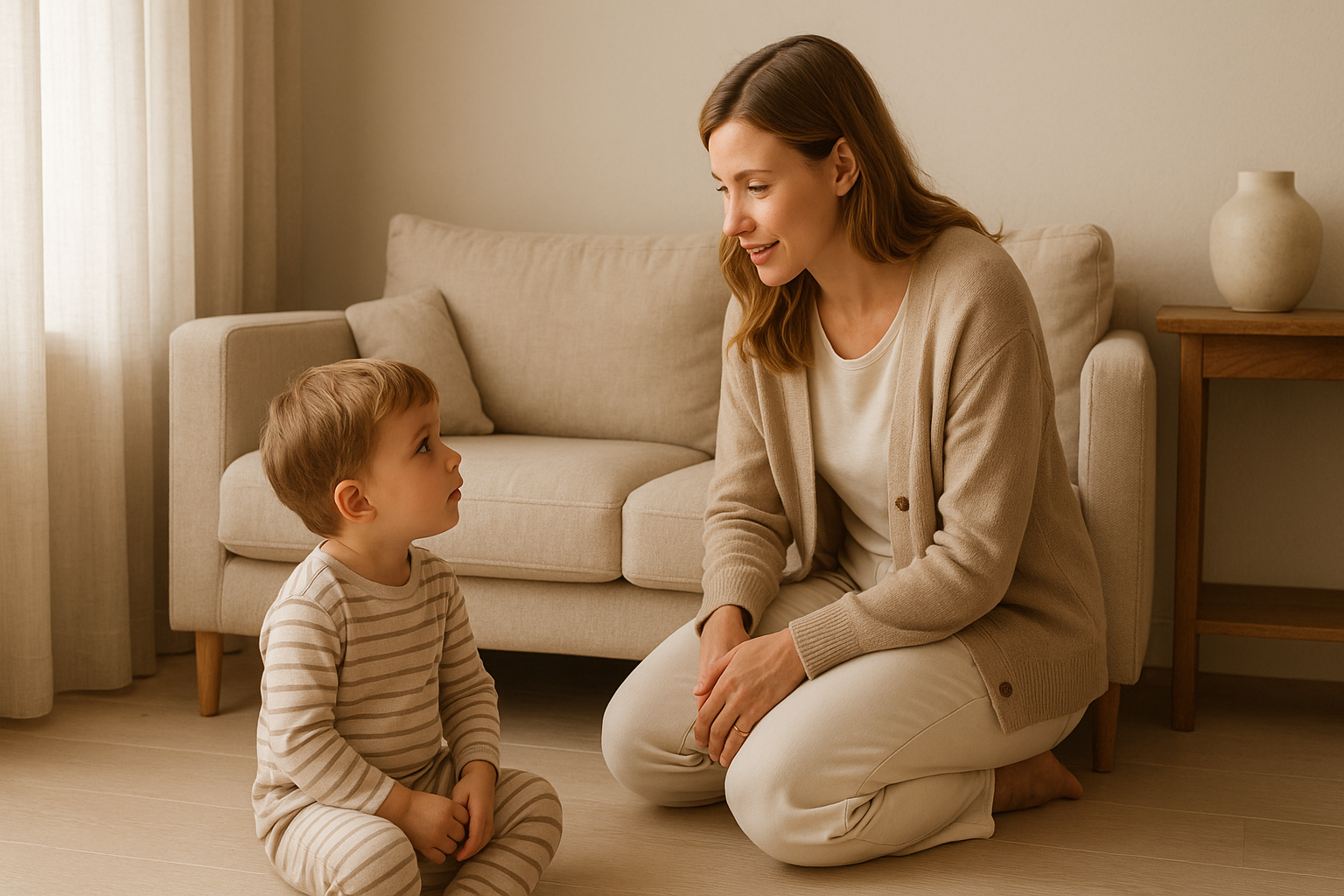
When to Worry — and What to Do — If Your Toddler Isn’t Talking Yet. If your toddler isn’t talking yet (many parents search “toddler not talking yet”), you’re not alone—this guide shows what to watch for and how to help.
Every child finds their voice at their own pace
Sometimes parenting feels like waiting for a flower to bloom. Other children are already telling little stories, while your toddler mostly says “ah” or “oh,” or points and gestures. You start to wonder: is my child behind? Is something wrong?
I’ve had that worry, too. Before age three, my son spoke very little. He understood a lot and could imitate actions, but he seldom used words. Every time someone asked, my heart raced: should we see a doctor? Is this a language delay?
Over time I learned: language develops at different speeds. Our job isn’t to wait passively—it’s to observe, understand, and act in time.
Slow doesn’t always mean a problem—but it’s worth watching
There’s wide variation. Some toddlers use short phrases by 18 months; others won’t speak until after two. Still, a few red flags suggest it’s wise to seek an evaluation sooner.
- Poor response to name or everyday sounds
- Rare imitation of sounds or words
- No gestures (pointing, waving, shaking head)
- Difficulty understanding simple daily language
- Noticeably quieter than peers
Common causes and myths
Many things can contribute to language delay. Some are temporary—hearing issues, oral-motor immaturity, or the adjustment period in bilingual homes. Others relate to neurodevelopment, such as autism spectrum or weaker language processing. This is why early evaluation beats guessing.
When your toddler isn’t talking yet, early evaluation can help rule out mild hearing loss or speech-sound issues and point you toward practical next steps.
- Myth: “Boys talk late.” — Not always true; gender alone isn’t a cause.
- Myth: “He’s just lazy.” — Expressive delay isn’t laziness.
- Myth: “Bilingual homes cause delay.” — Total vocabulary grows normally with rich interaction.
You can also consult The Hanen Centre (English) for practical guidance. They remind parents: early action doesn’t mean panic—it means giving your child the right help at the right time.
Home matters just as much as the clinic
Professional help is important, and home is where language truly grows. Every sentence your child hears at home—and every responsive look you offer—becomes a moment to build communication.
- Narrate daily life: “Blue shoes on.” “The puppy is running—so fast!”
- Follow their interests: Talk about what they love.
- Imitate and expand: Child: “Ball.” You: “Yes, a red ball rolling so fast.”
- Reduce background noise: Turn off TV; use your voice as the focus.
- Books, songs, pretend play: Ten focused minutes beat long drills.
For everyday communication skills, you may also like Toddler Potty Training — how daily routines can nurture independence and understanding.
What to Do When Your Toddler Isn’t Talking Yet
Ask your pediatrician for referrals to an SLP or developmental clinic, and carry their strategies into play and daily routines—short phrases, turn-taking, and patient wait time.
See the CDC’s Learn the Signs. Act Early. tools for age-by-age milestone checklists.
💭 Common parent questions
Is a hearing test really necessary? Yes—mild hearing loss can be missed. Screening is key even if the newborn test was clear.
My child understands but won’t speak. Is it laziness? No. Often it’s expressive delay or imitation difficulty—pressure backfires; connect first.
Will a bilingual home cause delay? No. Total vocabulary grows normally; words are simply split between languages.
Is my 3-year-old not talking autistic? Not necessarily. Professionals check social reciprocity, imitation, and emotion.
When is the best time to intervene? Ages 2–4 are the most responsive window. If little progress by 18–24 months, seek an evaluation; by 30–36 months, begin structured support.
Parents’ feelings matter, too
When a child’s progress feels slow, anxiety is natural—but children sense it. The calmer we are, the safer they feel.
One day, your child will respond in words. It won’t be magic—it will be the quiet result of patience and understanding.
For more on calm connection, read How to Handle Toddler Tantrums Calmly. Also see Nemours KidsHealth (English) — Delayed Speech or Language Development.
Gentle takeaways
Language grows at different speeds. What matters is that we notice early, offer support, and trust the process. If your toddler isn’t talking yet, remember that noticing early and staying responsive makes all the difference.