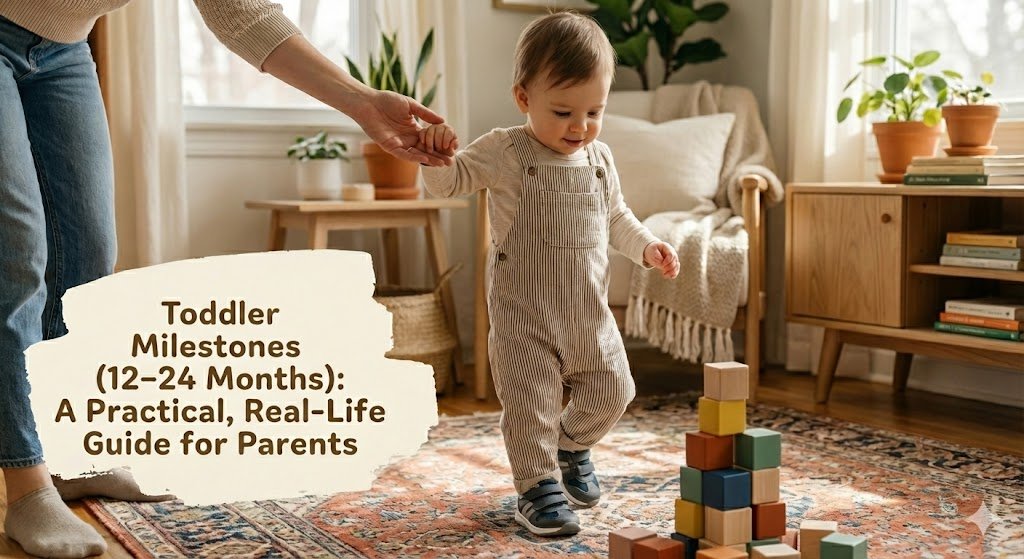
Navigating toddler milestones between 12 and 24 months can be a whirlwind. Their bodies get stronger, their words start to show up, and their need to do things on their own becomes much louder.
1. From “Can Walk” to “I’ll Do It Myself”
Somewhere between one and two, toddlers discover a new idea: “I can do things on my own.” Yesterday they didn’t mind being carried. Today they insist on walking, even if their shoes are on the wrong feet and you’re standing right there ready to help.
You might notice:
- They rush to press elevator buttons.
- They refuse help with cups, spoons, jackets.
- They drag chairs around the house to reach something.
- They collapse into tears the moment you stop them.
This isn’t stubbornness. It’s their first real experience of independence: “Some things are mine to try.”
How parents can support this stage
- Offer safe, limited choices: “Blue cup or green cup?”
- Break tasks into toddler-sized steps.
- Let them try first, then step in if needed.
What matters most right now isn’t skill. It’s your steady, consistent presence while they practice being themselves.
2. Gross Motor Toddler Milestones
Their world gets bigger — one wobbly step at a time.After their first birthday, toddlers don’t just walk. They test out speed, height, balance, and your reactions — all in the same afternoon.
12–15 months: Early Explorers
- A few steps forward, then a thoughtful pause.
- Holding onto furniture even when they don’t need to.
- Pushing anything with wheels: carts, chairs, boxes.
16–18 months: Courage Grows
- Running with full enthusiasm, limited brakes.
- Climbing onto couches or low steps with surprising confidence.
- Copying what you do — sweeping, carrying, tidying.
19–24 months: Purposeful Movement
- Kicking balls, changing direction, trying again.
- Walking backward to check if you’re still watching.
- Attempting stairs with a hand on yours.
How to help (without turning it into “practice time”)
- Provide safe spaces to roam.
- Let them stand up on their own after small falls.
- Use movement play: bubbles, rolling balls, push-pull toys.
- Praise effort, not performance.
3. Fine Motor Skills
Little hands, big determination.As toddlers move more, their hands start taking on new tasks. Their movements shift from “grab anything” to small, deliberate actions. These fine motor toddler milestones pave the way for writing and self-care later on.
12–15 months
- Picking up crumbs with two fingers.
- Turning pages, sometimes more than one at once.
- Tapping and stacking objects just to see what happens.
16–18 months
- Using a spoon with intention — spills included.
- Stacking blocks before knocking them down again.
- Making big scribbles with thick crayons.
19–24 months
- Building taller block towers.
- Drawing circles and long lines with focus.
- Trying simple tools like forks or tongs.
The right toys can make a huge difference in supporting all these motor milestones. For age-appropriate picks that encourage stacking, sorting, and pretend play, see our guide to the best toys for 1–2 year old toddlers.
4. Feeding & Self-Feeding
Eating becomes a skill long before it becomes neat.After turning one, toddlers learn to eat by touching, tasting, grabbing, refusing, and copying you at the table.
How to support (without pressure)
- Offer small, easy-to-grab pieces.
- Use toddler-friendly cups and utensils.
- Eat together — modeling matters more than instruction.
- If they refuse a food, offer it again another day.
Sample Day Menu
| Meal | Example |
|---|---|
| Breakfast | Oatmeal + egg + soft fruit |
| Lunch | Soft rice + vegetables + minced meat or tofu |
| Dinner | Noodles + egg + carrots |
| Snack | Yogurt, banana, cheese stick |
If your toddler wants to “help” in the kitchen, a learning tower gives them safe, independent access to the counter. See our picks for the best learning towers for toddlers that support self-feeding confidence and kitchen exploration.
5. Language & Communication
Language development at this age is full of surprises. Some toddlers talk early. Others stay quiet, then suddenly connect the dots. Both patterns can be completely typical.
12–15 months
- Follows simple requests (“give me that,” “come here”).
- Says a few words, not always clearly.
- Uses gestures to communicate needs.
16–18 months
- New words appear slowly but steadily.
- Two-word combos may show up (“more milk,” “mama up”).
- Copies your tone and rhythm.
19–24 months
- Short sentences begin to appear.
- Answers simple questions.
- Shows interest in books and songs.
7. Sleep: From Two Naps to One
Most toddlers move to one nap between 15 and 20 months. The shift is rarely smooth — more like: two naps → one → two → one → finally one.
- The second nap becomes harder.
- Bedtime becomes easier as naps shorten.
- Occasional night waking is normal.
8. When to Seek Professional Guidance
Development varies widely, but check in with your pediatrician if you notice:
- No independent walking by 18 months.
- No meaningful words by 24 months.
- Minimal response to voices or name-calling.
- Very withdrawn behavior or persistent aggression.
For a comprehensive list of medical red flags, refer to the CDC’s Developmental Milestones guide.
Want more gentle, practical guides for every stage?
Subscribe to Little Loving Life and grow with your child — one calm, steady day at a time.
6. Social & Emotional Toddler Milestones
Toddler emotions are big and fast. They know what they want long before they know how to handle the frustration of not getting it. Tracking these social toddler milestones is just as important as watching them learn to walk.
Common signs: Loud meltdowns, attachment to certain adults, and testing limits.
What helps at home