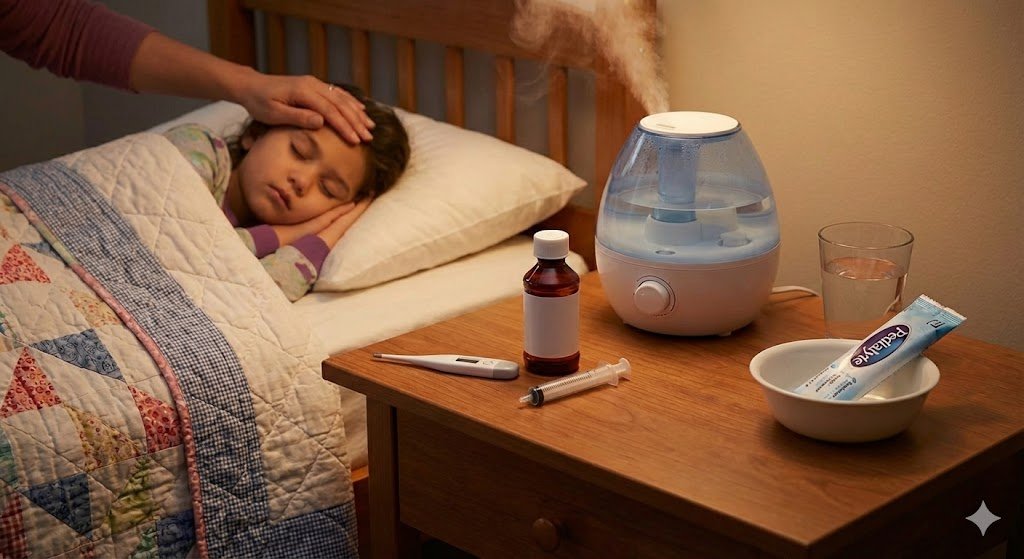
When your child wakes up burning hot at 2 AM, you don’t need a lecture—you need a protocol. Based on the latest clinical standards from the American Academy of Pediatrics (AAP) and the Mayo Clinic, this guide covers the essentials every household needs to survive the flu season safely.
📋 The Sick Day Essentials: The 10-Second Checklist
| Category | Must-Haves | Why It Works |
|---|---|---|
| Fever & Pain | Dye-Free Tylenol/Motrin | Precision dosing; no stains. |
| Congestion | Saline Spray + Suction | Mechanical clearance is best. |
| Night Cough (1y+) | Raw Honey | Proven cough suppressant. |
| Hydration | Electrolyte Popsicles | High acceptance; prevents ER visits. |
1. Dosing Safety: Weight is the Only Metric
The AAP is clear: pediatric medication must be dosed by current weight, not age. For the most accurate calculation, refer to the official AAP Acetaminophen Dosage Table.
- The “Dye-Free” Mandate: Only buy Dye-Free (Clear) versions to avoid unnecessary additives.
- Precision Tools: Always use the oral syringe provided with the product.
2. Respiratory Relief (Without the Scam)
The FDA and AAP strongly advise against over-the-counter (OTC) cough and cold medicines for children under 4. They carry risks of serious side effects and often lack proven efficacy in toddlers.
- The Honey Remedy: For children over 12 months, the Mayo Clinic confirms honey can be as effective as dextromethorphan.
- Cool-Mist Humidity: Helps thin mucus without the burn risk of steam vaporizers.
3. Hydration: Preventing the ER Visit
Dehydration is the #1 reason for pediatric ER visits during illness. The signs of dehydration can be subtle, so focus on small, frequent sips.
4. Red Flags: When to Seek Medical Help
Per Mayo Clinic First Aid guidelines, seek emergency care if:
- Infant Alert: Any fever over 100.4°F (38°C) in a baby under 3 months.
- Work of Breathing: You see “retractions” (skin pulling in around the ribs).
- Lethargy: The child won’t interact even after the fever drops.