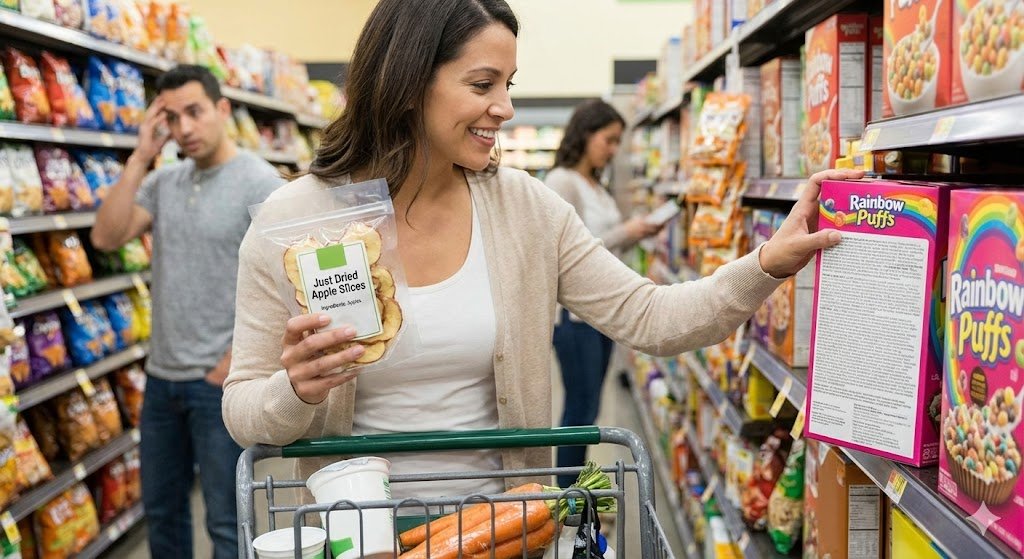
Buying snacks for kids shouldn’t feel like a mental workout.
Here’s the simple truth: the front of the package is where brands make promises. The back—the ingredient list—is where the truth actually lives.
This guide doesn’t try to teach nutrition theory. It’s here to help you spot the snacks that aren’t worth your time, fast.
🚀 The 3-Second Cheat Sheet
No time to analyze? A quick scan using this table will help you avoid most fake-healthy snacks.
| Feature | 🟢 Go For | 🔴 Pause |
|---|---|---|
| List length | Ideally ≤5 | Long, unfamiliar terms |
| Sweetener | Fruit powder, dates | Concentrate, syrups |
| Fats | Olive, avocado, butter | Palm, seed oils |
1. Watch the Top Three Ingredients
According to FDA guidelines, lists are ordered by weight. The first three tell you what your child is really eating.
Feels reassuring
Oats, chickpeas, blueberries—real foods you recognize.
Instant red flag
Sugar or refined oils in the first two spots.
2. The Five-Ingredient Rule
If a snack has more than 5–10 ingredients, and you can’t recognize at least half, it’s likely ultra-processed.
3. Fats: Don’t Make It Complicated
The real issue is the combo: refined starch + added sugar + refined oil. That mix fills kids for about five minutes.
4. Ripping Off the “No Added Sugar” Mask
The WHO warns that fruit juice concentrate is still “free sugar.” Once concentrated, the natural fiber is gone.
5. The Puff Trap: “Melts in the Mouth”
Puffs are made through high-heat extrusion, making starch extremely easy to digest. They disappear in seconds, leaving kids hungry almost immediately.
What Do I Actually Grab?
🛒 Easy Wins
- Freeze-dried fruit
- Plain yogurt or cheese
- Nut bars (sweetened with dates)
- Roasted chickpeas or lentils
⚠️ Pause Before Buying
- Puffs and melts (air and starch)
- Super-sweet “no added sugar” snacks
- Crackers with long lists