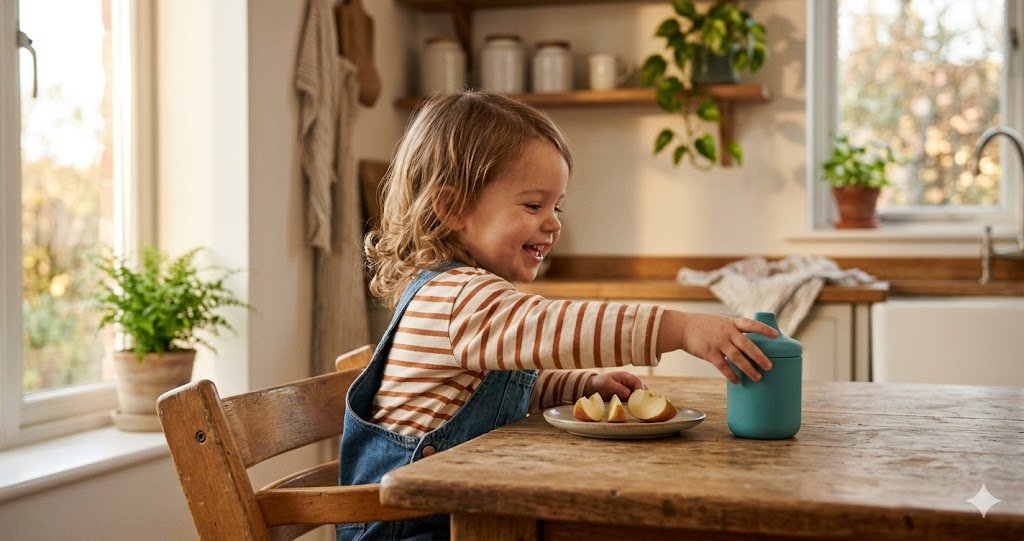
I already wrote the cheerful version of this post: the roundup of toddler water bottles I’d point a friend toward. This isn’t that. By the time my youngest was ready to graduate from a sippy, I’d been through the cup years twice already with his big brother, and I’d learned that the glowing five-star reviews mostly tell you the same three things: it’s cute, it keeps water cold, my kid likes it. Useful, sure. But they don’t tell you what’s going to make you swear quietly into a wet diaper bag eight weeks from now.
So this time I went the other direction. I sat down and read through the one- and two-star reviews of the bottles parents actually buy the most: the perennial best sellers, the Amazon’s Choice ones, the bottles every daycare cubby is full of. Not to count stars, but to find the patterns. And the thing nobody tells you is that across completely different brands, prices, and lid styles, the complaints collapse into a handful of the same failures. Once you can name them, you basically can’t be sold a bad bottle again.
What I can do is read a few hundred of those angry reviews so you don’t have to, and turn the most common toddler water bottle problems into the design choices that keep landing on the right side of each one.
Failure #1: ‘Leak-proof’ usually means ‘leak-proof only when your toddler closes the lid.’ They don’t.
This is the complaint I saw more than any other, and it’s sneaky, because technically the bottle isn’t lying. Most insulated straw bottles are genuinely spill-proof when the cap is clicked shut. The catch is buried in the reviews: the bottle only seals if the straw lid is down, and a one- or two-year-old does not close the lid. They take a sip, get distracted by a dog, and drop it open-side-up into your bag. (My husband is no better, honestly.) Parent after parent describes the same scene: soggy snacks, a swimming pile of crayons, a leak-proof bottle that leaked all over everything.
The fix the reviews point to: for the youngest kids, you want a bottle that’s sealed by default, not one that depends on a toddler remembering a step. That usually means a bite-valve or self-sealing spout that closes the instant the mouth comes off it, instead of an open straw protected only by a flip cap. It’s a less glamorous design, but it’s the one that survives a real toddler.
Failure #2: The straw is a mold trap, and the parts you can’t reach are the ones that get gross.
If Failure #1 is the loudest complaint, this is the most stomach-turning. Reviews across nearly every straw bottle eventually mention the same thing: black specks in the straw, a sour smell that won’t wash out, gunk wedged in a valve crevice that no normal brush reaches. There was even an Australian news story this year about a young woman who’d been casually rinsing her straw bottle about once a month and discovered she’d been drinking mould from inside the mouthpiece for months before she finally inspected it.
The pattern under the pattern: the more clever little parts a lid has (pop-up mechanisms, hidden gaskets, twisty valves), the more places water sits and grows things you can’t see. The bottles that don’t generate mold complaints tend to be the boring ones: few parts, a wide-ish opening, a clear straw you can actually inspect, and a straw that pops out to be replaced when it wears out.
Failure #3: The cheap ones chip and dent. (And yes, the lead scare is mostly overblown.)
A lot of one-star reviews here are simply cosmetic: the cute print washed off in the dishwasher, the bottle dented on the kitchen tile, the painted base started flaking. Worth knowing, not worth losing sleep over. And the lead scare you may have seen online belongs in the same bucket, because honestly it’s the most overblown topic in this whole category. Steel itself contains no lead; where it turns up at all, it’s a tiny solder dot tucked under the base cap. When a lab actually bought and tested these bottles, the exposed, in-use surfaces came back clean, with the only caveat being a conditional one: a child could be exposed if that base cap worked loose or the paint chipped all the way down to the metal. So the real lesson isn’t ‘lead,’ it’s ‘buy a solid finish.’ Favor a bottle with a silicone boot on the base (it cushions drops and keeps that cap covered), hand-wash the printed designs, and skip the flimsiest bargain bottles. Judge the construction, and the lead question quietly takes care of itself.
Failure #4: It’s too heavy, too big, or too stiff for a one- to three-year-old’s hands.
A lot of disappointed reviews aren’t about defects at all. They’re about a mismatch nobody warned the parent about. Someone buys the 18- or 20-ounce insulated bottle because more water sounds better, and then it’s a brick once it’s full and their toddler can’t lift it to drink. Or they buy a beautifully made bottle with a spout so stiff that little lips can’t actually pull water through it. Reviewers flag this even on premium bottles: the gear testers note that a tank-tough option like the Yeti Rambler Jr. has a spout that’s genuinely hard to open, which makes it a better pick for kids over five than for a toddler.
For the 1–3 crowd, small and light beats big and impressive every time. Look for an 8–10 ounce capacity, a real handle their hands can grab, and a low-effort spout or straw they can work themselves. The keeps-it-cold-for-24-hours, holds-a-liter specs are written for a hiking parent, not a 22-pound person who just wants a sip.
Failure #5: The straw gets chewed, a part goes missing, or the whole bottle vanishes at daycare.
This pattern is almost funny until it’s a pricey bottle in the trash. Toddlers chew straws flat. Handles pop off. And the bottle itself disappears into the great daycare void. One review that stuck with me was a parent whose child’s bottle was their comfort item, lost at the mall, a genuine small crisis. The bottles that earn back-handed praise here are the ones where a chewed straw doesn’t mean a dead bottle, because you can buy a two-pack of replacement straws for a few dollars instead of rebuying the whole thing.
So choose for repairability and identification. A bottle whose straws and parts are sold separately survives the chewing stage, and anything that comes with name labels (or an obvious spot to write a name) comes home from daycare a lot more often.
One more thing, but only after the five above: will they actually use it?
I’m putting this last on purpose, because it’s the trap that gets sold to parents first. A bottle is only as good as how often your toddler drinks from it, and for a picky little one, a favorite character on the side really can be the difference between a full bottle and a full-but-untouched bottle. That’s real. Character cups aren’t a gimmick tax if they get a stubborn kid to hydrate.
But the order matters. A licensed character does not fix a leaky valve, a moldy straw, a brick-heavy bottle, or a chewed-up part. So treat the looks as a tiebreaker, never a starting point: make a bottle clear Failures #1 through #5 first, and then let your kid pick the one with the dog or the princess on it. A cup like the First Years Bluey straw cup works on that logic, pairing the motivation with a simple straw setup. Just note it’s rated for 24 months and up, so it suits the older end of toddlerhood more than a brand-new one-year-old.
So how would I actually choose now?
Not by picking a single best bottle. That’s the wrong question, and it’s exactly why so many highly-rated bottles still rack up furious reviews. I’d run any bottle through the five failures in order: Does it seal without my toddler doing anything? Can I get the straw genuinely clean and replace it? Is the finish solid enough that the base won’t chip down to bare metal? Is it light and easy enough for little hands right now? And can I replace a part or label it for daycare? A bottle that passes all five is a good bottle whether it’s a budget pick or the premium one, and only then does it matter whose face is printed on the side.
If you want the cheat-sheet version of all this, a one-page printable that turns these five failures into a quick checklist you can pull up in the store, plus the right cup style for each age from open cups to bottles, I put it together for exactly this moment. Grab the free Bottle & Cup Cheat Sheet below and you’ll never second-guess a cup aisle again.
And if you’re not quite at the bottle stage yet, that’s worth getting right too. Here’s where I’d start with open cups for babies, the sippy and transition cups that bridge the gap, and the snack cups that round out the bag.