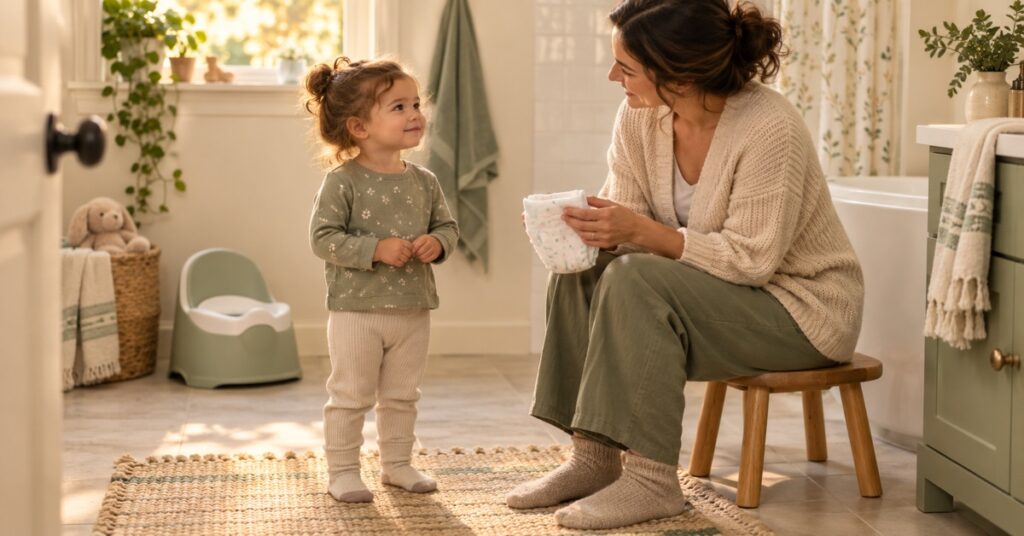
Your toddler pees in the potty, then brings you a diaper when they need to poop. I’d give them the diaper for this poop and work on the change separately. Suddenly refusing the diaper can lead to holding poop in. ERIC guidance
- Comfortable poops in a diaper, with no concerning symptoms: Work toward the toilet gradually. Save practice for a calm time when your child is willing and isn’t urgently trying to go.
- Hard or painful poops, repeated holding, or stool leaks: Contact your pediatrician and pause efforts to remove the diaper. If your child needs to poop but is afraid to let it out or refuses to release it, contact the doctor within 24 hours. That advice concerns holding poop in; simply choosing a diaper while passing stool comfortably is a different situation. NIDDK; HealthyChildren
- Get medical care right away if constipation comes with blood in the stool, bleeding from the bottom, constant belly pain, vomiting, a swollen belly, or weight loss. Green vomit needs an emergency-room visit. NIDDK; HealthyChildren
Peeing on the potty doesn’t tell you how pooping feels. A painful poop can make the next one frightening. Wanting privacy can matter, too. When your child needs to poop, clenching their bottom or rising onto tiptoes can be signs of holding it in. Mention those behaviors to your pediatrician. NIDDK
For the diaper request itself, keep your answer short. You could say, “You can have a diaper to poop. I’ll help you put it on.” Avoid adding a bargain about sitting on the potty first. Once your child has finished and you’ve cleaned up, let the conversation move on. There doesn’t need to be a lesson after every poop.
If your child already has a treatment plan, keep following it and ask the clinician when to introduce practice. Giving a diaper won’t treat constipation on its own.
Practice when there’s no rush to poop
When pooping is comfortable, work from what your child already accepts. Start with one change, such as where they wear the diaper. A child who already sits happily to pee doesn’t need to start over with learning to sit.
For a child who still wants to stand in a diaper, an early change might be using the diaper in the bathroom. Another might be sitting briefly with clothes on at a separate time. If sitting already feels comfortable, you could offer a sit with the diaper still on. Their bottom and feet should feel secure and supported. Later, when pooping while seated in the diaper feels comfortable, you can invite them to try without it. These are possibilities to work toward at their pace. ERIC guidance
You might say, “Would you like to try sitting with your diaper on?” If they say no, leave it for another time. Don’t cut the diaper or surprise your child by taking it away. For these practice sits, let them get up when they want to. Don’t insist on a poop or force them to stay seated. HealthyChildren
If a change brings pain or holding, pause the practice and call your pediatrician. If your child remains comfortable but rejects the new step, return to the step they already accept. There is no fixed number of days for moving from one step to the next. Ask for help if the fear persists or the family keeps getting stuck.
I wouldn’t buy a new potty just because your child still asks for a diaper. If the current seat is steady, your child feels secure, and their feet have support, keep using it. Fix a wobbly seat or unsupported feet before adding more practice.
Acknowledge a willing attempt with something specific, such as, “You tried sitting with your diaper on.” Don’t withhold meals or cancel an outing because they haven’t pooped on the potty.
Agree on a plan with daycare
Agree with the adults caring for your child on how to respond to a diaper request and which symptoms to tell you about.
For a child who currently poops comfortably in a diaper, you could adapt this note:
“[Name] uses the potty for pee and asks for a diaper to poop. Please offer the diaper when requested, without requiring a potty sit first. We’re practicing small changes separately when they’re comfortable and willing. Please tell us about hard or painful poops, holding, or stool leaks. If this arrangement isn’t possible in your room, please speak with us so we can agree on a plan.”
Share an existing clinician’s plan, too. If daycare cannot offer diapers for poop, discuss a workable arrangement with staff and your pediatrician before changing the routine. Don’t ask your child to hold poop until pickup. For help keeping adult responses calm and consistent, see our gentle potty-training guide.
What to write down for your pediatrician
A short record can make a pediatrician conversation easier. Make an entry for each poop or attempt, including times your child tried but nothing came out. You can copy this table into a note:
| What to record | Your note |
|---|---|
| Date and time | ___ |
| Poop passed, or attempt with no poop | ___ |
| What the poop looked like: hard/lumpy, soft/formed, or loose | ___ |
| Pain, signs of holding, or stool leaks | ___ |
| Where it happened, diaper use, and any recent change | ___ |
Write what you saw rather than guessing a diagnosis. Don’t wait to complete the record before calling about the symptoms above.
For your next calm practice, offer one small change your child might accept. A brief sit with the diaper on can be enough for that attempt. You can leave the next step for another time.