
Getting Started
This baby’s first foods guide gives you a clear, step-by-step plan: when to begin, how to progress textures safely, what to avoid in the first year, and simple meal ideas.
When to Start Solids
Most babies are ready around 6 months. Readiness signs include good head/neck control, sitting with support, loss of the tongue-thrust reflex, and clear interest in food. If your baby isn’t showing these yet, wait—follow their cues. See this
AAP guidance.
Why Iron-Fortified Cereal Matters
Iron supports growth—especially brain development. After about 6 months, breast milk or formula alone may not meet iron needs, so iron-fortified cereal is a common first food. For background, see this infant nutrition overview
(CDC).
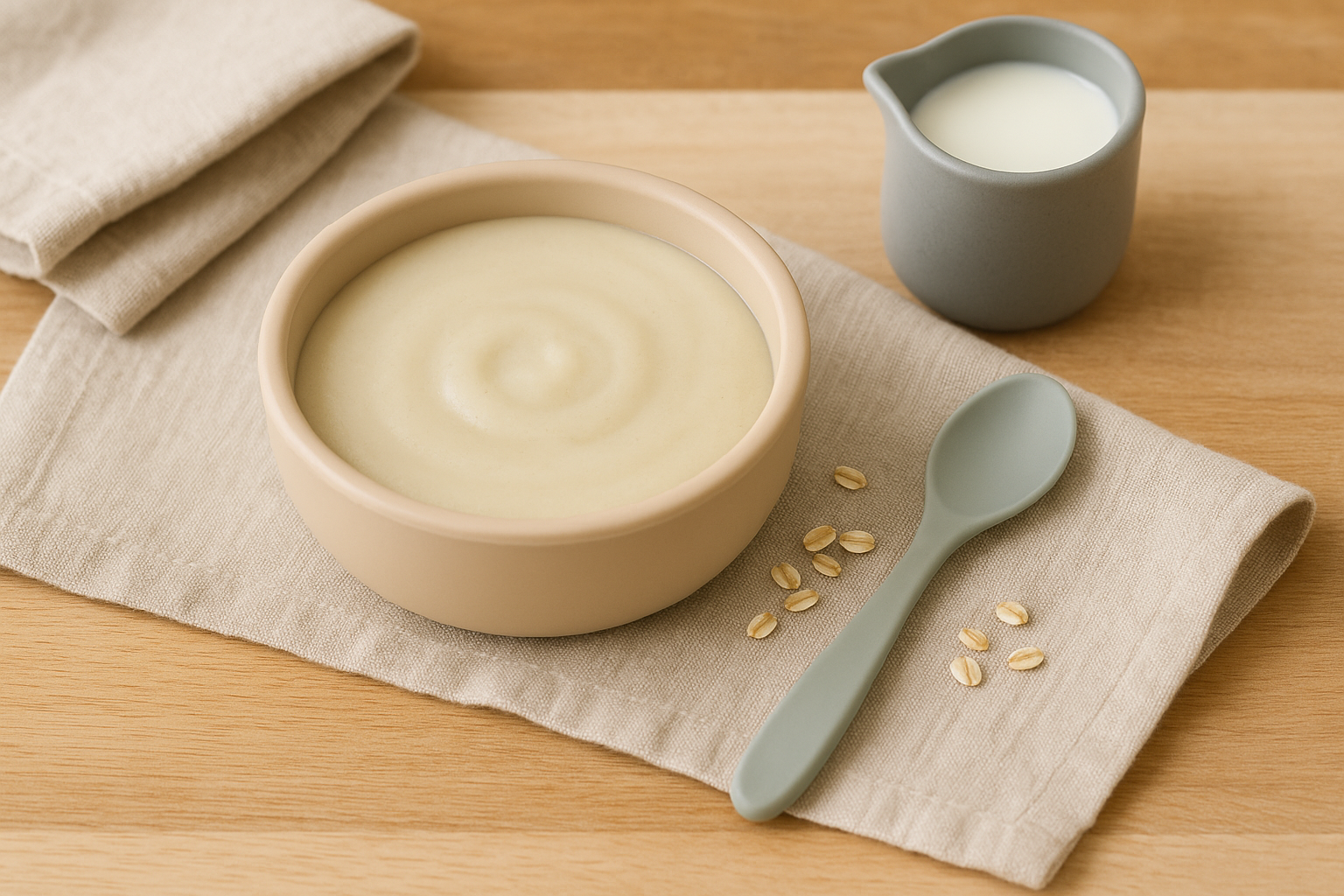
Baby’s First Foods: Texture Progression
Advance gradually as skills develop: smooth purées → thicker purées/soft mashes → soft, bite-size finger foods. This builds oral-motor skills and supports safe chewing.
Baby’s First Foods by Age: 6–12 Months
| Age | Suggested Foods | Texture Target | Meals/Day |
|---|---|---|---|
| 6–7 months | Iron-fortified cereal; puréed fruits/veg (apple, pear, carrot, sweet potato); puréed meats | Smooth & thin | 1–2 |
| 7–8 months | Avocado, oatmeal, mashed banana/peas; lentils; shredded chicken | Thicker purée / soft mash | 2–3 |
| 8–9 months | Soft lumps; full-fat yogurt; egg yolk; soft-cooked veg (carrot, zucchini) | Soft mash with small lumps | 3 + snacks |
| 10–12 months | Finger foods: diced soft fruit, soft pasta, small pieces of soft chicken or beef; cheese | Small bite-size pieces | 3 + snacks |
Foods to Avoid (Salt, Sugar, Honey)
- Salt: Immature kidneys—keep foods unsalted; avoid salty processed foods.
- Sugar: Skip added sugars/sweet snacks to prevent preference for overly sweet flavors.
- Honey: No honey before 12 months due to infant botulism risk.
Practical Tips
- Introduce one new food at a time; wait 3–5 days to watch for reactions.
- Start small and follow your baby’s pace—no pressure to finish.
- Use a high chair designed for BLW; keep posture upright and mealtimes calm.
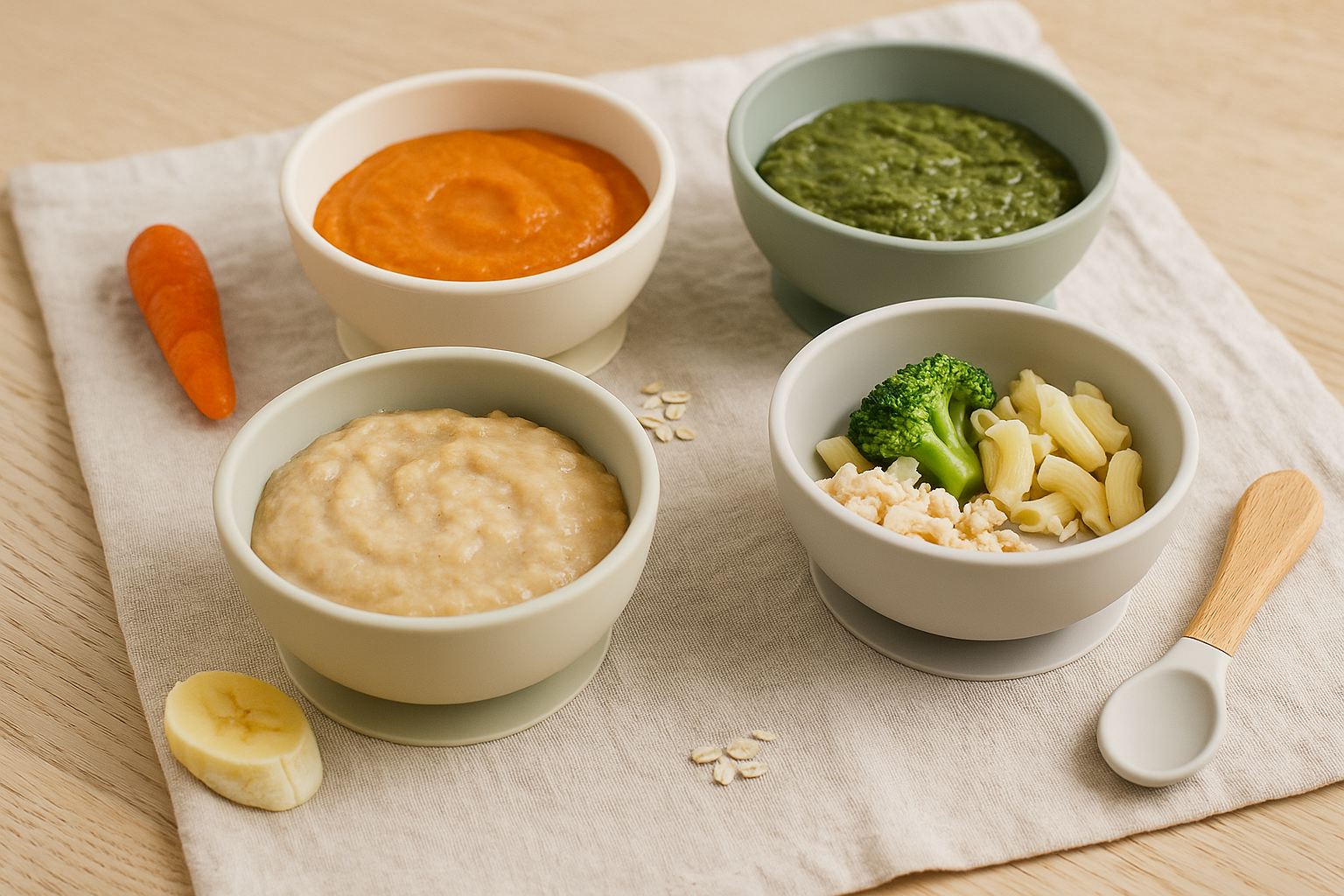
Sample Meal Ideas
- Breakfast: Oatmeal + mashed banana
- Lunch: Puréed carrot + sweet potato
- Snack: Soft avocado chunks or small pieces of cooked egg
- Dinner: Mashed peas + lentils
after or between solids. Rough guide—6–7 months: on-demand ~5–6 feeds/day
(formula ≈ 24–32 oz / 700–950 ml); 8–9 months: 4–6 feeds/day (≈ 20–28 oz / 600–830 ml);
10–12 months: 3–4 feeds/day (≈ 16–24 oz / 470–700 ml). Avoid cow’s milk as a drink before
12 months (small amounts of yogurt/cheese are fine). Small sips of water with meals are okay after 6 months.
This baby’s first foods guide helps you begin with confidence and keep meals safe, simple, and nourishing.
What to Remember
- Increase texture and variety gradually.
- Watch your baby’s cues; don’t rush.
- Keep meals balanced; ask your pediatrician for personalized advice if needed.
With patience and consistency, your baby will build healthy eating habits that last a lifetime.
🍼 Want to track your child’s developmental milestones?
Explore our full guide →
Baby & Toddler Development by Age (0-3) Hub