Finding the best toys for 1-2 year old toddlers is tricky because this stage changes so fast. One week they’re barely walking, the next they’re running, climbing, and trying to “cook” dinner. The toys that work now need to keep up with that speed – simple enough for quick wins, open-ended enough to grow with them.
My youngest son just turned one, so I’m living this stage in real time. Here are the five categories that keep him engaged the longest, with the specific products we use every day.
What’s Happening at 1-2 Years
- Walking, then running, then climbing everything
- “I do it myself” energy – wants to try everything independently
- Simple pretend play emerging – feeding dolls, “cooking,” talking on phones
- Stacking higher, sorting by shape, beginning to match colors
- Vocabulary exploding – naming objects, following simple instructions
- Short attention span – 3-10 minutes per activity is normal
The best toys for 1-2 year old toddlers work with this “fast and independent” energy, not against it.
Best Toys for 1-2 Year Old: Push Walker
A push walker is the single most-used toy from 12 to 18 months. Your toddler loads it up with stuffed animals, pushes it across the room, dumps everything out, reloads, and repeats. It’s exercise, pretend play, and cause-and-effect all in one.
Our picks:
- VTech Sit-to-Stand Learning Walker Top Pick – $30. The bestselling walker for a reason. Removable play panel for seated play, sturdy wheels with speed control. My youngest son went from wobbly steps to confident walks within two weeks of using this daily.
- Hape Block & Roll Cart – $35. Beautiful wooden cart that comes loaded with blocks. No batteries, no sounds – just pure push-and-build play. The blocks add building time after walking time.
Best Toys for 1-2 Year Old: Building Blocks
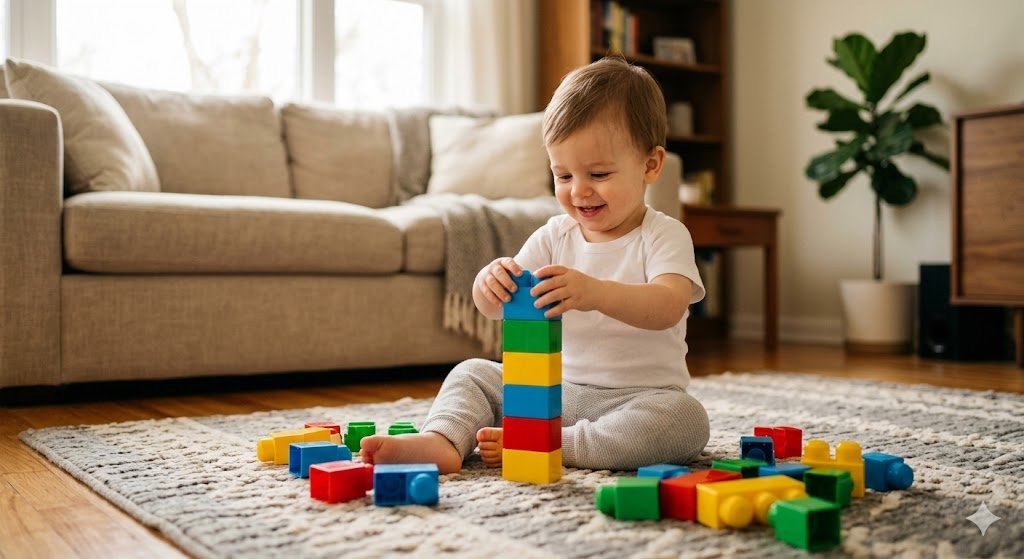
Big, chunky blocks that snap together easily are the foundation of creative play at this age. Your toddler starts by stacking 2-3 high, graduates to towers, then starts building “houses” and “cars.” The same set lasts years.
Our picks:
- Mega Bloks First Builders (80-piece bag) Top Pick – $20. The gold standard for toddler blocks. Big enough to be safe, snappy enough to stay connected, and the bag doubles as storage. My youngest son builds towers every single morning – it’s become his wake-up ritual.
- Melissa & Doug Wooden Building Blocks (100-piece) – $25. Classic wooden blocks in four colors and nine shapes. No snapping – they balance and fall, which teaches patience and spatial awareness differently than Mega Bloks.
Pretend Food & Kitchen Play
Somewhere around 14-16 months, your toddler starts “feeding” their stuffed animals and “cooking” with spoons. This is pretend play emerging – and it’s a huge cognitive milestone. Simple food sets let them practice.
Our picks:
- Melissa & Doug Cutting Fruit Set Top Pick – $18. Wooden fruits with velcro that “cut” apart with a wooden knife. The satisfying rrrip sound is addictive. Builds hand strength, teaches food names, and leads naturally into kitchen pretend play.
- IKEA DUKTIG Cooking Set Budget – $10. 5 pieces (pot, pan, and 3 utensils). Simple, sturdy, and perfectly sized for toddler hands. Pair with any food set.
Chunky Puzzles & Sorting Toys
Your toddler is ready for slightly harder puzzles now – 4-8 pieces with bigger knobs or chunky shapes. They’re learning that things have specific places, which builds spatial reasoning and patience.
Our picks:
- Melissa & Doug Safari Chunky Puzzle (8-piece) Top Pick – $8. Thick wooden animals that stand up for pretend play after puzzle time. Lions, elephants, giraffes – the naming practice is incredible for vocabulary building.
- Melissa & Doug Shape Sorting Cube – $15. If you didn’t get this at 9-12 months, now is great too. Start with 3-4 shapes, add more as your toddler masters them.
Crayons & Drawing
First scribbles are a big deal – your toddler is learning that their hand movements create visible marks. This is the foundation of writing, drawing, and creative expression.
Our picks:
- Crayola My First Washable Tripod Crayons (8-pack) Top Pick – $5. Triangular shape teaches proper grip from day one. Washable – because they WILL draw on the table, the wall, and themselves.
- Melissa & Doug Water Wow! Activity Pad Budget – $5. Water-only pen reveals colors on special pages. Zero mess, reusable, perfect for restaurants and car trips.
Play Tips for 1-2 Year Olds
- Short rounds, not marathons. 3-10 minutes per activity is normal and healthy. Multiple short sessions beat one long one.
- “I do it!” is the goal. Resist fixing their tower or correcting their puzzle. Their way IS the right way at this age.
- Name everything. “You built a TALL tower!” “That’s a RED block!” Vocabulary builds during play, not flash cards.
- End on a win. If frustration is building, simplify the task so they succeed, then stop.
- Tidy together. “Toys go home!” with a count makes cleanup part of the routine, not a battle.
The “delivery game” works for everything. Load blocks in the walker, deliver to the couch. Load food in the pot, deliver to the bear. Toddlers love missions.
How Many Toys Does a 1-2 Year Old Need?
5-7 items out at a time, rotated weekly. Here’s a realistic set:
- 1 push walker or ride-on ($30-35)
- 1 set of building blocks ($20-25)
- 1 pretend food/kitchen set ($10-18)
- 1 puzzle ($8-15)
- Crayons + paper ($5)
Budget path: ~$48 – VTech Walker + Mega Bloks + IKEA Cooking Set + M&D Safari Puzzle + Crayola crayons
Premium path: ~$100 – Hape Cart + Mega Bloks + M&D Cutting Fruit + M&D Safari Puzzle + M&D Shape Cube + Water Wow + Crayola crayons
Plus shape sorter and stacking cups from earlier months still get plenty of use.
Safety at 1-2 Years
- Climbing is constant. Anchor ALL furniture – bookshelves, dressers, TV stands.
- Small magnets and button batteries are the biggest hidden dangers. Check all toys.
- Crayon and marker taste-testing is inevitable. Stick with non-toxic, washable brands.
- Push walkers on stairs = serious fall risk. Gate stairs before introducing walkers.
For detailed safety guidance, see the AAP toddler safety guidelines and CDC 18-month milestones.
The Bottom Line
The 1-2 year stage is pure energy and discovery. Your toddler wants to DO things – push, build, sort, pretend, scribble. The best toys for 1-2 year old toddlers channel that energy into skills that last. Keep it simple, rotate often, and let them lead.
Coming from the baby stage? See our Best Toys for 9-12 Month Babies.
Ready for the next leap? Check out Best Toys for 2-3 Year Olds.
This article is for informational purposes only and isn’t a substitute for personalized medical advice from your pediatrician.
Browse Best Toys by Age