
Those first feeds can feel nothing like the photos—messy, noisy, and new for both of you. That’s okay. Breastfeeding is a skill you and your baby learn together, and it gets easier quickly.
Here’s a calm, practical guide you can skim at 3 a.m.: first, why breast milk is so good; then the few common snags and how to fix them; the tools that actually help; and a short FAQ.
Breast Milk: Why It’s So Good
- Tailored nutrition: HMOs to feed good gut bacteria; whey-dominant proteins digest easily; fats shift within a feed/day to match needs.
- Immune protection: secretory IgA, lactoferrin, lysozyme, and living cells help protect the gut.
- Highly bioavailable micronutrients: iron and zinc are well absorbed despite modest amounts.
- Bioactives & hormones support digestion and appetite regulation.
- Dynamic: composition adapts with time of day, stage of lactation, and baby’s age.
Common Challenges & How to Fix Them
Sore nipples
- Adjust latch/position: tummy-to-tummy, nose-to-nipple, wait for a wide-open mouth; bring baby to breast.
- After feeds, apply a thin layer of purified lanolin (HPA/medical-grade) or a food-grade, fragrance-free nipple balm; many lanolin products don’t need wiping (check label).
- Air-dry with a few drops of breast milk; brief cool compresses for comfort.
Engorgement & plugged ducts
- Keep milk moving: frequent, effective removal (baby or pump); breast compressions.
- Warm before feeds, cold after; targeted massage toward the nipple.
Worried about low supply
- Early weeks target: 8–10 removals/day for the first 2–4 weeks.
- Boost ideas: switch nursing, skin-to-skin, add one extra morning pump for several days if needed.
- Hydration matters: keep water within reach at every feed; aim for pale-yellow urine. Over-drinking won’t raise supply by itself, but dehydration can reduce it.
Mastitis (red flags)
- Flu-like symptoms plus a hot, painful area. Keep milk moving, rest, hydrate, and contact your clinician promptly.
Bottle (optional)
- Not required unless separation/flexibility is needed. If used, choose slow-flow nipples and practice paced bottle feeding (upright hold, pauses every 20–30 ml, switch sides).
- If a bottle replaces a breastfeed, pump 1:1 to protect supply; ensure pump flange size fits your nipple.
Breastfeeding Tools That Help
- Nursing pillow — keeps tummy-to-tummy alignment and reduces back/shoulder strain.
- Breast pump — manual or electric; choose the right flange size. Double electric for efficiency, manual for travel/light use.
- Nursing pads — disposable or washable; change regularly to avoid irritation.
- Nursing bras/tops — soft, stretchy, wire-free in early weeks; good fit prevents pressure points.
- Bottles & slow-flow nipples (optional) — only if you need flexibility or separation; use paced bottle feeding.
Quick starter kit
1 nursing pillow, 2–3 nursing bras, 1–2 packs of pads, 1 pump with correct flange, and (if needed) 2 slow-flow bottles.
Breastfeeding FAQ
When will my milk “come in”?
For many, day 2–5. Frequent, effective feeds help the transition.
How long does a feed take?
Newborns often take 10–30 minutes per side. Watch swallowing and relaxation, not the clock.
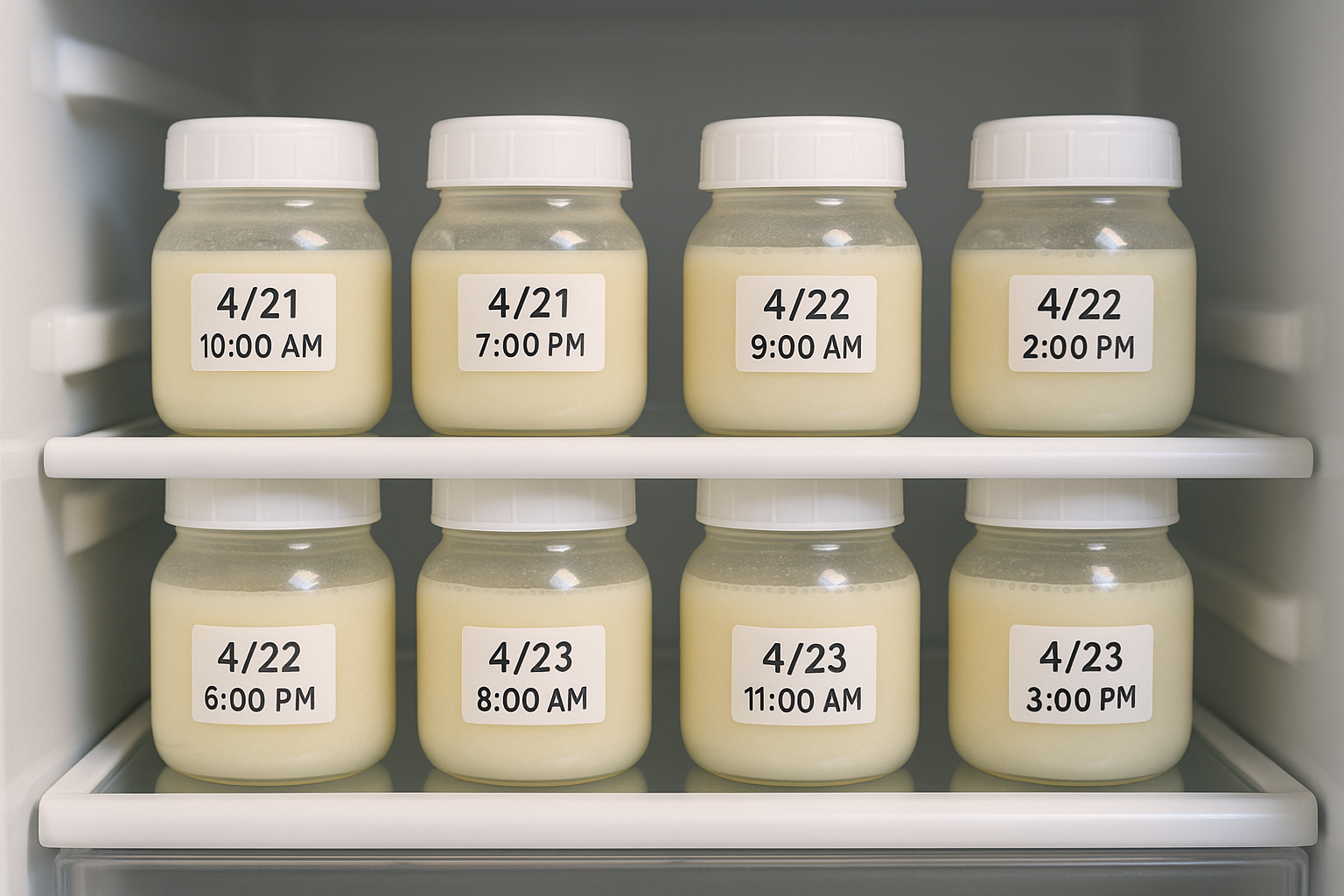
How do I store breast milk safely?
Room temp (~25 °C): up to 4 h · Fridge (≤4 °C): up to 4 days (thawed: 24 h) · Freezer (≤−18 °C): 6–12 months (best by 6). Leftover after a feed: 2 h, then discard. See public health storage guidance and professional lactation resources for details.
Which nipple cream is safe?
Purified lanolin (HPA/medical-grade) or a food-grade, fragrance-free balm is commonly used; many lanolin products don’t need wiping before the next feed (check label). Fixing latch remains the #1 solution for pain.
Can I have coffee or take medicines while breastfeeding?
Moderate caffeine (~200–300 mg/day) is usually fine—watch your baby’s sensitivity. For medicines, consult your clinician and check a trusted lactation database.
Your Baby's First Week Guide
Free 4-page printable: day-by-day guide + feeding & diaper tracker + warning signs checklist.
No spam. Unsubscribe anytime.