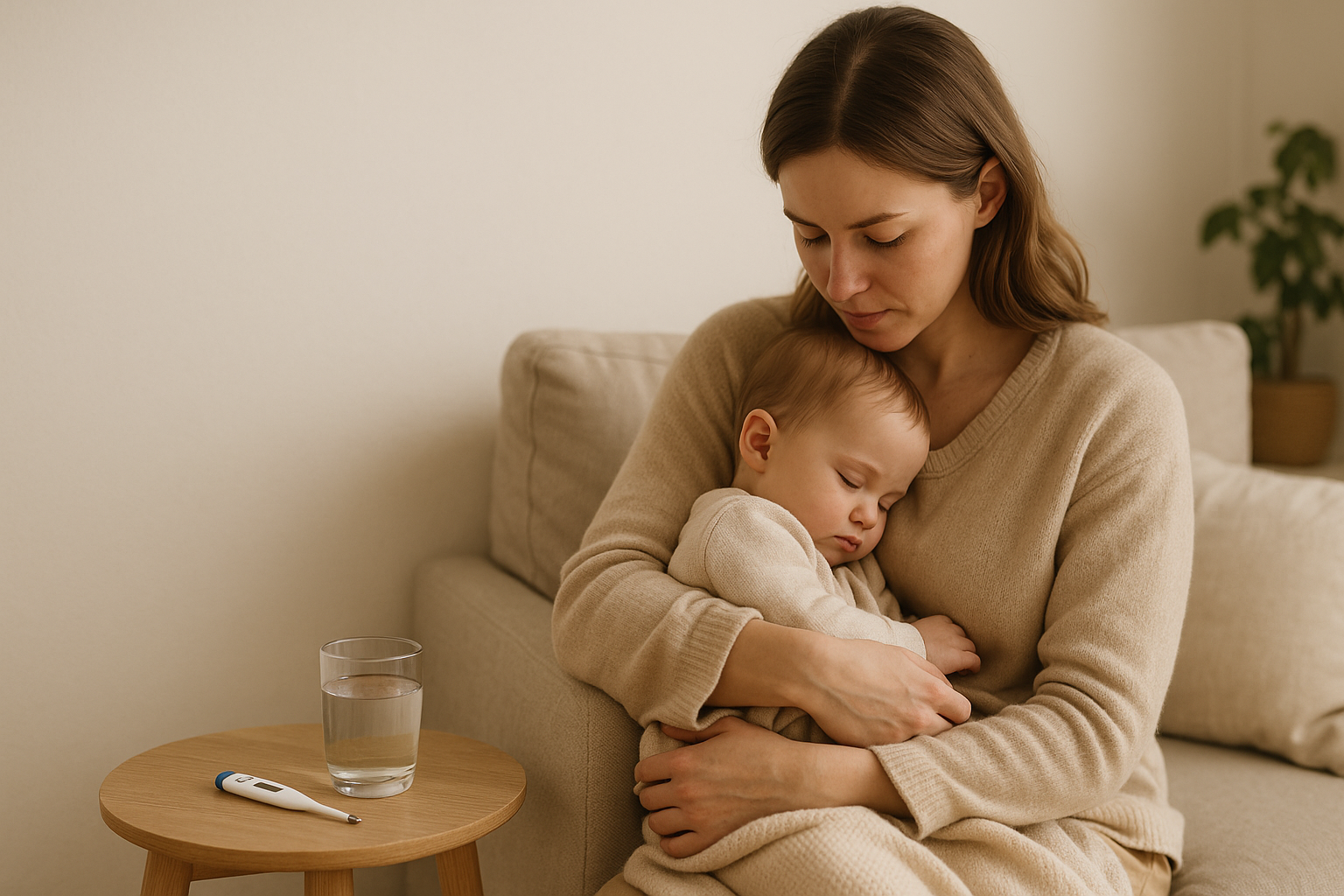
What To Do When Your Child Has a Fever: Accurate Temperature Taking, Home Care, Medicines & When to Seek Care
Key takeaways (30-second read)
- Fever definition: Rectal/ear/temporal ≥100.4°F (38.0°C); oral ≥100.0°F (37.8°C); axillary ≥99.0°F (37.2°C). Mayo Clinic
- Look at comfort & hydration more than the number. Many fevers can be managed at home with fluids, rest, and comfort care.
- <3 months old: any fever ≥100.4°F (38.0°C) → contact your pediatrician promptly. AAP
- Medicines: Acetaminophen (all ages if advised), Ibuprofen (≥6 months). Dose by weight. No aspirin for kids/teens. AAP
- Skip alcohol baths & ice water. If using a bath, keep it lukewarm and stop if your child shivers. AAP
What counts as a fever?
Fever is a normal immune response. For practical home decisions, use these thresholds:
- Rectal / Ear / Temporal: ≥100.4°F (38.0°C)
- Oral: ≥100.0°F (37.8°C)
- Axillary (underarm): ≥99.0°F (37.2°C)
When calling your pediatrician, report the number + method (e.g., “temporal 101.2°F”).
How to take your child’s temperature (by age & device)
- <3 months: Prefer rectal for accuracy.
- ≥6 months: Ear can be used if aimed correctly; earwax and cold exposure can skew readings. AAP
- Temporal (forehead): Works across ages; let your child warm up after coming indoors; avoid sweat/glare interference. AAP
- Axillary: convenient but least accurate; confirm with a more accurate site if results and appearance don’t match. Mayo
Home care: comfort first
- Fluids: small, frequent sips of breast milk/formula/water or oral rehydration solutions. Watch dehydration signs (dry mouth, fewer tears, fewer wet diapers, sunken soft spot). AAP
- Clothing & room temp: light breathable layers; add a thin blanket only if shivering. AAP
- Lukewarm baths only (optional): avoid cold water and never use alcohol sponges. AAP
Fever medicines & weight-based dosing
Goal: help your child feel better (rest, drink), not to “zero out” the number.
- Acetaminophen (paracetamol): 10–15 mg/kg per dose, every 4–6 hours; max 4 doses in 24h. Use mL syringes, not kitchen spoons. AAP dosing table
- Ibuprofen: 5–10 mg/kg per dose, every 6–8 hours; use only if ≥6 months. AAP dosing table
- No aspirin in children/teens (Reye syndrome risk). AAP
- Avoid routine alternating of acetaminophen & ibuprofen unless your clinician gives a written schedule. AAP clinical report
When to seek care (by age & red flags)
Go to the ER now (any age) if one or more is present
- Breathing trouble: fast/labored breathing, chest retractions, noisy breathing/stridor/wheezing, blue/gray lips/face. AAP symptom checker
- Very poor responsiveness: unusually sleepy/hard to wake or “looks very ill.” AAP
- Age <3 months with temp ≥100.4°F (38.0°C). AAP
- Repeated ≥104°F (40.0°C) or a seizure. AAP
- Severe dehydration: very few/no wet diapers, dry mouth, no tears, sunken fontanelle, marked lethargy. AAP
Contact your pediatrician the same day
- Fever duration: <2 years >24 hours; ≥2 years >72 hours. AAP
- Cough with risk signs: clearly faster breathing, chest pain, wheeze, or cough >3 weeks. AAP symptom checker
- Poor intake + less urine: refusing to drink/nurse plus fewer wet diapers → dehydration concern. AAP
- Your gut says your child is getting worse or still “not right” even after fever comes down. AAP
Combo symptoms: fever + cough + poor appetite + restless sleep
This cluster is common with viral respiratory illnesses. What matters most is breathing, hydration/urine output, alertness, and the duration of fever/cough:
- ER now if any breathing distress or very poor responsiveness occurs (see list above).
- Same-day visit if fever exceeds the duration thresholds above, if your child won’t drink + pees less, or if cough is persistent/worsening with chest pain/wheeze. Details above.
- Home care is fine if appetite is down but your child is still drinking, urinating normally, and interacting reasonably well. Re-check trends over 24–48 hours.
When fever comes with a cough: simple comfort care
- Humidified air and warm clear fluids (if age-appropriate); avoid second-hand smoke.
- Honey can soothe nighttime cough for children >1 year (2.5–5 mL as needed). Do not give honey to infants <1 year. AAP
- OTC cough/cold medicines: not recommended <2 years; manufacturers label most products “do not use under 4 years.” Use caution for older kids and avoid multi-ingredient combos. FDA
Febrile seizures: what parents should know
- Occur in about 2–5% of children (typically 6 months–5 years). Most are brief, with excellent recovery and no long-term harm. CDC
- If a seizure happens: place your child on their side, clear nearby hazards, do not put anything in the mouth, and time the event. Call emergency care if it lasts >5 minutes or if you’re worried. CDC
FAQ
Do I need to bring the temperature back to “normal”?
No. Treat if your child is uncomfortable or can’t rest/drink; the number is just one piece of the picture.
Is an ear thermometer better than a forehead (temporal) thermometer?
Both are acceptable when used correctly. Ear thermometers are generally for ≥6 months and must point toward the eardrum; temporal thermometers work across ages but can be affected by cold exposure and sweat. AAP
Why do hospitals use axillary readings if they’re less accurate?
They’re quick and noninvasive for screening/monitoring, but important decisions are confirmed with more accurate methods (rectal/temporal/ear). Mayo Clinic
Should I alternate acetaminophen and ibuprofen?
Not routinely. Alternating can be confusing and increases dosing-error risk. If your clinician provides a written schedule, follow it exactly and log doses/times. AAP clinical report