First Walking Shoes: Why We’re Not Rushing into Shoes (And What to Buy Instead)
A simple barefoot approach for new walkers—plus gentle fit tests you can actually use.
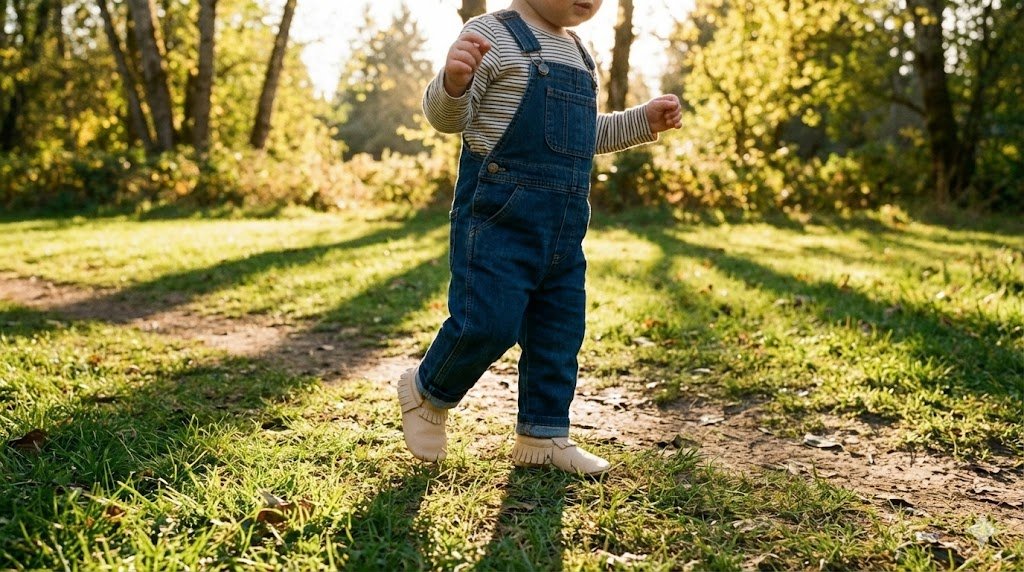
01. A Quick Perspective (If You’re in a Hurry)
Most parents wonder when to buy that first pair of walking shoes. The simple answer? As late as possible.
Indoors, bare feet are the best teachers. They help babies feel the ground, build balance, and understand where their body is in space. Shoes become necessary only when the outside world—cold pavement, hot concrete, or rough gravel—makes protection essential.
When that moment comes, look for shoes that bend like a leaf, with a wide toe box that lets little toes spread naturally.
The 3 Simple Rules I Follow
- Indoors: Barefoot or non-slip socks
- Outdoors: Shoes only for protection, not practice
- Fit test: Flexible sole + wide toe box + room to grow
02. Letting Development Lead the Way
There’s a quiet logic behind the barefoot approach I follow.
A baby’s foot isn’t just for walking—it’s a sensory organ. When babies feel different textures under their feet, they receive constant sensory feedback that helps build balance, coordination, and body awareness (proprioception).
Those chunky, stiff sneakers we often see in stores? They may look supportive, but they often act as a barrier between the brain and the ground—blocking the very information a new walker needs.
03. How to Know They’re Ready for the Outdoors
Age is just a number. Instead of counting months, I watch for these signs:
- The “10-Step” Confidence: They’re no longer wobbling—they can take consistent, independent steps.
- The Terrain Shift: Your outings involve more walking on sidewalks and less time sitting in the stroller.
- The Elements: The ground is simply too cold or too hot for bare skin.
04. Finding the Right Fit (The Gentle Way)
When protection becomes necessary, I look for shoes that mimic being barefoot.
- ✔ The “Wring” Test: If you can’t easily twist the shoe with your hands, it’s too stiff for soft cartilage.
- ✔ Room to Splay: The front should be wide and rounded. If it looks like a miniature adult shoe, it’s usually too narrow.
- ✔ The Thumb Gap: Leave about 12 mm (≈ 0.5 inch) of space at the front—roughly an adult thumb’s width. It looks like a lot, but baby feet grow incredibly fast.
Important note: If your baby has foot or gait concerns (such as persistent toe-walking), follow guidance from a pediatrician or pediatric physical therapist first.
05. A Few Honest Thoughts on Buying
You don’t need a collection.
One solid pair for outdoor play—and perhaps a soft leather pair for indoor social settings—is more than enough.
A note on second-hand shoes: I love pre-loved items, but for first walkers, be cautious. Every child wears down a sole differently, and you don’t want someone else’s walking pattern shaping your baby’s first steps.
Frequently Asked Questions
Do babies need shoes to learn to walk?
No. Most babies learn best barefoot indoors, where they can feel the ground and build balance naturally.
Are socks enough indoors?
Often, yes. Non-slip socks can be a great option on smooth floors, especially if your home is chilly.
What’s the most important feature in first walking shoes?
A flexible sole and a wide toe box—so the shoe protects without restricting natural movement.
How much space should be in the toe?
About 12 mm (≈ 0.5 inch), or roughly an adult thumb’s width—enough room to grow without making the shoe unstable.
Can first walker shoes be second-hand?
It’s better to buy new for the very first pair. Sole wear patterns can differ, and you want a clean start for early gait development.