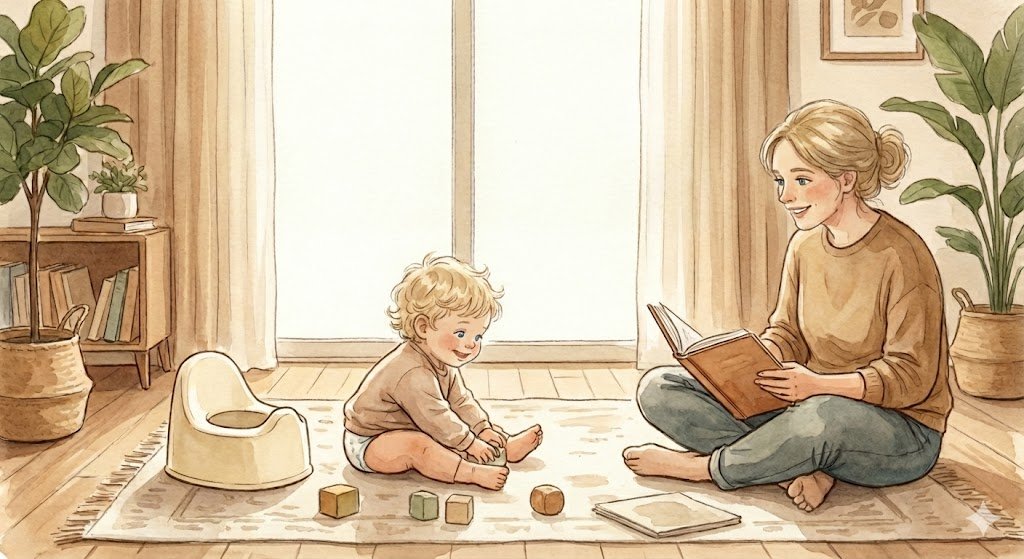
Why I Stopped Forcing the Potty—and What Finally Helped
A few weeks ago, sitting on a park bench, I went through a silent trial of parenting KPIs.
The moms around me were deep in a heated discussion about potty training. One proudly shared that her 2.5-year-old was completely out of diapers. I instinctively pulled my feet back, trying to hide the bulky pack of Pull-Ups tucked under my stroller. My son is nearly three—and he still completely ignores the cream-colored, minimalist potty I carefully chose to match our home.
I used to be drowning in that “must be done before preschool” anxiety. I tried every so-called 3-day miracle method, bought more star stickers than I care to admit, and survived countless bathroom standoffs that left us both exhausted.
That night, staring at a puddle on the floor, it finally hit me: If I believe in respecting a child’s pace, why did I turn into a drill sergeant when it came to the toilet?
1. Are We “Training” or Supporting?
We call it potty training, but the word itself can feel forceful. Most of the pressure isn’t coming from our child—it’s coming from everything around us:
- Social currency — as if earlier independence makes us better parents
- Institutional deadlines — the cold “no diapers allowed” preschool rule
- Aesthetic fatigue — we’re tired of the mess and want order back
“Do these adult-imposed deadlines actually align with a child’s biology?”
2. Waiting Isn’t Being Late—It’s Respecting Development
When I stopped watching the calendar and started learning about development, I discovered something most readiness guides skip: Toilet independence isn’t trained. It matures.
For most children, readiness is a combination of three things coming together:
- Awareness of bodily signals
- Physical control (muscle coordination and timing)
- Emotional safety — without pressure, bargaining, or judgment
Many kids reach this window somewhere between 2.5 and 3.5 years old. It’s not a rule—it’s a range. Starting when a child is ready is like sailing with the wind.
Common Readiness Signs
(No need to check all)
- Stays dry for 2+ hours
- Understands simple instructions
- Communicates discomfort
- Shows curiosity about the bathroom
- Dislikes wet clothes
3. The No-Pressure Script I Use for Accidents
I used to say “It’s okay,” but my face said otherwise. Now I rely on neutral, pressure-free language—because hidden disappointment still feels like pressure to a toddler.
Stop Saying
“Do you need to go potty?”
The answer is almost always a reflexive “No.”
Try Saying
“I see you doing the potty dance. The potty is there whenever you’re ready.”
Neutral cleanup (no shame, no drama):
“Oh, the rug is wet. Let’s clean it up together and put on dry clothes.”
4. To the Parent Facing the Preschool Ultimatum
Take a breath. No one goes to college in diapers. Potty independence isn’t a sprint—it’s a handoff of control. When we drop the outcome-driven goal and focus on emotional safety, progress often follows naturally.
Give them time. Give yourself grace. A confident child with body autonomy is worth far more than the money saved on a few extra boxes of diapers.