Toddler Emotions · Gentle & Practical
Teaching Toddlers to Name Their Feelings: 7 Simple Games
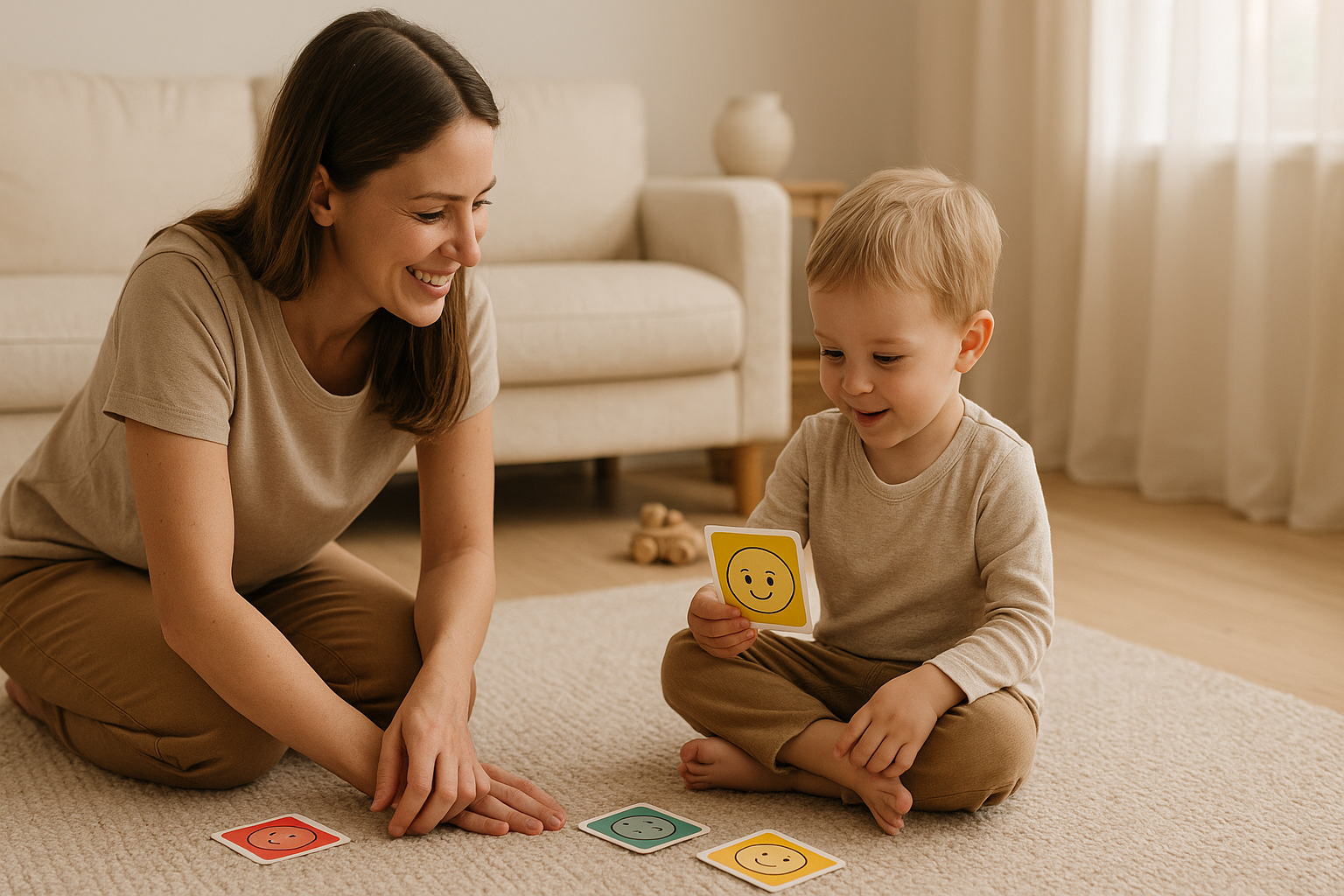
When teaching toddlers to name their feelings, we often discover that big emotions come before big words. Naming turns chaos into clarity—and play is the bridge.
Opening Story · When Tears Mean “I Can’t Say It Yet”
That morning, you were helping your child put on shoes. Suddenly, he burst into tears: “I don’t want these!” You tied the laces and reached to help switch pairs, and he cried again: “I don’t want to change!”
You felt helpless—and a little angry. But if we slow down, we might see that he isn’t being “stubborn.” He’s anxious, confused, and out of control on the inside, and he hasn’t learned the words to say so yet.
For many 3–5-year-olds, crying, yelling, and even tossing toys aren’t “bad behavior”—they’re emotional outlets. Their bodies are speaking before their words can.
Why Teaching Toddlers to Name Their Feelings Matters
For toddlers, big feelings show up fast and loud. Naming those feelings helps children feel seen and builds the brain pathways that support self-regulation later on.
Emotional Development (Ages 0–5)
| Age | Typical milestones | What to emphasize |
|---|---|---|
| 0–2 | Emotions expressed mainly through the body: crying, startle, cuddling for safety. | Co-regulation and consistent comfort. |
| 2–3 | Begins to notice preference and simple feeling words (happy/sad/mad). | Label feelings in the moment; connect cause ↔ feeling. |
| 3–5 | Understands more nuanced emotions and others’ perspectives. | Grow vocabulary (proud, worried, frustrated, nervous) and practice skills. |
Research from the Harvard Center on the Developing Child shows that emotional regulation grows hand in hand with language and social development — making ages 3–5 a golden window for emotional learning.
A 5-Step Framework to Help Toddlers Name Their Feelings
- Notice their body cues gently: “Your hands are tight — are you feeling mad?”
- Name the feeling: “It looks like anger.”
- Normalize with empathy: “It’s okay to feel mad.”
- Offer simple choices: “Hug or breathe together?”
- Review later: “What could help next time?”
Everyday Moments to Teach Toddlers About Their Feelings
- At meals: “What made you happy today?”
- Before leaving home: “Feeling nervous about new places?”
- After a play conflict: “Were you frustrated when the blocks fell?”
- During stories: “Why might she be sad?”
- At bedtime: “One good thing, one hard thing.”
Books We Love
The Color Monster (Pop-Up Edition)
A playful story that helps children recognize emotions by color and learn emotional awareness through touch and interaction. Buy the Pop-Up Edition →
In My Heart
Explores the many feelings inside a child’s heart with poetic language and warm illustrations.
A Little Spot of Emotion (series)
Each “spot” represents a different feeling—perfect for teaching empathy and regulation skills.
Related reading: How to Handle Toddler Tantrums Without Losing Your Calm
Gentle Closing · Let Their Feelings Be Seen
When a child can say, “I’m angry,” “I’m scared,” or “I’m proud,” they’re also saying, “I trust you to understand me.”
Teaching toddlers to name their feelings isn’t about making them more “well-behaved.” It’s about helping them know themselves better — and love others more deeply.
💗 Related reading: How to Handle Toddler Tantrums Without Losing Your Calm →