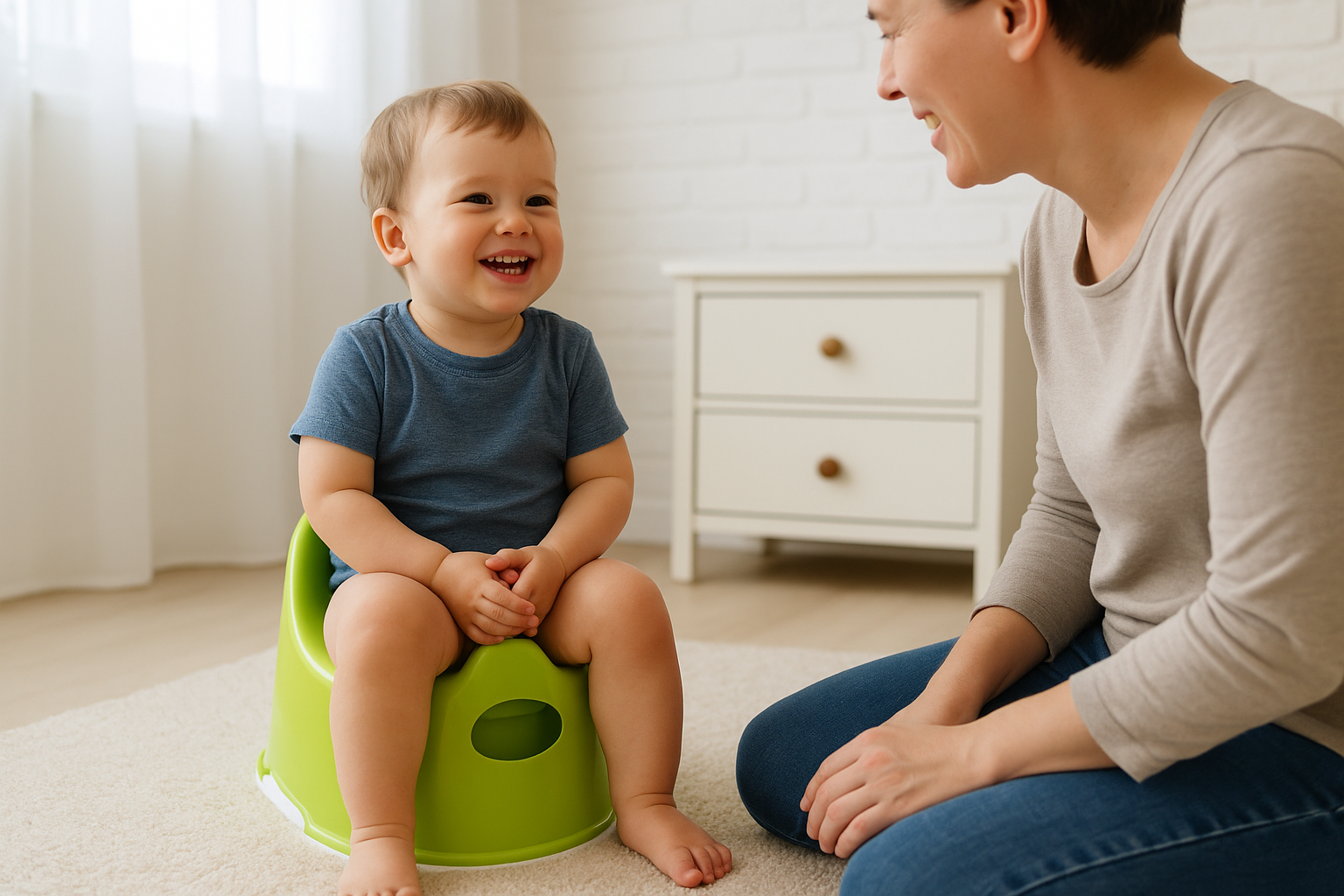
This potty training guide keeps things simple: know when to start, choose a method that fits your child, follow a clear daily routine, and handle accidents without power struggles.
Potty Training Readiness Signs
Most children are ready sometime between 18–30 months, but timing varies. Look for:
- Stays dry for 2+ hours or wakes dry from naps
- Regular bowel movements and shows awareness (hides, pauses, tells you)
- Can pull pants up/down and follow 1–2 step directions
- Shows interest in the toilet or copying adults/older siblings
- Dislikes wet/dirty diapers and asks to be changed
Both pediatric groups and national health services stress waiting for readiness and avoiding pressure—see the American Academy of Pediatrics (AAP) and the NHS potty training advice.
What You’ll Need
- Potty chair or seat reducer + step stool
- Training pants or underwear (skip diapers during awake training hours)
- Easy-off clothing (elastic waist), spare outfits, wet bag for outings
- Toilet paper/flushable wipes, hand soap, paper towels
- Rewards you approve (stickers, stamps, high-fives, little books)
- Cleaning supplies for quick, calm accident clean-ups
Choose a Method
Child-Led (Gradual)
Introduce the potty, read books, model the steps, and invite short sits after waking and meals. Great for laid-back timelines.
3-Day (Intensive)
Clear a long weekend, go pants-free at home, watch closely, prompt often, and celebrate successes. Keep expectations realistic; it often takes longer than three days to cement habits.
Hybrid (Most Families)
Start child-led, then add a focused weekend for momentum.
Potty Training: Step-by-Step Routine
- Morning: Potty sit right after waking; switch to training pants.
- Daytime: Offer sits every 45–90 minutes and before/after outings; always before naps.
- Mealtime boost: Sit 10–20 minutes after meals (gastro-colic reflex helps).
- Evening: Potty → bath → PJs → final potty → bed.
Sample Day Plan
| Time | What to do | Notes |
|---|---|---|
| 7:00 | Wake & potty sit | Dry/wet? quick praise either way |
| 8:00 | Breakfast | Offer water; sit 10–20 min after |
| 9:30 | Prompted potty sit | Read a one-minute story |
| 12:00 | Lunch | Post-meal sit |
| 13:00 | Nap prep potty sit | Use diaper only for nap if needed |
| 15:30 | After-nap potty sit | Snack + water |
| 18:00 | Dinner | Post-meal sit |
| 19:30 | Bath → potty → bed | Calm, consistent routine |
Handling Accidents (Without Power Struggles)
- Stay neutral: “Pee goes in the potty. Let’s clean and try again.”
- Guide your child to help with simple cleanup—builds ownership.
- Increase prompts or shorten intervals temporarily.
- If resistance escalates, pause for 3–7 days and restart gently.
Day vs. Night
Day training and night dryness are different skills. Keep diapers for sleep until your child wakes dry for several mornings. Lift-and-pee is optional and not required.
Poop Training & Constipation
Many children withhold stools. Keep sits relaxed after meals, use a footrest for a squat-like position, offer fiber and water, and talk to your pediatrician if poop is hard or painful. A calm routine beats pressure.
Rewards & Motivation
- Use small, immediate rewards for sits/tries, not only successes
- Privileges work well: choose the bedtime story, push the flush, pick underwear
- Fade rewards as habits stick; keep praise specific (“You listened to your body!”)
Hygiene & Independence
- Teach wipe front to back; one wipe per pass
- Hand-washing routine: wet, soap, scrub 20s, rinse, dry
- Boys: start seated; introduce standing later with target stickers
Potty Training FAQ
When should we start potty training?
When readiness signs show—often 18–30 months. Starting early without readiness usually drags out the process.
How long will it take?
Many children learn daytime skills in 1–3 weeks, with regressions during life changes. Nights often come later.
What if my child refuses?
Back off briefly, keep the potty positive, read potty books, and restart with tiny wins (sit fully clothed → underwear → bare bottom).