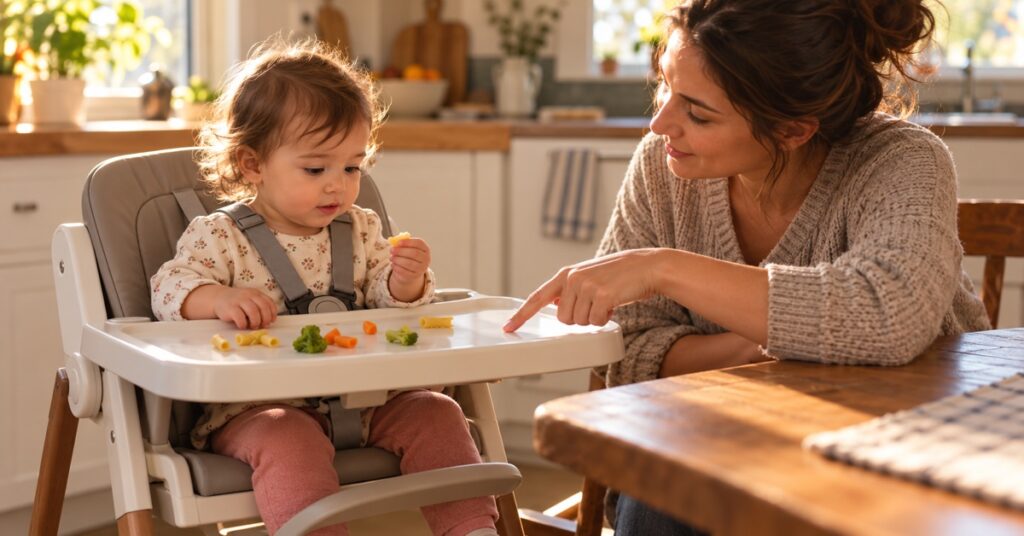
For toddlers ages 1–3, especially 12–24 months, who already eat solid foods.
If your toddler throws food but keeps eating or asking for more, keep offering food. Put a little of the meal that hasn’t been on the floor in front of them, then refill as needed. Show them where to put food they don’t want. Throwing alone doesn’t tell you they’re full. [1]
When they stop eating and show you they’re done, finish the meal calmly. If they still want food but the meal is getting too difficult to manage, take a break and help them settle before trying again.
Keep the serving dish beside you rather than putting everything on the tray at once. This leaves less food to sweep onto the floor, while there’s still more available to eat. A request for more pasta doesn’t have to wait until the vegetables are gone.
Point to a spot on the tray and say, “You can put it here.” An extra bowl is another option, or you can take a piece your child is trying to hand you. They don’t have to master this before you give them more food. [2]
Reaching for food, opening their mouth, and making sounds or gestures can all mean they want more. Offer some food and watch what happens. If they turn away, leave it; there’s no need to coax them into taking a bite. [1]
Keep your child upright in a suitable high chair or booster, secured according to its instructions, and stay beside them while they eat. Serve food in a size and texture your child can manage. [3]
If the bowl gets thrown too
Sometimes the extra bowl goes straight onto the floor too. Put it away. A spot on the tray or your open hand may be easier for your child to use. If the plate keeps getting tipped, serve the small amount directly on the clean tray.
If even those small servings are getting thrown, but your child is still taking bites, keep some food in reach and help them move unwanted pieces aside. If food keeps flying and you’re getting overwhelmed, take a break.
A laugh after “no throwing” can be particularly irritating. It doesn’t tell you much about whether your child is hungry. Keep the response brief and repeat the same simple direction: “Put it here.” Keep talking and eating together, and respond when they want food or comfort. Each dropped piece doesn’t need a discussion.
If your toddler is dropping food to a waiting dog, move the dog to another room. Turn off the screen, too, so both of you can pay attention to the meal. Changing the setting may help, though it won’t necessarily stop the throwing. [3]
Taking a break from the table
Once your toddler is crying or struggling too much to eat safely, put the dish aside and help them settle. Stay with them. If another adult can take over while you catch your breath, let them.
The pause doesn’t need a timer. When your child can sit safely with your help and wants to eat again, offer some of the clean food still available from the meal. They may still be upset; they don’t need to apologize or promise to stop throwing before they eat.
If trying again brings more crying or struggling, finish for now. Once their mouth is empty, help them away from the table and stay with them. Leave the food at the table. When they’re ready to eat later, help them sit down again.
Ending the meal
Toward the end of a meal, your child may stop taking bites, turn away, and say or gesture “all done.” Help them finish then, even if the rest of the family is still eating. They can leave the table for a safe activity with an adult watching. Wait until their mouth is empty, and leave food at the table.
Invite a small cleanup job afterward, such as putting a napkin away. If they won’t help, finish the cleanup yourself. They can still have more food even if they haven’t helped.
When they ask for food again
A child who said “all done” a moment ago may ask for food as soon as you clear the table. Offer some of the original meal again, with them safely seated, if it’s still safe to serve. If there’s none left, a simple meal or snack from what you have at home is enough; you don’t have to cook another dinner. Use food that hasn’t been on the floor.
It gets harder when they reject that food and ask for a favorite instead. Decide what you can offer, including something familiar they usually accept. For example: “We have pasta and yogurt. Would you like some?” They can have the yogurt without eating the pasta first. You don’t need to keep listing new options until one gets a yes.
Keep your usual meals and snacks, with room to adjust for what happened today. A child who barely ate may be hungry earlier than usual. Bring a snack forward or offer another chance to eat if they need it, rather than making them wait because they threw food. Toddlers may not manage enough at one meal to last until the next, and their snack needs differ. [1] [4]
If most of the throwing happens at dinner, consider its timing before adding another rule. A change in naps or childcare may mean the old mealtime no longer works. For a child who is exhausted by the time everyone sits down, eating earlier may help. Avoid waiting until they’re too hungry or tired to eat. [5]
When to call your pediatrician
If meals are regularly difficult or you’re worried about how much your child is eating, talk with their pediatrician. Follow any individual feeding plan they already have.
Throwing food alone doesn’t mean your child has a feeding disorder. Repeated coughing or choking with food or drinks, difficulty chewing, pain when eating, or concerns about growth, weight, or energy need medical advice. Your pediatrician can assess what’s happening and, if needed, refer you to a speech-language pathologist who works with children’s feeding and swallowing or to a feeding team. [6]
Tell them which meals are hardest, what happens when your child tries to eat, and what you’ve already tried. You don’t need to wait several weeks or finish a food diary before calling.
If your child cannot breathe or you suspect a life-threatening emergency, call 911 in the U.S. or your local emergency number immediately. [7]
Sources
- CDC — Signs Your Child Is Hungry or Full
- Kids Eat in Color — Toddler Throwing Food?
- CDC — Tips for Mealtime Routines
- American Academy of Pediatrics / HealthyChildren — Building Balanced Snacks to Feed to Toddlers
- NHS — Fussy eaters
- ASHA / Communication Health Support Association — Feeding and Swallowing Disorders in Children
- American Academy of Pediatrics / HealthyChildren — When Your Child Needs Emergency Medical Services