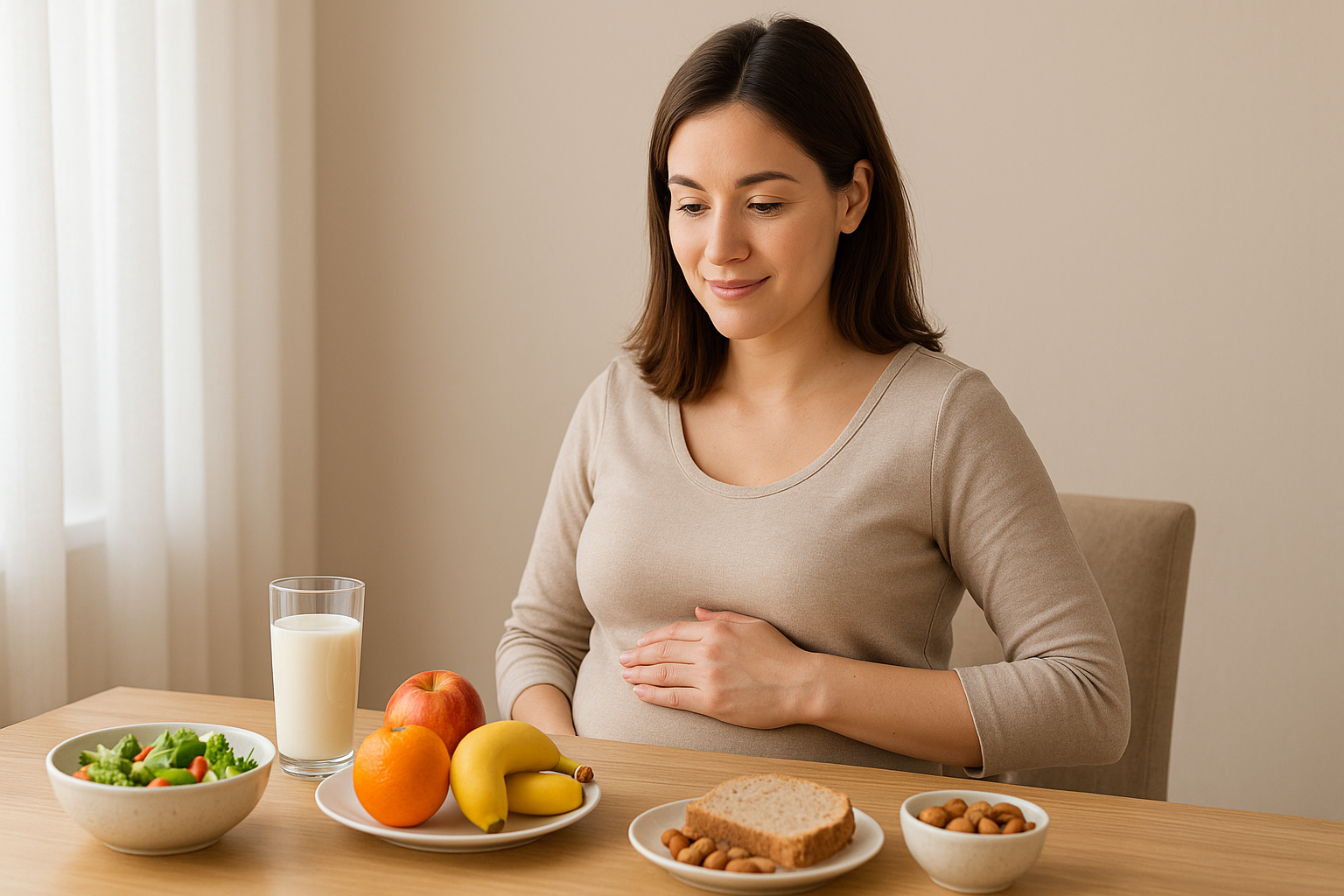
Pregnancy food safety doesn’t mean memorizing a hundred rules. Choose pasteurized, cook thoroughly, watch time and temperature, and swap risky items for safer versions.
Here’s a calm, practical checklist you can skim anytime: quick rules, what to avoid, easy safe swaps, and a short FAQ.
Why Food Safety Matters
Pregnancy increases sensitivity to some germs (like Listeria) and contaminants (like mercury). Smart choices reduce foodborne illness risk and support baby’s development. For a simple overview, see public-health pregnancy food safety advice.
The Golden Rules (Quick)
- Pasteurized only for milk, cheese, and juices (check the label).
- Cook thoroughly: poultry 74 °C/165 °F; ground meats 71 °C/160 °F; steaks/roasts 63 °C/145 °F + 3-min rest; eggs until yolks/whites are firm.
- Reheat to steaming leftovers, deli meats, hot dogs, and refrigerated smoked fish.
- Time & temp: fridge ≤4 °C/40 °F; freezer ≤−18 °C/0 °F; follow the 2-hour rule (≥32 °C/90 °F → 1 hour).
- Clean & separate: wash produce; keep raw foods apart from ready-to-eat.
High-Mercury Fish to Avoid (with Safer Choices)
Avoid: shark, swordfish, king mackerel, tilefish (Gulf of Mexico), bigeye tuna, marlin, orange roughy. Choose low-mercury fish 2–3 servings/week (1 serving ≈ 113 g/4 oz cooked): salmon, sardines, trout, herring, anchovies, pollock, cod, haddock, tilapia, catfish, shrimp. Tuna tips: canned light tuna is lower in mercury; limit albacore/white tuna to 1 serving/week; avoid bigeye. See official mercury in fish recommendations.
Raw/Undercooked Items
- Raw or undercooked seafood/meat/eggs (sushi/sashimi, rare steak, runny yolks) → cook fully; use pasteurized eggs for sauces like mayo/aioli.
- Refrigerated smoked seafood (lox, kippered, nova) → avoid unless cooked in a dish; canned/shelf-stable versions are fine.
- Deli meats & hot dogs → reheat until steaming hot to reduce Listeria risk. See practical food safety guidance.
Unpasteurized Dairy & Soft Cheeses
Avoid unpasteurized milk/cheese. Soft cheeses are fine if made with pasteurized milk (check labels): feta, brie, camembert, queso fresco, blue-veined, etc.
Pâtés, Spreads, Salads & Sprouts
- Refrigerated pâtés/meat spreads → avoid; canned/shelf-stable are okay.
- Pre-made deli salads (chicken/tuna/egg) → higher risk; make fresh at home.
- Raw sprouts (alfalfa, clover, radish, mung bean) → avoid unless cooked thoroughly.
Liver & High-Vitamin A Products
Limit/avoid liver and high-retinol supplements (including some cod liver oils). Follow your prenatal vitamin as advised. For details, see evidence-based vitamin A in pregnancy guidance.
Alcohol, Caffeine, Energy Drinks, Herbal Products
- Alcohol: best to avoid.
- Caffeine: keep to ≤ 200 mg/day (watch coffee size, tea/cola/cocoa). See clinician-reviewed caffeine guidance.
- Energy drinks: avoid (high caffeine/other stimulants).
- Herbal teas/supplements: use modestly; avoid strong/licorice-root blends or unverified products—when in doubt, ask your clinician.
Juices, Buffets & Leftovers
Choose pasteurized juices. Be cautious with buffets/foods held at room temp. Refrigerate leftovers within 2 hours (hot weather: 1 hour) and reheat to steaming before eating. Practical basics: cold storage times.
Quick “Eat This Instead” List
| Swap This | For This |
|---|---|
| Raw sushi, sashimi | Cooked sushi (shrimp/crab/eel) or fully cooked salmon rolls |
| Unpasteurized soft cheese | Same cheese made with pasteurized milk (check label) |
| Cold deli meats/hot dogs | Reheat until steaming hot before eating |
| Runny yolks, raw-egg sauces | Fully cooked eggs, or sauces made with pasteurized eggs |
| High-mercury fish | Salmon, trout, sardines, cod/pollock, tilapia, shrimp |
| Raw sprouts | Stir-fried sprouts (cooked through) |
FAQ
Can I eat sushi?
Choose cooked sushi (shrimp/crab/eel) or fully cooked rolls; avoid raw fish/shellfish unless your clinician advises otherwise.
Which cheeses are okay?
Soft cheeses are fine if pasteurized (check the label). Avoid unpasteurized versions.
How much coffee is safe?
Keep total caffeine to about ≤ 200 mg/day and consider other sources (tea/cola/cocoa). If you’re sensitive, cut lower.
I ate something risky—what now?
Don’t panic. Watch for fever, vomiting/diarrhea, severe abdominal pain. If symptoms develop—or you’re worried—contact your clinician promptly.