This hospital bag checklist tells you exactly what to pack for mom, baby, and partner – specific products, what the hospital already provides, what to skip, and lessons from a mom who has packed this bag three times.
With my daughter, I packed my hospital bag at 39 weeks while having contractions. I forgot nipple cream, packed four outfits I never wore, and did not bring a single snack. By my third baby, I had the bag ready at 35 weeks with exactly what I needed and nothing I did not. The difference was night and day. Here is the list I wish someone had given me the first time.
Hospital Bag Checklist: When to Pack
Pack your hospital bag between 35-37 weeks. Babies do not care about your timeline. My second baby came at 37 weeks and we barely made it to the hospital. Have the bag in your car or by the front door, not “mostly packed” in a closet.
Pro tip: Use two bags. Bag 1 is your labor bag (what you need during delivery). Bag 2 is your recovery bag (what you need after). Label them clearly. During labor you will not want to dig through a giant suitcase looking for lip balm.
Hospital Bag Checklist for Mom: Labor
This is Bag 1 – what goes in the delivery room with you.
Labor essentials:
- ID, insurance card, and birth plan – Required for check-in. Keep them in a clear zip pouch at the top of the bag where you or your partner can grab them immediately.
- Burt’s Bees Lip Balm – $4. Lip balm can help with dry lips. Follow your maternity team’s instructions about what you may eat or drink during labor. I went through two tubes during my 14-hour labor with my daughter.
- Hair ties and a headband – $5. You will sweat. Get your hair off your face and neck. Bring extras because they will disappear.
- Phone charger with a 10-foot cord Top Pick – $10. Hospital outlets are never near the bed. A short cord means choosing between charging and using your phone. Do not make that choice during labor.
- Your own pillow (with a colored pillowcase) – Hospital pillows are flat and wrapped in plastic. A colored case makes sure yours does not go home with the hospital laundry. This sounds small but made a huge comfort difference.
- Snacks for your support person – Trail mix or granola bars can be useful when the cafeteria is closed. For your own food and drinks, follow your maternity team’s instructions; what is appropriate can change during labor or before anesthesia.
Hospital Bag Checklist for Mom: Recovery
This is Bag 2 – what you need after delivery for 1-3 nights in the hospital.
Recovery essentials:
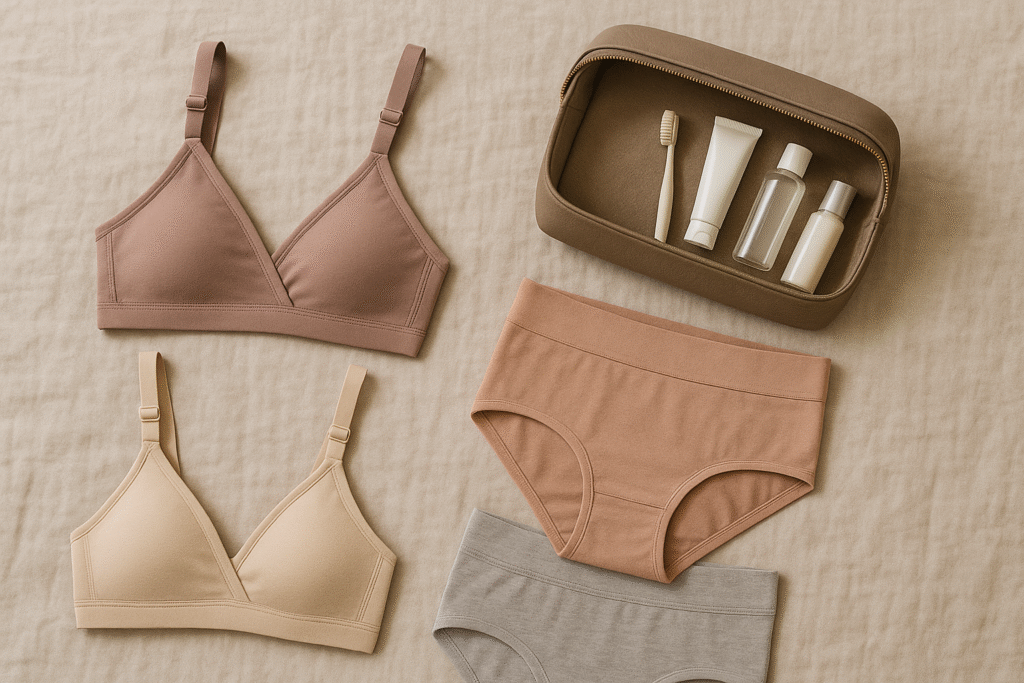
- Kindred Bravely French Terry Nursing Bra (2 pack) Top Pick – $35 each. Soft, no underwire, pull-aside crossover front for breastfeeding – no clips or clasps, just pull the fabric aside. Sleep in it, wear it all day. I brought two and alternated. This is the same bra I recommend in my postpartum recovery products list because it really is that good.
- Frida Mom Upside Down Peri Bottle – $15. The hospital gives you a basic one. The Frida angled version is significantly easier to use when you are sore and exhausted. Bring it with you and start using it immediately.
- Dermoplast Pain Relief Spray (Blue Can) – ~$10. The no-touch spray nurses use for perineal pain relief. The hospital may give you one, but having your own ensures you are covered. Buy two – one for the hospital bag, one for home. See our full review.
- Lansinoh Lanolin Nipple Cream – ~$10. Ask your maternity or lactation team whether nipple cream is appropriate for you. If feeding hurts repeatedly, or your nipples crack or bleed, ask for help with positioning and latch promptly. Cream does not replace that assessment.
- Always Discreet Maximum Underwear (small pack) – $7 (7-count). For after delivery. The hospital mesh underwear works fine but these are more comfortable. Bring a small pack for the hospital stay, full box at home.
- Colace Stool Softener – ~$8. Ask your care team whether you need a stool softener and which product to use. Do not start a medicine during your hospital stay on the basis of this packing list. Review prescription and nonprescription products with your team and follow your discharge instructions for home.
- Loose, button-down pajamas or a nursing nightgown – $20-30. Do not bring anything you love because it will get stained. Dark colors hide blood and milk stains better. Button-down tops are easier for breastfeeding and skin-to-skin than pullover shirts.
- Slip-on slippers with a hard sole – $15. Hospital floors are cold and not clean. You will walk to the bathroom constantly. Do not bring fuzzy socks – they are slippery on hospital tile.
- Travel-size toiletries – $10-15. Shampoo, body wash, deodorant, toothbrush, face wash. That first shower after delivery is one of the best showers of your life. Do not rely on the hospital soap – it dries out your skin.
- Stanley or Hydro Flask water bottle (32-40 oz) – $25-35. With a straw. You will be told to drink constantly, especially if breastfeeding. The hospital gives you a small cup with no straw. A big bottle with a straw means one-handed drinking while holding or feeding your baby.
C-section addition: If you know you are having a C-section (or want to be prepared just in case), add high-waisted underwear that sits above your incision line and a postpartum belly wrap for support when getting in and out of the hospital bed. The regular hospital gown works fine for the first day, but you will want something loose and high-waisted for going home.
Hospital Bag Checklist for Baby
Babies need very little at the hospital. The hospital provides diapers, wipes, blankets, and a hat. Here is what they do not provide.
Baby essentials:
- 2-3 newborn onesies + 1 going-home outfit – $15-25. Bring footed sleepers with zippers (not snaps – you will understand at 3 AM). Size newborn AND 0-3 months because you do not know how big your baby will be. My daughter was 6 lbs and swam in 0-3 month clothes.
- Halo SleepSack Swaddle Top Pick – $28. Use only according to the instructions for the exact size and model. For sleep, place your baby on their back on a firm, flat, separate sleep surface with no loose bedding. Stop using any swaddle that restricts the arms, chest or body as soon as your baby shows signs of trying to roll; an arms-out setting does not remove that stopping rule.
- Infant car seat (installed and tested) – $100-200. Required to leave the hospital. Install it at least 2 weeks before your due date. Most fire stations will check the installation for free. Do not wait until the day you are discharged.
- Newborn hat and mittens – $5-8. The hospital provides a hat, but bring a backup. Mittens prevent scratching – newborn fingernails are surprisingly sharp.
- Muslin receiving blanket (2 pack) Budget – $10. For the car ride home, as a light cover, for burping. Versatile and lightweight.
Do NOT bring: Bottles (even if you plan to formula feed – the hospital has them), diapers (hospital provides plenty), or a coming-home blanket set from your registry (save the pretty stuff for photos at home when you are less exhausted).
Hospital Bag Checklist for Partner
Partners forget to pack for themselves and end up uncomfortable for 24-72 hours. Here is what my husband wished he had the first time.
Partner essentials:
- Change of clothes + hoodie – Hospitals are cold. Labor can last 12+ hours. Your partner needs to be comfortable to support you. Pack at least 2 changes in case of a longer stay.
- Toiletries + phone charger – Toothbrush, deodorant, and their own long phone cord. They will be documenting every moment and their phone will die.
- Snacks and a refillable water bottle – Hospital cafeterias close at night. Vending machines are expensive and unhealthy. Pack protein bars, nuts, dried fruit, and instant coffee or tea bags.
- Cash ($20-30 in small bills) – For parking meters, vending machines, or tipping hospital staff if allowed. Many hospitals still have coin-operated machines.
- A small blanket or travel pillow – Hospital “dad chairs” are torture devices. A thin blanket and pillow make sleeping possible. My husband slept on a vinyl recliner for two nights and his back did not recover for a week.
- Entertainment for downtime – Book, tablet, earbuds. Early labor can be slow. After delivery, there is a lot of waiting between nurse visits. Earbuds so they do not disturb you while you sleep.
What the Hospital Provides (Take Everything)
Hospitals stock basics for mom and baby. The quality varies but it is all free – well, included in your bill. Take every item they offer. Here is what to expect.
| Item | Hospital provides | Still bring your own? |
|---|---|---|
| Maternity pads | Yes (heavy-duty) | No – theirs are actually good |
| Mesh underwear | Yes (ask for extras) | Optional – Always Discreet is more comfortable |
| Peri bottle | Yes (basic) | Yes – Frida Mom angled version is much better |
| Stool softener | If your care team recommends it | Follow your discharge instructions; do not buy or start it automatically |
| Newborn diapers + wipes | Yes (plenty) | No – do not pack diapers |
| Baby hat + blanket | Yes | Optional – bring one backup hat |
| Formula (if needed) | Yes (ready-to-feed) | No – they have every brand |
| Ice packs | Yes (nurse-made) | No – theirs work great |
| Breast pump | Yes (hospital-grade, loan) | No – do not bring yours yet |
Discharge tip: Before you leave, ask your nurse for extra mesh underwear, pads, peri bottles (some hospitals give you 2), and any leftover nipple cream samples. I stuffed a whole bag with supplies before discharge with my third baby. It is all included in your bill – no shame in taking it all home.
What to Skip (Do Not Pack These)
- More than 2 outfits for yourself Skip – You will live in the hospital gown or one set of pajamas. I packed 4 outfits for my daughter’s birth and wore exactly one.
- Jewelry or valuables Skip – Leave everything at home. Things get lost in hospitals.
- A big diaper bag Skip – You do not need it at the hospital. The baby stays in the room with you.
- Candles or essential oil diffusers Skip – Most hospitals do not allow open flames or diffusers. Bring a rollerball essential oil if you want aromatherapy.
- Newborn shoes Skip – Your baby is not walking. Footed sleepers are all they need.
- A full-size pillow for baby Skip – Never. Pillows in the bassinet are a suffocation risk. The hospital bassinet has its own firm mattress.
Packing Timeline
For more on what to expect after delivery, the ACOG labor and delivery preparation guide covers the medical side. The Mayo Clinic packing guide is another trusted reference.
The Bottom Line
The best hospital bag checklist is a short one. Two small bags beat one overstuffed suitcase. Pack what you will actually use, take everything the hospital offers, and do not stress about forgetting something – your partner can always make a run to the store.
The thing I wish I had known with my first: the hospital bag does not need to be perfect. Your baby does not care what you packed. They just need you.
Already home? See our Postpartum Recovery Products: 12 Items I Actually Used for everything you need for recovery at home.
Setting up the nursery? Check our Newborn Must-Haves Checklist for specific gear with prices.
Figuring out sleep? Read Baby Sleep Essentials List: 10 Products That Saved Our Nights.
Need a sleep schedule? See Baby Sleep Essentials: A Gentle Newborn Sleep Guide.
First-time parent? Our Newborn Care Guide (Week by Week) covers feeding, diapering, and when to call the doctor.
Looking for first toys? See Best Toys for 0-3 Month Babies.
This article is for informational purposes only. Every hospital has different policies – call yours in advance to confirm what they provide and any restrictions on personal items. Product prices are approximate and may vary.