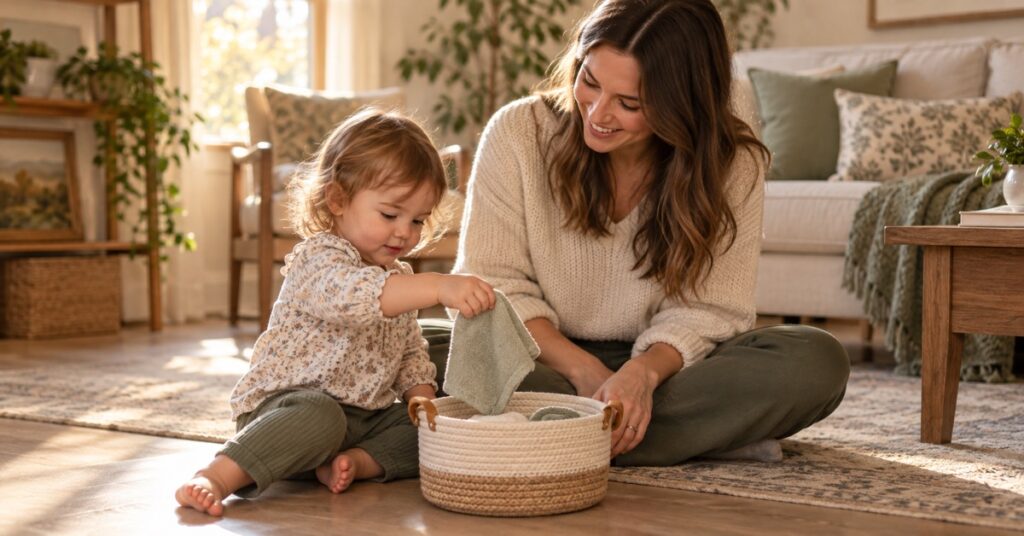
You fold a washcloth. Your toddler opens it again, pleased to have a turn. The clean pile is shrinking in the wrong direction, and you still need to get everyone dressed.
I’d give the washcloth a destination: a low basket beside your child. One cloth goes in; that part is done. You can fold the rest yourself.
That is where I’d start with toddler chores. Choose a small piece of something you already do, set it within reach, and stay beside your child. A cleaning kit, a timer, and a week of planned activities can wait. Start with the things already in your hands.
Choose the action before you choose an age
A birthday does not tell you whether a child can carry a cup steadily, tolerate a damp cloth, or follow two instructions at once. Watch what happens when you offer one familiar action. Can your child reach it without climbing? Can you keep unsafe items out of the activity? Are you free to stay and help?
The CDC lists copying household actions among its 18-month milestones. Its tips for 2-year-olds include carrying napkins or cups and putting laundry or toys into a basket. Those are examples of participation, not a requirement to finish household work independently.
For a younger toddler, watching you or passing one soft cloth may be enough. When a familiar action becomes manageable, try adding another: put the cup down, then place the napkin beside it. Give the second instruction separately if needed. This article is not a developmental checklist; bring concerns about development or lost skills to your child’s doctor.
Six places to start with what you already have
1. Put one item in a low laundry basket. The easiest place to begin is usually the task with the shortest route. Put a low, open basket next to you on a clear floor. Offer a clean washcloth or a dry T-shirt, and show where it goes; handle heavily soiled laundry yourself.
Your child does not need to sort the full load, carry a heavy basket, or go near the washing machine. If the basket keeps getting emptied, set out only one item and move the remaining pile out of reach. Handing the item to you also counts as taking part. Keep the actual laundry area, detergent, and packets inaccessible; an adult handles the appliances. The AAP’s laundry safety advice explains these boundaries.
2. Match one pair of socks. With clean laundry, sit on the floor together. Hold one sock and offer two possible matches. A familiar color or pattern gives you something concrete to point to. If the choice is frustrating, leave just the matching sock and let your child put the pair together.
Matching is optional; a younger child can pass you a sock instead. Stop when the pair is together, rather than producing another ten pairs to finish. Avoid tiny baby booties or items with loose decorations that a child might put in their mouth.
3. Place a napkin or an empty cup. Before a meal, set out one cloth napkin and an empty, unbreakable cup. Use a stable surface your child can reach with feet on the floor. Point to the place for the napkin, then offer the cup. Carrying it across the room is not necessary; placing it a few inches away is still useful.
If reaching the family table means climbing or stretching, keep that part with you. Glasses, hot food, cutlery, and unloading the dishwasher are not part of this starter job. You are inviting your child into a small part of the preparation, not sending them to fetch things from the kitchen.
4. Wipe one small spot with a damp cloth. An adult wets a clean cloth with water and wrings it out so it does not drip. Choose a small mark on a low, stable table, stay beside your child, and demonstrate a wipe. Let your child have a turn. The whole table does not need to be spotless.
Take over if the cloth is being chewed, water spreads onto the floor, or your child wants to climb for a different surface. This is not a way to disinfect anything: raw-food residue, bathroom messes, and pet waste stay with an adult. Keep cleaning products secured and never repurpose an old cleaner bottle for a toddler activity. For the wider room, see the AAP’s kitchen safety guidance.
5. Return two large toys to a basket. Place an open basket nearby, check that the toys are intact and age-appropriate, and point to the two you mean. A request such as “These two blocks go in here” gives you something to demonstrate. Stay with that small selection rather than adding the rest of the room once it is done.
An adult first clears small pieces, broken toys, and any loose batteries or magnets out of the area. Keep the basket open and low; your child should not have to reach into a heavy-lidded chest or climb onto furniture.
6. Put a pair of shoes together. On a clear floor away from stairs, an exit, or a swinging door, leave space for the shoes your child has just taken off. Start with placing one beside the other. No need to match left and right or make the pair face a certain way. If bending and reaching while standing is difficult, sit together and keep the shoes close.
Skip this job when the shoes are muddy or need cleaning. It should not require opening an exterior door, carrying footwear on stairs, or reaching onto a shoe rack. You handle any storage furniture and the wider entryway.
On a busy day, the basket or napkin is plenty. Choose the one that needs the least preparation in your home, rather than working through all six.
When helping turns into more work
What if helping becomes dumping? First, make the amount smaller. One cloth is easier to return to a basket than a whole load. You can say, “This one goes here,” and show it once. If your child is enjoying emptying the basket and you need the laundry finished, put it away and finish yourself. You can offer another turn when you have time. You do not have to convert every household moment into a lesson.
Refusal may simply mean you need to move on. Offer a small choice once: the napkin or the cup. If neither works, take care of the immediate task. A hungry child waiting for lunch does not need a longer chore negotiation. When you try again, begin with an action they already know and a moment when you are less rushed.
You can also correct work when it matters. A towel folded unevenly may be usable; a wet patch on the floor needs you to step in. Try, “I’ll dry the floor so we can walk safely.” There is no need to sneak back later to fix a safety or hygiene problem. Adults remain responsible for the finished result.
I would leave pet feeding out of these first chores. Pet food can carry germs, and handling it requires careful handwashing. Let an adult manage the food and bowls while your toddler joins in somewhere else. The same goes for detergent, cleaning chemicals, hot surfaces, sharp tools, and machine controls: a small helping role does not make these child jobs.
A thank-you is a good place to finish
When a task is done, name what happened: “You put the napkin by the cup. Thank you.” Your child can connect those words with an action they just completed. A chart is optional. CDC guidance for toddlers and preschoolers includes simple rewards and charts as possible tools alongside specific, positive feedback.
If you use one, choose a single clear action and let an adult mark it when it happens. Do not make the target “be helpful all day.” If the chart adds reminders and arguments, simplify the task before buying a different chart. You can keep the thanks and skip the chart altogether.
For today, put one clean washcloth beside a low basket and invite your child to put it in. Stay nearby, help if needed, and accept that one finished action. The rest of the laundry can still be yours.