Beyond the Spreadsheet: A Gentle Guide to Financial Literacy
We’ve all been there.
You’re in the checkout line, exhausted, and your child suddenly spots a brightly colored, suspiciously flimsy plastic car. They look up with that face—you know the one—and ask: “Mom, can I please have this?”
In that split second, it’s never really about the five dollars. It’s the anxiety. You’re wondering: If I say yes, am I spoiling them? If I say no, am I crushing their spirit? Honestly, we aren’t afraid of giving them a few bucks; we’re afraid of missing the chance to teach them how the world works.
Here’s a thought: What if we stop seeing allowance as a chore for us, and start seeing it as a “low-stakes practice ground”? Better they learn the hard lessons now over a pack of stickers than at twenty over a credit card bill.
Three Old Jars and the “Play Money” Hack
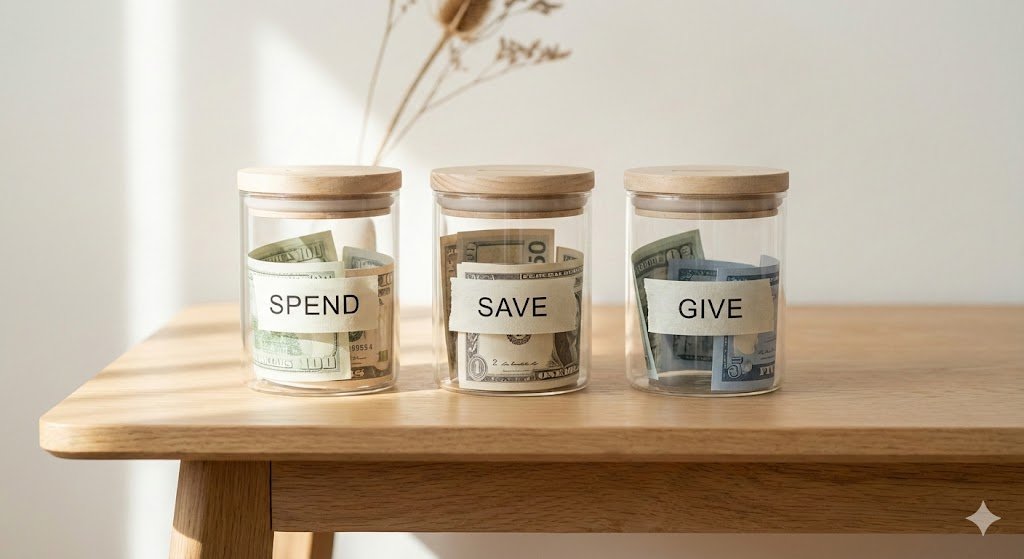
For kids under six, numbers on a screen mean nothing. They need “stuff” they can hold. You don’t need fancy kits; three old jam jars with labels will do just fine: Spend, Save, and Give.
Since almost none of us carry cash anymore, go buy a set of realistic play money. On “Pay Day,” give them that tactile toy cash. When you’re at the store, have them “pay” you with their play money, and then you swipe your card. That physical hand-off is huge—it helps them realize that the digital numbers in Mom’s phone represent physical bills you worked for.
How Much? (There’s No Perfect Answer)
Don’t stress about “industry standards.” Think of this table as a starting point for conversation, not a benchmark to measure your family against.
| Age | Suggested (Weekly) | The Goal |
|---|---|---|
| 4–6 years | $2 – $5 | Watching money “disappear” |
| 7–10 years | $1 per year of age | Building the “patience muscle” |
| 11+ years | $15 – $25+ | Managing personal lifestyle costs |
A quick reminder: Allowance doesn’t have to be “extra” money. I usually take the budget I was already going to spend on their snacks and treats and just hand it over to them. Pick a consistent “Pay Day” to give the moment a sense of respect and ritual.
Don’t Turn Your Home into a Marketplace
If there’s one thing I’ve learned, it’s this: Don’t pay your kids to just exist in the family.
- Our Home (Unpaid): Making the bed, clearing the table, tidying toys. We do these because we belong to each other.
- Extra Help (Paid): Washing the car or deep-cleaning the pantry. These create extra value and earn rewards.
“There will still be days they refuse to help. That doesn’t mean the system failed; it just means they’re human. We are building a foundation, not a robot.”
Research suggests that focusing on intrinsic motivation is key to long-term habits, rather than relying solely on monetary rewards for basic responsibilities.
When They Make a “Bad” Purchase…
This is the hardest part for us: Learning to keep our mouths shut.
If the money gets lost? Comfort them, but don’t replace it. If they buy a toy that breaks ten minutes later? Resist the urge to say, “I told you so.” Let them feel the sting of regret. That “ouch” feeling in their chest is actually the best financial lesson they’ll ever get.