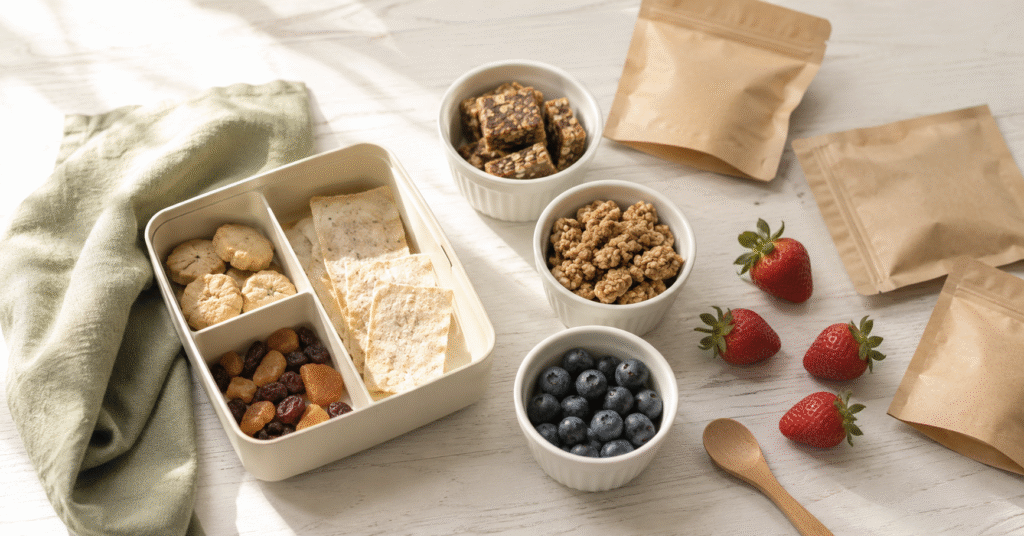
Best Allergy-Friendly Snacks for Toddlers (That Actually Pass the Daycare Test)
Packing snacks for a toddler with food allergies is one of those parenting tasks that sounds simple and isn’t. The label says “nut-free,” but the small print says “made in a facility that also processes peanuts.” The brand is famous for being allergy-safe, but the gummy form is a choking risk you didn’t think about. The daycare bans the top 9 allergens, but half the snacks marketed as “allergy-friendly” only avoid one or two.
I’ve been packing two small lunchboxes for the past year and a half (my youngest is 19 months, my older son just turned 3), and the snack aisle still surprises me. (If you’re also tracking what goes into those snacks nutritionally, my high-protein toddler snack guide is a good companion read.) So this isn’t a list of every cute pouch on Amazon. It’s five products that clear three filters: genuine allergen safety (with the facility tier spelled out, because that matters more than most blogs let on), texture appropriate for toddler chewing, and a track record of parents coming back to buy them again.
1. There are two levels of “allergen-free.” Level 1 means the ingredient list doesn’t contain the allergen. Level 2 means the entire facility is dedicated: no shared lines, no traces, no risk of cross-contact. For mild sensitivities, Level 1 is fine. For diagnosed allergies (especially peanut or tree nut), Level 2 is the only one that’s safe. Every product below is labeled.
2. Choking risk is separate from allergens. The American Academy of Pediatrics recommends avoiding whole grapes, popcorn, hard candy, nuts, and large chunks of gummy or marshmallow for children under 4. Some of the “best” allergy-friendly snacks on the market are still choking hazards for the toddler crowd. I’ve flagged each one.
How I narrowed it down
I started with the brands most allergy-mom blogs cite: MadeGood, HomeFree, Partake, Bobo’s, That’s it., gimMe, Skout Organic, Annie’s. Then I cut anything that fell into one of these buckets:
- Cross-contact risk that contradicts the marketing. Bobo’s Oat Bites are wonderful, but the label says “may contain traces of tree nuts and peanuts,” which isn’t safe for a family with a real peanut allergy, no matter how clean the ingredient list looks.
- Texture that fails the toddler test. Anything pretzel-shaped, popcorn-style, or with whole-seed crunch. Beautiful for school-age kids; wrong for an 18-month-old.
- Hidden top-9 ingredients. Edamame snacks are technically nut-free and gluten-free but contain soy, which is a top-9 allergen. Read past the front of the bag.
- Amazon listings that don’t match the brand’s reputation. Partake Foods makes genuinely excellent allergen-free cookies, but on Amazon their ratings sit in the 3.8–4.0 range with low review counts, likely because their real distribution is Whole Foods and direct-to-consumer. If you have a Whole Foods nearby, grab them there; I didn’t include them as an Amazon pick because the Amazon experience isn’t representative.
What’s left is five products that hold up on the things you can actually verify: ingredient lists, facility certifications, texture, and a durable review history.
The 5 Picks
1. HomeFree Mini Cookies Variety Pack Level 2 — Top 14 Free 24m+
Why it earns the top slot: HomeFree’s facility is SQF Level 3 certified, which is the food safety standard most daycares and school nurses actually recognize when they ask “where is this made?” The whole bakery is dedicated nut-free and gluten-free, free from the top 14 allergens with no exposure during production. For a family juggling multiple sensitivities (which according to FARE, applies to about 40% of children with food allergies), that’s not a marketing flourish. It’s the difference between confidently passing a daycare snack policy and rereading every label twice. They’re also a Certified B Corp, which won’t change whether your toddler will eat them but does tell you something about the operating discipline.
The texture is a crisp, thin wafer-style cookie. That’s why these land at 24 months rather than 18: the firmer bite needs a slightly older toddler. The variety pack earns its place because flavor preference at this age is wildly unpredictable; buying a single flavor in bulk is how you end up with a cabinet full of the one flavor your kid decided they hate.
Whole grains are the first ingredient, not a sugar of some kind, which puts them in a different category from most “school-safe” cookies that are basically frosting in cookie form.
2. MadeGood Chocolate Chip Granola Bites Level 2 — Top 8 Free 3+ ONLY
Why it’s a strong pick for older toddlers: The bite-sized clusters are individually pouched, made in a dedicated nut-free facility, organic, and free from the top 8 allergens. They also work in six different vegetable extracts (broccoli, spinach, carrot, beet, tomato, shiitake), which is the kind of thing to be skeptical of since most “hidden veggie” snacks are 0.1% spinach, but at least it’s not pretending to be something else.
For a child past the choking-risk threshold, these are a real lunchbox upgrade: the kind of snack that works for a weekend hike, a daycare-approved party, or a grandparent visit, rather than a daily staple.
3. That’s it. Mini Fruit Bars Variety Level 1+ — Top 12 Free 18m+
Why it’s the easiest pick for the youngest toddlers: Two or three ingredients. Always. The ingredient list on a strawberry bar reads: apples, strawberries. That’s it. (Which, yes, is where the brand name comes from.) Made in a facility free from the top 12 allergens, so it bridges the gap between Level 1 ingredient cleanliness and Level 2 facility safety.
The texture is soft fruit puree pressed into a flexible bar, closer to a fruit leather than a chewy granola bar, which is exactly right for emerging molars. 60 calories per bar, so the portion question takes care of itself. The 35-pack with five flavors is the kind of thing that lives in a diaper bag; cherry and fig tend to be the sleeper favorites.
One honest note: the natural sugar from concentrated fruit is real sugar. It’s still healthier than candy, but the marketing positioning of “no added sugar” doesn’t mean “low sugar.” If your kid is sensitive to sugar swings before a nap, time accordingly.
4. gimMe Organic Roasted Seaweed Snacks (Sea Salt) Level 1 — Top 8 Free 18m+
Why every allergen-free pantry needs a savory option: Look at any other “best allergy snacks for kids” list and count how many are cookies, bars, and fruit gummies. Most American toddlers eat sweet snacks all day and then their parents wonder why dinner is a fight. gimMe’s roasted seaweed sheets are crispy, salty, dissolve in the mouth quickly enough to be safe at 18 months, and have one of the largest review bases of any seaweed snack on the market, which is about the clearest “people buy this again” signal a category like this gives you.
Each individual pack is tiny, about a third of a regular pack of gum, so portion control is built in. USDA Organic, naturally gluten-free, no top-9 ingredients. Two caveats worth knowing: sodium is real (toddlers don’t need a lot), so one pack per snack-time, not three. And gimMe makes flavored varieties (sesame, teriyaki, wasabi) that contain different allergens; make sure you’re buying the sea salt SKU if you’re sensitive to sesame.
5. Annie’s Organic Bunny Fruit Snacks Variety Pack Level 1 — Ingredient-Free Only 2+ with supervision
Why it earned a slot anyway: Because most allergy-friendly snack lists pretend the only options are premium specialty brands ordered online. Annie’s is at every Target, Walmart, Kroger, and Whole Foods, costs a fraction of the specialty picks, and is genuinely USDA Organic with no high-fructose corn syrup or artificial colors. For a family with mild sensitivities (not anaphylactic allergies), a child whose daycare just bans peanuts, or a grandparent stocking up before a visit, this is the realistic, affordable pick.
It’s the kind of thing worth keeping in the car for emergency snack moments. Not the everyday rotation, but the one you’re glad exists.
Quick reference: which snack at which age
Because half the comments on these posts are “but is X safe for my 20-month-old?”, here’s the actual answer:
- 18–24 months: That’s it. Mini Fruit Bars and gimMe Seaweed are the easiest two to start with at this age, both soft or quick-dissolving.
- 2–3 years: Add HomeFree Mini Cookies and Annie’s Bunny Fruit Snacks (with supervision).
- 3 years and up: Everything on the list, including MadeGood Granola Bites.
How to read an allergy label without losing your mind
Current FDA labeling requires the top 9 allergens (milk, egg, fish, shellfish, tree nuts, peanut, wheat, soy, and sesame, which was added in 2023) to be declared on the package. That covers what’s in the food. What it doesn’t cover is what the food touched on the way to the bag. That’s the “may contain” or “manufactured in a facility with” line, which is voluntary, inconsistent, and the source of most allergen confusion.
If your child has a diagnosed allergy, the AAP’s food allergy guidance is the place to start (and if you’re still in the earlier stage of introducing allergens, my guide to baby’s first foods walks through that process), and your allergist’s actual advice trumps anything you read online, including this. For everything else, the rough hierarchy I use:
- Read the ingredient list first. If a top-9 allergen is in there, stop.
- Then read the “contains” statement. Required by FDA. Plain English summary of allergens.
- Then look for “may contain” / “produced in a facility.” Voluntary, but if it’s there, take it seriously.
- Then look for the dedicated facility claim. “Made in a peanut-free facility” / “dedicated allergen-free bakery” / SQF certification. This is the Level 2 marker.
For toddler snacks specifically, the FDA’s food allergen page walks through what every label term legally means.
Common questions
What can I send to daycare if they ban the top 9? Any of the Level 2 options on this list pass that test: HomeFree, MadeGood (if your child is 3+), and That’s it. Print or screenshot the brand’s allergen statement and tape it to the front of the snack; daycare teachers will thank you.
What about parties where I can’t control the snacks? Bring a small container of MadeGood Granola Bites (3+) or HomeFree minis. Most kids without allergies are happy to take one, and your child doesn’t have to feel like the only one eating a different snack.
Aren’t these just expensive cookies? Some of them, honestly, yes. The premium isn’t for the cookie; it’s for the dedicated facility, the third-party testing, and the supply chain that makes the “free from” claim actually true. If your child doesn’t have an allergy, regular grocery store snacks are fine. If they do, the math changes.
Are any of these soy-free? HomeFree is explicitly soy-free at the facility level. That’s it. and gimMe are also soy-free. MadeGood and Annie’s: check each variant’s label, because sunflower oil is the default but sometimes a flavor uses something else.