Blog

  • Building a Growth Mindset: What to Say When Your Child is Frustrated

    Building a Growth Mindset: What to Say When Your Child is Frustrated | Little Loving Life

    Building a Growth Mindset: What to Say When Your Child is Frustrated

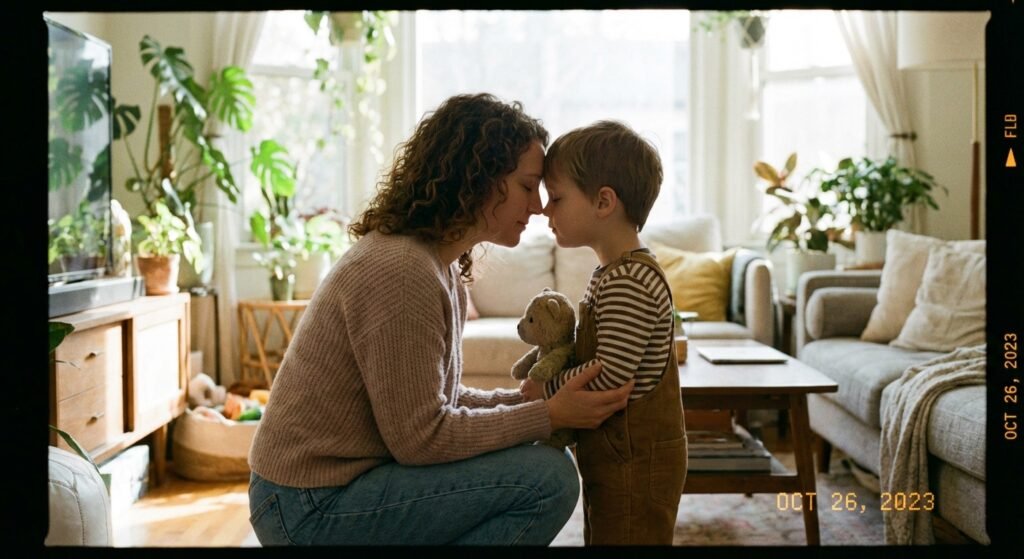
    A child and parent working through frustration with blocks

    Often, a child’s meltdown isn’t because a task is too difficult—it’s because reality didn’t meet their expectations. According to researchers at the Harvard Center on the Developing Child, learning to manage these moments of frustration is a critical part of developing executive function and resilience.

    Maybe the blocks tumbled just as they reached the top. Maybe a puzzle piece is missing, or their shoes simply feel “wrong.” In our adult eyes, these are minor inconveniences. But in a child’s small world, that moment feels like a final ending.

    Growth mindset isn’t about avoiding failure. It’s about learning that when things go wrong, the story doesn’t have to stop.

    Our instinct is often to say, “It’s okay,” or “Don’t worry, let’s start over.” While well-intentioned, these phrases can act like a “skip button,” pulling the child away from the problem before they’ve had a chance to process it. As pioneered by Dr. Carol Dweck, the key is to shift the focus from the outcome to the process of learning.

    1. Just Observe: Acknowledge the Moment

    Instead of rushing to fix the situation, simply state what happened. This validates their experience without judgment.

    Try saying: “Oh, it tumbled down.” or “It didn’t go the way you planned.”

    2. Isolate the Difficulty

    Help them see that the problem is a specific obstacle, not a personal failure. This keeps the frustration manageable and supports frustration tolerance.

    Try saying: “That part is a bit tricky, isn’t it?”

    3. Hold Space for the Frustration

    Normalize the feeling of being upset. When feelings are validated, children find the emotional energy to try again.

    Try saying: “It’s really frustrating when it doesn’t work. I’d feel that way too.”

    4. Offer a Choice (Return Autonomy)

    Instead of taking over, give the power back to them. Choices help move them from a reactive state to a proactive one.

    Try saying: “Would you like to take a break for a minute, or try a different way right now?”

    5. Focus on the Pivot

    Praise the strategy, not just the effort. This teaches them that progress comes from adjusting their approach.

    Try saying: “I noticed how you moved that piece to the side to see it better. That was a great adjustment.”
  • 7 Non-Toxic, Easy-to-Clean Art Supplies for 2-Year-Olds

    7 Non-Toxic, Easy-to-Clean Art Supplies for 2-Year-Olds

    Little Loving Life • Toddler Life

    7 Non-Toxic, Easy-to-Clean Art Supplies for 2-Year-Olds

    The simple, low-mess setup that actually works (and doesn’t turn into a wall-cleaning project).

    A toddler joyfully exploring non-toxic art supplies at a clean wooden table

    I once bought a big box of 64 crayons.

    At the time, it felt like the right thing to do. More colors, more options. That had to be better, right?

    But the first time I put them in front of my two-year-old, it became obvious pretty quickly that something was off.

    He wasn’t interested in drawing at all. What fascinated him was dumping every single crayon onto the floor—one by one—then putting them back into the box, only to dump them out again.

    “Maybe art just isn’t that important at this age.”

    It took a while to realize that art wasn’t the problem. The tools were.

    When parents talk about “art time” for toddlers, the worries tend to sound familiar: Will they draw on the walls? Will everything get ruined?

    But when you actually watch a two-year-old, you see something different. They’re not trying to make a picture. According to developmental guidelines from the CDC , they are focused on mastering hand and finger skills. They are often exploring those 2-Year-Old Cognitive Milestones (No-Stress Support) through scribbling and building.

    At this age, drawing is less about creativity and more about hands, movement, and sensory feedback.

    Over time, our criteria for art supplies became very simple:

    1. Safety: If this goes in my child’s mouth, will I panic? (Always look for the AP Non-Toxic Seal from ACMI).
    2. Efficiency: Will cleanup take five minutes or forty-five?
    3. Control: Can my child actually control this, or will it turn into chaos?

    These are the seven options that consistently caused the least trouble in our home.

    1) Beeswax Crayons (Short and Chunky)

    I stopped buying long, skinny crayons early on. For a two-year-old, they snap easily and often turn into tools for banging on furniture instead of drawing. Short, chunky beeswax crayons are much easier for small hands to manage and are virtually unbreakable.

    Pro Tip: Offer just 3-4 colors at a time.

    2) Tempera Paint Sticks

    These are my favorite “low-stress” tools. There’s no water cup, no dripping paint, and no mixing. They glide like paint but dry almost instantly. Perfect for when you aren’t in the mood for a full cleanup operation.

    3) Dot Markers

    Dot markers work especially well because they’re hard to mess up. A light press creates bold color—no line control required. That immediate success makes kids less likely to throw the tool aside in frustration.

    4) Water Painting Books

    For the days when you don’t have the energy to supervise closely. The color appears with water and disappears as it dries. No stains, no residue. Just calm, hands-on play.

    5) Color-Reveal Markers (Paper-Only)

    If your biggest fear is walls or furniture, these are worth every penny. They only show color on special paper. Anywhere else, nothing happens. It gives toddlers freedom without putting your home at risk.

    6) Chunky Triangular Colored Pencils

    These offer more control than crayons but are sturdier than regular pencils. The triangular shape helps develop the proper grip early on and prevents them from rolling off the table.

    7) Reusable Stickers & Dot Stickers

    Peeling and placing stickers still works Fine Motor Activities for Toddlers (Low Prep) without any mess at all. I usually peel the edges of the sticker sheet first to reduce frustration for little fingers.

    The setup that made this calmer for us

    What made art time calmer wasn’t constant correcting; it was simplifying the environment. We keep the table the same, put a mat down first, and limit the tools.

    In our home, art time usually lasts about 8 to 12 minutes. If marks go off the mat, we stop and clean up together—no lectures, just a simple routine.

    Quick FAQ

    When can toddlers start using crayons?

    Many are ready around 15–18 months. Age two is when scribbling usually becomes more intentional, though supervision is still key.

    What if my child tries to eat the crayons?

    This is common. Stick to beeswax or veggie-based options. Sometimes offering a snack right before art time helps if it’s sensory seeking.

    How do I remove marks from walls?

    Warm soapy water first. Experts like those at the Mayo Clinic suggest a gentle cleaning approach. For more tips on keeping your space safe, check out our Baby Home Safety Guide .

    Looking back, art at age two doesn’t need to be elaborate. If it’s safe, easy to clean, and your child is willing to engage, that’s a win. A lot of important skills grow quietly in these low-pressure moments.

  • Why Your Child Can’t Stop Jumping — and What Their Body Is Really Asking For

    Why Your Child Can’t Stop Jumping — Little Loving Life

    Why Your Child Can’t Stop Jumping — and What Their Body Is Really Asking For

    Understanding proprioceptive input and “heavy work” at home (without turning your living room into chaos).

    A child jumping and playing

    Many parents recognize this moment.

    It’s late afternoon. Dinner isn’t ready. The floor was just cleaned. And suddenly your child becomes unusually active—jumping on the couch, crashing into pillows, throwing their body down again and again, as if they simply can’t stop.

    It’s easy to label this as too much energy or misbehavior. But from a child-development and sensory perspective, this kind of movement often points to something else: the body trying to feel more stable.

    Why does this happen so often in the evening?

    For many children, late afternoon and evening are the hardest parts of the day. After hours of stimulation—school routines, social expectations, noise, transitions—the body is tired.

    And when fatigue sets in, sensory systems can work less efficiently, especially the ones responsible for body awareness. At that point, children don’t “decide” to act out. They use movement to recalibrate themselves.

    Proprioception: How children feel where their body is

    Proprioception is a sensory system that comes from the muscles, joints, and bones. It constantly tells the brain:

    • Where the body is in space
    • How much force is being used
    • Whether the body feels stable and controlled

    When proprioceptive input is clear and consistent, children move without thinking about it. When it becomes unclear—often due to fatigue or sensory overload—children instinctively seek stronger physical input.

    Why jumping and crashing seem to help

    When a child jumps and lands, or presses their body into cushions, the joints and muscles receive deep pressure input.

    In occupational therapy, these kinds of activities are often described as “heavy work”. They’re commonly used to support proprioceptive processing and overall regulation.

    For many children, this type of input can help:

    • Clarify body boundaries
    • Increase the sense of “I am here”
    • Bring the nervous system back toward balance

    Important: Jumping does not calm every child, every time.

    A Critical Distinction: Regulating vs. Overstimulated

    Parents can often tell the difference by observing what happens after the movement.

    Signs it is Regulating

    • Your child slows down afterward
    • Movements look more organized
    • Transitions (dinner, bath) become easier

    Signs it is Overstimulating

    • Jumping escalates instead of settles
    • Vocalizations get louder
    • It becomes harder to stop

    If you’re seeing overstimulation, continuing the activity usually adds stress rather than relieving it.

    Why supporting proprioception matters

    The answer goes beyond the moment. There are three key developmental benefits:

    1) Clearer body boundaries

    Proprioceptive input helps children better judge distance and pressure. This is why some children get labeled as “rough” or “clumsy” when what they need is clearer body feedback.

    2) A foundation for emotional regulation

    For young children, emotional control starts with physical stability. When the body feels grounded, the brain becomes more available for listening and problem-solving. Regulation comes before reasoning.

    3) Better conditions for focus

    Attention isn’t about forcing stillness—it’s about reducing internal sensory “noise.” Regular input can reduce the need for physical “resetting,” making it easier to sit for a story.

    How to support these needs at home

    Three principles matter most: short duration, clear boundaries, and observing the response.

    ✔ Create a purposeful “crash zone”

    Use pillows or cushions in one designated area. Instead of unlimited jumping, offer structure: “Three jumps—then lie down and squeeze.” The compression at the end is often more regulating than the jumping.

    ✔ Use resistance instead of height

    • Wall pushes: Push against a wall with all your strength.
    • Heavy loads: Pushing a loaded laundry basket.
    • Slow frog jumps: Focus on the landing.

    These provide strong joint input without escalating speed and noise as easily.

    ✔ Slow it down if overstimulated

    Switch to steadier, more predictable pressure:

    • A gentle blanket wrap (“The Burrito”)
    • Deep pressure hugs (only if welcomed)
    • Sitting wall pushes while taking a sip of water

    A Realistic Safety Note

    More input is not always better. Frequency and predictability often matter more than intensity. If your child frequently crashes into objects, shows unusual pain responses, or seeks unsafe body input, check in with your pediatrician or an occupational therapist.

    Final Thoughts

    Children who jump and crash aren’t trying to create chaos. They’re often trying to feel stable inside their own body. With the right kind of support, that need can be met in calmer, safer ways.

    Want a simple evening reset?

    Try: 3 wall pushes + a pillow “squeeze sandwich” + water sip. Keep it short, then move on.

  • Spinning: The Quiet Science of Why Toddlers Whirl

    Spinning: The Quiet Science of Why Toddlers Whirl

    Spinning: The Quiet Science of Why Toddlers Whirl

    A Familiar Scene

    A toddler spinning with joy
    Movement is a foundational part of development.

    I used to wonder why my toddler could spin for minutes until the world blurred—only to collapse in laughter and immediately want to do it all over again.

    As adults, we see dizziness. But for young children, spinning is often a meaningful, brain-building sensory experience.

    What’s Really Happening: Vestibular Input

    In developmental science, this is called vestibular input. The vestibular system—located in the inner ear—helps the brain understand movement, balance, and spatial orientation.

    It’s the first sensory system to develop in the womb, and between ages 1 and 6, it plays a foundational role in how a child organizes their body, attention, and emotions. Experts at Understood.org note that sensory-seeking behaviors like spinning are often a child’s way of finding their balance in the world.

    For many toddlers, spinning isn’t random. It’s their nervous system actively seeking information.

    Simple, Intentional Movements at Home

    In our home, we lean toward sensory experiences that don’t require special equipment. The most effective tools are often already in your living room.

    1. The Swivel Chair (Office Chair)

    A slow, intentional spin is a classic for a reason. Try five slow rotations in one direction, then pause, then five in the other direction. This keeps the nervous system balanced, rather than overstimulated.

    2. The Floor Roll (Log Roll)

    Rolling slowly across a rug offers a different plane of movement. It’s grounding, calming, and supportive of core stability.

    3. The “Bear Hug” (Deep Pressure Reset)

    If your child seems overly “high” or dysregulated after spinning, a firm, full-body hug can act as a natural reset button. Deep pressure helps the nervous system re-organize and settle.

    How Much Is Too Much? A Gentle Boundary

    Every child’s sensory threshold is different—and it can change from day to day.

    Spinning is usually okay when:

    • The child can stop on their own
    • They recover quickly
    • They remain playful and regulated afterward

    It’s a sign to pause when:

    • It leads to frequent falls or injuries
    • Nausea, paleness, or distress occurs
    • Dysregulation lasts a long time afterward
    • It interferes with daily life or sleep

    This isn’t about restriction—it’s about supporting regulation, not overwhelm.

    A Note on Observation

    The goal isn’t to make children spin. It’s to offer opportunities—and observe how their body responds.

    Most of the time, a child’s nervous system is incredibly wise. And when it needs help, gentle structure and co-regulation make all the difference.

    © 2026 Little Loving Life. All rights reserved.
  • Montessori Letters & Numbers at Home: Why We Skip ABC Memorization

    Montessori Letters & Numbers at Home: Why We Skip ABC Memorization

    Montessori at Home • Early Literacy

    Montessori Letters & Numbers at Home: Why We Skip ABC Memorization

    Building deep understanding through sounds and quantity, one tiny step at a time.

    Ages: 2.5–4.5 Time: 5 mins/day Focus: Meaning over Rote
    Montessori learning materials with letters and numbers on a wooden surface
    Quick Navigation

    Why “Knowing the Song” Isn’t the Same as Recognizing Symbols

    Reciting ABCs or counting high is a wonderful rhythmic achievement. But often, it’s just a script. What helps a child transition to reading and math is connecting meaning to symbols.

    Real-life note: If your child already knows the song, you haven’t “messed up.” You’ve just built the first floor; now we’re adding the foundation underneath.

    Letters: Start with Sounds

    In Montessori, we prioritize the sound of the letter (/a/ as in apple) over its name (the letter “A”). According to the American Montessori Society (AMS), focusing on phonetics allows children to start blending sounds into words much more naturally.

    Try this: “I Spy” (Initial Sounds)

    The Activity
    1. Say: “I spy something starting with /s/.”
    2. Let your child search: s-s-sock, s-s-spoon.
    3. Model the connection: “I was thinking of the s-s-sock.”

    Keep it tiny: 60 seconds is plenty.

    Writing: Let Fingers Lead First

    Before a child can master a pencil, they can master the shape. Tactile memory is incredibly powerful at this age. If you’re looking for ways to strengthen those tiny hand muscles first, check out our guide on essential fine motor activities for toddlers.

    Sugar Tray Tracing

    Use a shallow tray with sugar or salt. Draw a symbol (like “s” or “2”) and invite your child to trace it with their index and middle fingers. This builds muscle memory without the frustration of grip.

    Numbers: Quantity Before Numerals

    A “3” is just a squiggle until it represents three physical things. Research curated by NAEYC (National Association for the Education of Young Children) highlights that “number sense” is built through concrete experiences with quantity long before abstract numerals make sense.

    Identical Units

    Use 10 identical items (coins or plain blocks). Showing “3” as three identical objects prevents the child from being distracted by the toys’ colors or shapes.

    A Simple 3-Step Teaching Flow

    1. Introduction

    “This is /s/.”

    2. Association

    “Show me /s/.” (Spend the most time here!)

    3. Recall

    “What is this?” (Only when Step 2 is easy.)

    The Rule of Two

    Only teach two new things at a time to keep it low-pressure.

    A 7-Day Micro Plan

    • Day 1-2: I Spy sounds (Focus on /s/ and /m/)
    • Day 3-4: Sugar tray tracing (One letter or number)
    • Day 5-6: Quantity matching (1, 2, and 3)
    • Day 7: Light review of their favorites.

    FAQ

    What age should I start?

    Between 2.5 and 4.5 is the “sweet spot.” You can find more detail in our look at cognitive milestones for 2-year-olds to see if your child is ready.

    Do I need expensive materials?

    No. A tray of salt and some bottle caps are just as effective as official Montessori gear for home use.

    The goal isn’t to be “ahead.” It’s to ensure that when your child sees a letter or a number, they don’t just see a mark—they see a tool they understand.

    — Little Loving Life

  • 5 Low-Prep Fine Motor Activities for Toddlers (Montessori-Inspired)

    5 Low-Prep Fine Motor Activities for Toddlers

    5 Low-Prep Fine Motor Activities for Toddlers

    (Montessori-Inspired)

    As parents, we often celebrate the big milestones—the first step, the first jump, the first “I did it!” But there’s a quieter kind of magic happening in those tiny fingertips. Fine motor skills are the behind-the-scenes heroes of everyday independence.

    Below are five low-prep, play-based activities you can set up in minutes. They’re Montessori-inspired: simple materials, real-life practice, and plenty of room for exploration.

    5 Low-Prep Fine Motor Activities for Toddlers
    Safety First

    Some activities use small parts. Always provide active adult supervision. For children under 3, swap small items for larger alternatives (e.g., jumbo cereal or large pasta).

    18 months+ Bilateral Integration

    1) Colander & Pipe Cleaners

    Mess Rating: ★★★★

    How to do it

    1. Grab a kitchen colander and pipe cleaners.
    2. Demonstrate slowly: poke through, then pull.
    3. Let your toddler try. Hold the colander steady if needed.

    Why it matters

    This task develops bilateral integration—using both sides of the brain and body together.

    💡 Minimalist swap: Use dry spaghetti (with supervision).

    2 years+ Pincer Grasp

    2) Pincer Grasp Sticker Challenge

    Mess Rating: ★★★★

    How to do it

    • Offer a sheet of stickers and blank paper.
    • Help them “start” by peeling up one edge.

    Strengthening the pincer grasp is a critical precursor to holding a pencil and self-feeding.

    💡 Swap: Use painter’s tape or washi tape on a table.

    2.5 years+ Hand Strength

    3) Kitchen Tongs Transfer

    Mess Rating: ★★★★★

    Mom tip: Start with larger tongs (easier to squeeze). Move to tweezers as they grow stronger.

    Process

    Set out two bowls and a pair of tongs. Moving items (pom-poms, rolled socks) develops essential hand-eye coordination.

    Minimalist swap

    Dry cereal (like O-shaped cereal) works great—just supervise closely.

    2 years+ Proprioception

    4) Playdough “Hidden Treasure” Rescue

    Mess Rating: ★★★★★

    Pushing and pulling against playdough provides valuable sensory feedback, helping kids develop proprioceptive awareness.

    Instructions

    Press “treasures” (large beads, coins, or buttons) into dough. Ask your toddler to “rescue” them by pinching and pulling.

    3 years+ Fine Motor Control

    5) Magic Dropper Art

    Mess Rating: ★★★★

    Using a medicine dropper requires high-level control and teaches the principle of cause and effect.

    Mess-averse tip: Skip food coloring. Plain water on colored construction paper creates satisfying “magic” dark spots.

    Frequently Asked Questions

    How often should we do fine motor activities?

    A few times a week is plenty. Remember, daily life (feeding, dressing, coloring) provides constant practice!

    What if my toddler uses their whole fist to hold crayons?

    According to the AAP, this is a normal developmental stage. Grip matures as their hand strength grows.

  • 2-Year-Old Cognitive Milestones (Without the Pressure)

    2-Year-Old Cognitive Milestones (Without the Pressure)

    2-Year-Old Cognitive Milestones (Without the Pressure)

    3 Play-Based Ways to Support Development at Home

    Toddler exploring and learning through play

    I remember the first time I sat down with a milestone checklist for my two-year-old.

    I felt a sudden, sharp pang of anxiety.
    Can he group shapes yet? Does she understand two-step instructions? Why is the toddler next door already identifying hexagons while mine is still trying to eat the crayon?

    If you’ve ever gone down that mental spiral, you’re not alone. As parents, we want the best for our children.

    But somewhere along the way, cognitive development quietly turns into a series of mini-exams. We start checking instead of observing. Lately, I’ve had a shift in perspective. I stopped treating milestones like a to-do list and started seeing them as a window—a way to understand how my child’s brain is growing, at their own pace.


    A Gentle Snapshot: Common Abilities at Age Two

    Before we talk about activities, here’s a calm, no-pressure snapshot of what cognitive abilities many two-year-olds begin to show:

    • Follows simple two-step directions occasionally
    • Sorts objects by one feature (color, size, or shape)
    • Looks for hidden objects (object permanence)
    • Uses one object to represent another in play
    • Begins matching familiar colors or shapes in real-life settings
    Note: Growth at this age is uneven. If your child shows some of these but not others, it’s usually perfectly typical.

    🥣

    1. Sensory Bins

    Problem Solving Through “Messy” Logic

    What You Need

    • • A shallow container
    • • Rolled oats, crushed cereal, or pasta
    • • A few small toys or scoops

    What It Supports

    • • Spatial awareness
    • • Cause-and-effect reasoning
    • • Object permanence
    🎭

    2. Pretend Play

    Building Symbolic Thought

    When your toddler hands you a block and says “Hello?” like it’s a phone, that’s a major cognitive leap. This is symbolic thought.

    Instead of correcting—“That’s not a phone”—lean in:
    “Oh! Who’s calling?”
    🔍

    3. Color Scavenger Hunt

    Executive Function in Action

    This supports Executive Function: Holding a goal in mind, filtering distractions, and categorizing.

    “Can you find something blue and bring it to the sofa?”

  • Potty Training Without Pressure: A Gentle, No-Shame Guide for Toddlers

    温柔的如厕训练指南 – Little Loving Life

    Potty Training Without Pressure: A Gentle, No-Shame Guide for Toddlers

    Why I Stopped Forcing the Potty—and What Finally Helped

    Potty Training Guide Cover

    A few weeks ago, sitting on a park bench, I went through a silent trial of parenting KPIs.

    The moms around me were deep in a heated discussion about potty training. One proudly shared that her 2.5-year-old was completely out of diapers. I instinctively pulled my feet back, trying to hide the bulky pack of Pull-Ups tucked under my stroller. My son is nearly three—and he still completely ignores the cream-colored, minimalist potty I carefully chose to match our home.

    I used to be drowning in that “must be done before preschool” anxiety. I tried every so-called 3-day miracle method, bought more star stickers than I care to admit, and survived countless bathroom standoffs that left us both exhausted.

    The result? A child who began withholding his poop—and a parent on the edge of burnout.

    That night, staring at a puddle on the floor, it finally hit me: If I believe in respecting a child’s pace, why did I turn into a drill sergeant when it came to the toilet?


    1. Are We “Training” or Supporting?

    We call it potty training, but the word itself can feel forceful. Most of the pressure isn’t coming from our child—it’s coming from everything around us:

    • Social currency — as if earlier independence makes us better parents
    • Institutional deadlines — the cold “no diapers allowed” preschool rule
    • Aesthetic fatigue — we’re tired of the mess and want order back

    “Do these adult-imposed deadlines actually align with a child’s biology?”

    2. Waiting Isn’t Being Late—It’s Respecting Development

    When I stopped watching the calendar and started learning about development, I discovered something most readiness guides skip: Toilet independence isn’t trained. It matures.

    For most children, readiness is a combination of three things coming together:

    1. Awareness of bodily signals
    2. Physical control (muscle coordination and timing)
    3. Emotional safety — without pressure, bargaining, or judgment

    Many kids reach this window somewhere between 2.5 and 3.5 years old. It’s not a rule—it’s a range. Starting when a child is ready is like sailing with the wind.

    Common Readiness Signs

    (No need to check all)

    • Stays dry for 2+ hours
    • Understands simple instructions
    • Communicates discomfort
    • Shows curiosity about the bathroom
    • Dislikes wet clothes

    3. The No-Pressure Script I Use for Accidents

    I used to say “It’s okay,” but my face said otherwise. Now I rely on neutral, pressure-free language—because hidden disappointment still feels like pressure to a toddler.

    Stop Saying

    “Do you need to go potty?”

    The answer is almost always a reflexive “No.”

    Try Saying

    “I see you doing the potty dance. The potty is there whenever you’re ready.”

    Neutral cleanup (no shame, no drama):
    “Oh, the rug is wet. Let’s clean it up together and put on dry clothes.”

    4. To the Parent Facing the Preschool Ultimatum

    Take a breath. No one goes to college in diapers. Potty independence isn’t a sprint—it’s a handoff of control. When we drop the outcome-driven goal and focus on emotional safety, progress often follows naturally.

    Give them time. Give yourself grace. A confident child with body autonomy is worth far more than the money saved on a few extra boxes of diapers.

    © 2026 Little Loving Life. All rights reserved.

  • How to Prepare Your Toddler for Their First Haircut (Without a Power Struggle)

    How to Prepare Your Toddler for Their First Haircut

    How to Prepare Your Toddler for Their First Haircut (Without a Power Struggle)

    Toddler’s first haircut coming up? Try 5 gentle prep tips—from sensory practice to choice and pause rules—to reduce tears and build trust.

    Gentle toddler haircut preparation

    The Milestone We Fear

    Let’s be honest: a toddler’s first haircut can feel like a bittersweet goodbye to the baby stage. Those soft, unruly curls are finally getting trimmed.

    But for your child, this moment isn’t about looking neat. It’s about sensory overload: unfamiliar sounds, tools close to their face, a new environment, and often a sudden loss of control.

    The goal of a first haircut isn’t a perfect result. It’s helping your child feel safe, respected, and heard. As the American Academy of Pediatrics notes, toddlers thrive on predictability and routine when facing new physical experiences.

    Quick Take

    • Use calmer words (avoid scary “cut”).
    • Practice the buzzing sensation at home.
    • Give your child a clear “stop” signal—and honor it.
    • Skip the cape if it triggers panic.
    • Validate fear instead of dismissing it.

    1. Language Matters: Reframe the Experience

    To a toddler, the word cut can sound scary—often linked to pain and injuries. Instead of “We’re going to cut your hair,” try:

    • “We’re going to trim your hair.”
    • “We’re going to style your hair.”
    • “We’re doing a little hair tidy-up.”

    Keep the explanation simple: “Your hair is just getting a little shorter—not going away.”

    “We’re going to make your hair feel more comfortable.”

    2. Sensory Practice: The “Tickle Test”

    For many toddlers, the biggest trigger isn’t scissors—it’s the buzzing vibration of clippers near the ears. This is a common sensory processing challenge where everyday sounds can feel physically overwhelming.

    A day or two before the appointment, practice at home:

    • Let your child feel an electric toothbrush or a small massager on their arm.
    • Offer control: “Do you want to try it on your hand first, or on mine?”
    • Name it gently: “It feels like a little tickle.”

    3. Honor Bodily Autonomy: The “Stop” Rule

    One of the most practical ways to reduce fear is to give your child a clear way to pause. Building bodily autonomy early on helps kids feel in control of their environment.

    Before you start, agree on a simple signal:

    • “Raise your hand if you need a break.”
    • “You can say stop any time.”
    • “Let’s do 10 seconds, then pause.”

    Then follow through. If your child asks to stop, stop. Trust—not perfection—is the long-term win.

    4. Skip the Cape if It Triggers Anxiety

    Many meltdowns start the moment the cape snaps around the neck. It can feel tight, noisy, and restrictive—especially if it traps the arms.

    If your child resists the cape, don’t force it. Try:

    • Bring an old t-shirt for them to wear during the cut.
    • Change clothes afterward.
    • Let them hold a small comfort object or fidget (if the stylist agrees).

    5. Validate the Fear (Then Keep It Small)

    Instead of saying “You’re fine” (when they clearly don’t feel fine), try validation. Research shows that validating a child’s feelings helps them regulate their emotions faster.

    “I see you. This feels scary.”

    Validation reduces escalation. Then make the next step tiny: one snip, then pause; one clipper touch, then a break.


    The Keepsake Ritual

    If you want a simple milestone moment, bring a small envelope for the first lock of hair. Not as proof you “got through it,” but as a marker of growth.

    Final Note

    A first haircut doesn’t need to go smoothly to be successful. The goal isn’t appearance—it’s safety and trust. Stopping early is sometimes the most effective choice.

    LITTLE LOVING LIFE • 2026
  • First Walking Shoes: Why We’re Not Rushing into Shoes (And What to Buy Instead)

    First Walking Shoes: Why We’re Not Rushing into Shoes (And What to Buy Instead)

    A simple barefoot approach for new walkers—plus gentle fit tests you can actually use.

    01. A Quick Perspective (If You’re in a Hurry)

    Most parents wonder when to buy that first pair of walking shoes. The simple answer? As late as possible.

    Indoors, bare feet are the best teachers. They help babies feel the ground, build balance, and understand where their body is in space. Shoes become necessary only when the outside world—cold pavement, hot concrete, or rough gravel—makes protection essential.

    When that moment comes, look for shoes that bend like a leaf, with a wide toe box that lets little toes spread naturally.

    The 3 Simple Rules I Follow

    • Indoors: Barefoot or non-slip socks
    • Outdoors: Shoes only for protection, not practice
    • Fit test: Flexible sole + wide toe box + room to grow

    02. Letting Development Lead the Way

    There’s a quiet logic behind the barefoot approach I follow.

    A baby’s foot isn’t just for walking—it’s a sensory organ. When babies feel different textures under their feet, they receive constant sensory feedback that helps build balance, coordination, and body awareness (proprioception).

    Those chunky, stiff sneakers we often see in stores? They may look supportive, but they often act as a barrier between the brain and the ground—blocking the very information a new walker needs.

    03. How to Know They’re Ready for the Outdoors

    Age is just a number. Instead of counting months, I watch for these signs:

    • The “10-Step” Confidence: They’re no longer wobbling—they can take consistent, independent steps.
    • The Terrain Shift: Your outings involve more walking on sidewalks and less time sitting in the stroller.
    • The Elements: The ground is simply too cold or too hot for bare skin.

    04. Finding the Right Fit (The Gentle Way)

    When protection becomes necessary, I look for shoes that mimic being barefoot.

    • ✔ The “Wring” Test: If you can’t easily twist the shoe with your hands, it’s too stiff for soft cartilage.
    • ✔ Room to Splay: The front should be wide and rounded. If it looks like a miniature adult shoe, it’s usually too narrow.
    • ✔ The Thumb Gap: Leave about 12 mm (≈ 0.5 inch) of space at the front—roughly an adult thumb’s width. It looks like a lot, but baby feet grow incredibly fast.

    Important note: If your baby has foot or gait concerns (such as persistent toe-walking), follow guidance from a pediatrician or pediatric physical therapist first.

    05. A Few Honest Thoughts on Buying

    You don’t need a collection.

    One solid pair for outdoor play—and perhaps a soft leather pair for indoor social settings—is more than enough.

    A note on second-hand shoes: I love pre-loved items, but for first walkers, be cautious. Every child wears down a sole differently, and you don’t want someone else’s walking pattern shaping your baby’s first steps.


    Frequently Asked Questions

    Do babies need shoes to learn to walk?

    No. Most babies learn best barefoot indoors, where they can feel the ground and build balance naturally.

    Are socks enough indoors?

    Often, yes. Non-slip socks can be a great option on smooth floors, especially if your home is chilly.

    What’s the most important feature in first walking shoes?

    A flexible sole and a wide toe box—so the shoe protects without restricting natural movement.

    How much space should be in the toe?

    About 12 mm (≈ 0.5 inch), or roughly an adult thumb’s width—enough room to grow without making the shoe unstable.

    Can first walker shoes be second-hand?

    It’s better to buy new for the very first pair. Sole wear patterns can differ, and you want a clean start for early gait development.