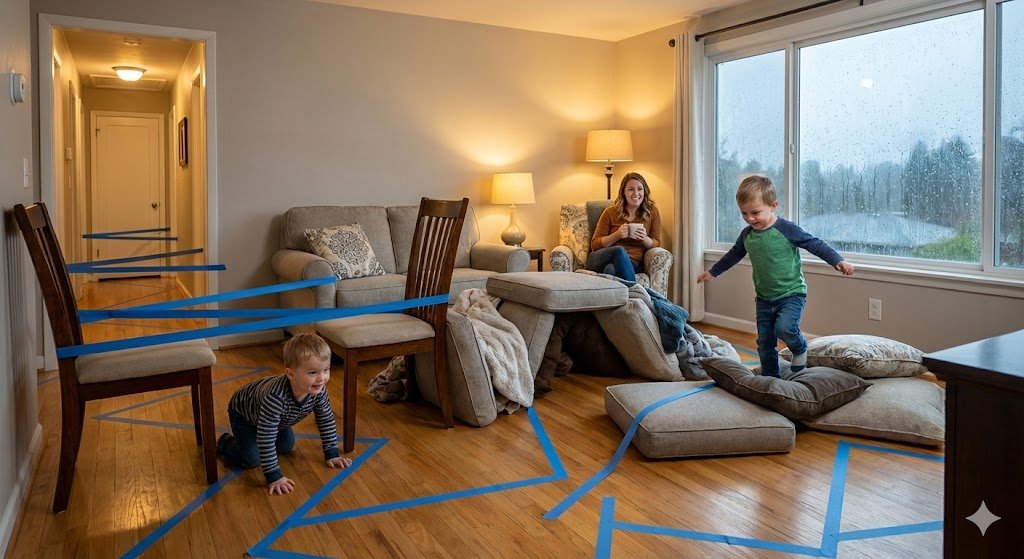
It’s one of those afternoons. The rain is relentless, the energy levels are hitting a fever pitch, and you can practically hear the furniture screaming for mercy. We’ve all been there—staring at the clock, wondering how it’s only 3 PM.
Before you give in to another hour of cartoons, I want to share the one thing that actually saves my sanity every single time: a DIY indoor obstacle course for kids that takes five minutes to set up. This activity is the ultimate physical alternative to keep them engaged while giving their screens (and your brain) a much-needed break.
The Science Behind the Chaos
I used to think this was just about “running off steam,” but after looking into occupational therapy and child development research, it turns out there’s a lot more going on. When kids are pushing through “cushion tunnels” or balancing on tape lines, they’re doing what professionals call “Heavy Work.”
According to experts at Understood.org, Heavy Work provides deep pressure input to the muscles and joints. This acts as a “reset button” for a hyperactive nervous system, building focus through intentional movement.
The Result? It’s the fastest way to turn a “wild child” into a “calm child” who might actually sit still for dinner.
The “Low-Prep” Game Plan
You don’t need a Pinterest-perfect playroom. You just need a roll of painter’s tape and a willingness to move the coffee table. You can tailor the complexity using household staples and toys you already have on hand.
1. The “Laser” Maze (Motor Planning)
Stick tape across your hallway at different heights and angles. This is perfect for encouraging coordination and spatial awareness in growing toddlers.
- The Reality: It looks messy, but it’s brilliant for Motor Planning. They have to think about exactly where to put their limbs to get through without “tripping the alarm.”
- The Twist: Tell them they are “Secret Spies” carrying a “diamond” (a plastic ball or spoon) that can’t drop.
2. The Cushion “Lava” Mountain (Gross Motor Skills)
Pile up every pillow and couch cushion you own in a safe area. This kind of open-ended play allows kids to explore their own physical limits without constant parental entertainment.
- The Benefit: Climbing a wobbly surface builds core strength and balance. As noted by The OT Toolbox, obstacle courses are a natural way to develop gross motor skills.
- The Hack: As long as there are no sharp corners nearby, let them struggle a bit—it’s “safe risk” play that builds confidence.
3. The Mission (Cognitive Focus)
Don’t just tell them to run. Give them a “job” to complete. This helps turn high-energy chaos into a focused routine of sorts.
- The Idea: “The stuffed animals are trapped! You have to rescue them one by one and bring them back to Base Camp.”
- Pro Tip: If they’re still too hyper, tell them they have to do the second round backwards or while hopping like a frog.
The Exit Strategy (The Real Parent MVP)
The biggest deterrent to a DIY indoor obstacle course is the cleanup. However, the game isn’t over until the equipment is put away. By keeping the setup simple, you avoid the overwhelm of a total living room “detox” later on.
I always make the cleanup part of the game: The Cleanup Race. “The lava is cooling down! We have 120 seconds to put all the ‘boulders’ (cushions) back on the sofa before they freeze!” Throw on a high-energy song, and watch them scramble to “win” the race.
Final Thoughts
Is my living room a disaster for 30 minutes? Yes. But is it worth the 20 minutes of quiet coffee time while they’re focused on their “mission”? Absolutely. For more official safety tips, you can always check the CDC’s physical activity guidelines to see why this kind of play is so vital.