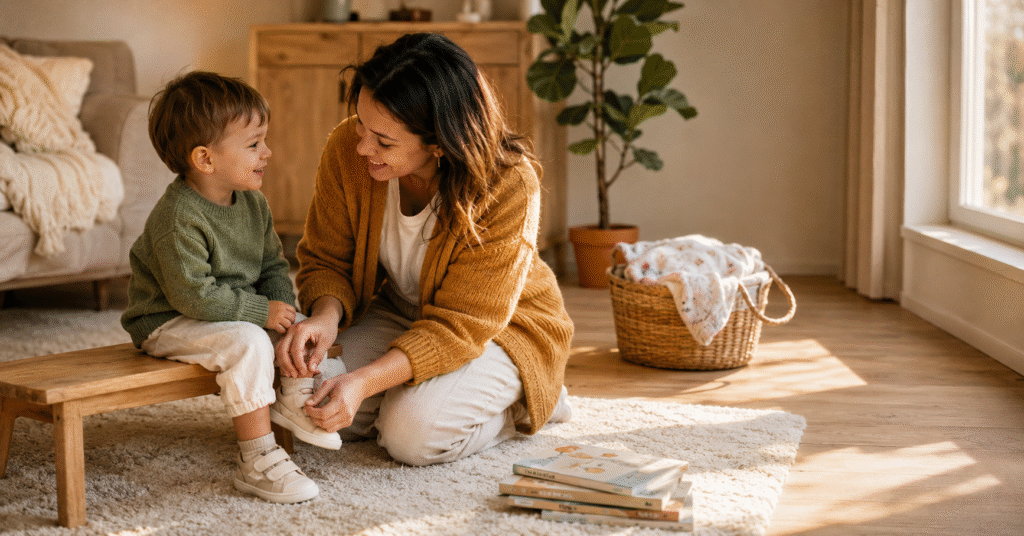
My youngest son turned 18 months last month, which means we just graduated out of those squishy, sock-like first walking shoes and into the next decision: what does an actual everyday sneaker look like for a toddler who’s now running, climbing the couch, and bolting through the daycare drop-off line? After three kids and roughly a decade of watching tiny feet cycle through every shoe category I can name, I’ve learned that the answer is not “a smaller version of an adult sneaker.” The toddler-sneaker category has its own rules, and most of the cute pairs on Amazon break them. (The word “cute” is doing a lot of work in that sentence.)
So I went into this 2026 round with a narrow brief: find the sneakers that the actual pediatric specialists agree on, not the ones the algorithm is pushing. I cross-referenced Babylist’s 2026 toddler-shoes guide written by pediatric physical therapist Dr. Kailee Noland, the American Academy of Pediatrics position on toddler footwear, the APMA Seal of Acceptance program for kids’ shoes, and the NAPA pediatric PT clinic’s footwear recommendations. Then I pulled real Amazon sales data, bestseller rankings, and combed thousands of one- and two-star reviews to see where each “expert pick” actually breaks down in a real toddler’s life.
Five pairs survived all of that. Every one is in stock as of this writing, every one ships from Amazon, every one carries 300+ verified parent reviews at 4.5 stars or higher, and every one earned its spot through a different strength: APMA certification, machine-washability for daycare, genuinely wide width, barefoot-style minimalism, or a budget price that doesn’t compromise on the structure.
What Pediatric Specialists Actually Look For
Before the picks, here is the short list of features I now refuse to compromise on. Every one of these comes straight from Babylist’s pediatric physical therapist guide, the APMA program, and NAPA’s clinic recommendations. They overlap so heavily across sources that you can think of this as the actual expert consensus, not one person’s opinion.
1. A Wide, Foot-Shaped Toe Box
Toddler feet are not tapered. They are roughly rectangular, with all five toes spreading roughly equal distances from the heel. A “wide toe box” means the front of the shoe is rounded, not pointed, with room for the toes to splay naturally when the child puts weight on their forefoot. Babylist’s Dr. Noland flags this on her must-have list, and her test is simple: the toe box should not curve inward near the big toe or taper toward the front of the shoe. A genuinely roomy toe box is also what lets the foot do its actual developmental job, which is to grow.
The catch is that “wide” on the label doesn’t always mean “foot-shaped” in real life. Many shoes labeled “wide” or “W” are just regular shoes scaled up sideways, with the same pointed silhouette. The pairs in this guide all have rounded, foot-shaped toe boxes that have been independently flagged by reviewers and pediatric specialists.
2. A Sole You Can Fold in Half
This is the one a lot of parents miss. The sole of a toddler sneaker should be flexible enough that you can take the shoe in your hands and roll it from toe to heel without much resistance. Stiff soles, even cushioned ones, restrict the small foot muscles that need to fire with every step to develop normally. Dr. Noland describes the test simply: you should be able to fold the shoe roughly in half from toe to heel. NAPA’s pediatric PT clinic echoes the same idea, recommending a flexible forefoot that supports natural gait mechanics.
Flexible does not mean flimsy. A protective rubber outsole is still required because toddlers walk on pavement, woodchips, and the occasional piece of Lego. The goal is “protective but flexible,” not “soft like a sock.”
3. Easy Velcro, Not Tiny Laces
Velcro (or “hook-and-loop closure,” if we’re being technical) does three jobs at once: it makes the shoe adjustable to the toddler’s exact foot width, it lets daycare teachers get them on and off without losing their mind, and most importantly, it builds the foundation for independent dressing. Around 2 years old, many toddlers can start managing Velcro on their own. Laces are years away.
Tip from Dr. Noland that I wish someone had told me five years ago: if you have laces, replace them with elastic laces (the kind that don’t need tying). It cuts your morning routine by about three minutes per kid. With three kids, that math added up fast.
5 Best Toddler Sneakers 2026
Five pairs, ranked roughly by where they fit in a typical family’s lineup: the classic everyday pair, the daycare workhorse, the truly-wide-feet specialist, the barefoot-style flex pick, and the budget barefoot option that punches well above its price.
1. See Kai Run Stevie II — Best APMA-Certified Classic
If you only buy one pair of toddler sneakers and you want the safest expert-approved choice, this is it. See Kai Run was founded in Seattle in 2004 with the specific goal of designing shoes around toddler foot anatomy, and the Stevie II has been their signature everyday sneaker for over a decade. It carries the APMA Seal of Acceptance, the same one the American Podiatric Medical Association awards to shoes that meet their criteria for healthy foot development. That is roughly the highest third-party credential available in this category, and very few sub-$60 toddler sneakers have it.
What sets the Stevie II apart in cross-reference is the fit data. Zappos publishes a customer fit survey on this exact shoe, and 95% of buyers report it runs true-to-width, while 89% report it runs true-to-size and 88% report moderate arch support. That kind of consistency at scale is unusual for kids’ shoes. Reviewers across Babylist, parenting forums, and Amazon repeatedly mention the same things: it opens wide enough to get a chubby foot in without a fight, the Velcro stays put through daycare, and it survives the washing machine cycle that all my friends end up running at some point.
The honest weakness, mentioned in roughly 5-10% of reviews, is that the rubber toe trim can start to separate after a few weeks of heavy wear, especially if your toddler is a “drag the toes on the swing” type. If that’s your kid, you may get a shorter life out of these than the price suggests. See Kai Run’s customer service is reasonable about replacements when this happens, though.
Best for: First “real” sneakers around 12-18 months, parents who want the strongest pediatric credentials available, anyone whose toddler has even slightly wide feet. Skip if your kid drags their toes constantly.
2. Stride Rite Artin 2.0 — Best Daycare Workhorse (Machine Washable)
Stride Rite has been making kids’ shoes in the U.S. since 1919, and the Artin 2.0 is their machine-washable everyday line, the one they specifically designed for the “your child will return from daycare covered in food and mud” reality. It carries Amazon’s Choice tag in the kids’ sneaker category, has thousands of reviews at a 4.5-star average, and is one of the few pairs in this list that ships with a memory-foam footbed. Among the picks here, it’s also one of the fastest-growing toddler sneakers on Amazon right now, which is a quiet trust signal in its own right.
The single feature that earned it a spot here, though, is what Stride Rite calls the 360 Dual Fit System. The insole inside the shoe is removable, and pulling it out gives you noticeably more room across the width of the foot. That means one pair can fit a medium-width toddler at the start of the season and accommodate growth into wider feet by the end. It’s the closest thing to “buying wide without buying wide” that I’ve seen on a mainstream affordable sneaker. The Velcro itself is one of the more secure closures in this lineup, with elastic faux laces underneath that hold the tongue in place so it doesn’t bunch when little hands try to put the shoe on.
The honest pattern in the lower-star reviews is durability. Long-time Stride Rite buyers consistently note that the Made2Play machine-washable line, which this is part of, doesn’t seem to last as long as the brand’s older non-washable styles. Toe rubber peeling after 2-3 months of daily wear shows up in multiple reviews, especially for very active 4- and 5-year-olds. For a true daily-wear daycare shoe at this price point, that may still be acceptable, but go in with expectations matched.
Best for: Daycare parents who need shoes that survive the washing machine, toddlers with medium-to-wide feet, families on a budget who want a recognizable brand. The 360 Dual Fit insole trick is a real advantage if you don’t know yet whether your kid is going to develop wide feet.
3. Tsukihoshi Racer — Best for Truly Wide Feet
Tsukihoshi is a Japanese brand that has been making children’s shoes since 1873, which is its own kind of credential. The Racer is their flagship toddler sneaker, and the product title on Amazon spells out exactly what makes it different: “Wide Toe Box.” This shoe was designed from the start around the principle that toddler toes need to splay, and the toe box is wider than even New Balance’s extra-wide kids’ sizing, according to reviewers who have compared them directly.
Three structural details set this apart. First, the insole is infused with natural Green Tea extract that controls foot odor (yes, really; toddlers do sometimes have surprisingly strong foot smell, especially in summer), and it’s removable for faster drying after the washing machine. Second, the heel counter is firmer than most flexible-sole shoes, which Tsukihoshi specifically markets as a stability feature for new walkers; pediatric PTs flag a “firm but flexible heel cup” as one of the most important toddler-shoe features, and Tsukihoshi delivers it without sacrificing flex elsewhere. Third, the EVA/TPR sole is one of the lightest in the category, which matters because heavy shoes tire small leg muscles faster.
Two things to know going in. The pair runs roughly half a size to a full size large, so most reviewers recommend sizing down. And the toe rubber bumper on the Racer specifically has a long-standing reputation for detaching from the upper after about a month of heavy wear; longtime fans of the brand keep buying them anyway because everything else about the shoe is excellent, but it is the single most common complaint across years of reviews. If your toddler is a moderate-wear kid, this is a non-issue. If they’re a “scrapes the toes on every climb” kid, the Stevie II or the Bare Steps may hold up better.
Best for: Toddlers with genuinely wide or chubby feet, kids with sensory sensitivity to tight shoes, parents who want a stability-leaning rather than full-barefoot shoe, families with summer foot-odor issues. Skip if your kid is exceptionally rough on shoe toes.
4. Merrell Bare Steps A83 — Best Barefoot Style With Wide-Width Option
If you’ve started reading about “barefoot shoes” or “minimalist shoes” for toddlers and felt vaguely confused about whether they’re a wellness fad or a real thing, here’s the short answer: the principle is real (toddler feet develop better when the shoe lets them move naturally) and Merrell’s Bare Steps line is the version of that principle made by a serious hiking-shoe company, so the construction is solid. The Bare Steps A83 sits high in Amazon’s Boys’ Sneakers bestseller list, and Babylist’s gear team has flagged the broader Bare Steps line in multiple roundups. It’s also one of the fastest-rising barefoot toddler sneakers on Amazon right now — the barefoot category itself is growing, and this is the one parents who’ve done their homework are landing on.
The structural features that matter: an extra-wide toe box with rounded edges, a zero-drop sole (heel sits at the same height as the toe, which is what the developmental researchers actually want), and forefoot flex pods that allow the shoe to bend in multiple directions at once rather than only along the ball of the foot. The hook-and-loop strap is a single wide piece across the top, which makes it easy for a 2-year-old to start managing themselves. Merrell offers this exact shoe in wide width sizing, which is rare in the barefoot category; most barefoot brands assume your child’s feet are average-width even though half the appeal of barefoot shoes is for kids whose feet aren’t.
The honest pattern in reviews is that on toddlers who are extremely active (preschool-age, daily playground use, lots of climbing), the Velcro can lose its sticky after several months of daily on-and-off, faster than the rest of the shoe wears out. The Velcro is replaceable but not easily so. If your kid is going to be in these from 18 months through age 2 or so before sizing up, this is unlikely to bite you. If you’re trying to stretch them through age 4, the Velcro is the limiter.
Best for: Parents who’ve researched barefoot footwear and want a solid first pair, families with wide-footed toddlers who can’t find their width in other barefoot brands, hiking or outdoorsy families. The eco-friendly materials story is also a real plus here.
5. WHITIN Wide Barefoot — Best Budget Barefoot
WHITIN is one of those Amazon-native brands that I had to research carefully before recommending, because the “Chinese-brand barefoot shoes on Amazon” category contains both quality products and absolute junk. WHITIN, after cross-referencing the well-respected Anya’s Reviews barefoot footwear blog, the Barefoot Shoe Guide roundup, and roughly a thousand parent reviews, falls firmly into the “real budget barefoot option” category. It currently holds the Best Seller badge in Amazon’s Boys’ Walking Shoes category, and the toddler wide version specifically (model B0D4Z7RX58 if you want to verify) has held 4.6 to 4.7 stars across thousands of reviews.
The build is real barefoot. The toe box is foot-shaped (not tapered), the sole is zero-drop and flexible enough to roll into a ball, the upper is light breathable mesh, and the whole pair weighs about 7 ounces. The Velcro closure is a single wide strap that secures the foot without compressing the toes, which is the entire point. The price runs roughly half of what you’d pay for a comparable Merrell or Tsukihoshi pair.
What you’re trading at this price point is durability headroom. The materials are not as premium as Merrell’s leather upper or See Kai Run’s rubber outsole, and reviews mention that very active kids may wear them out faster than higher-priced options. The Anya’s Reviews barefoot guide is also explicit that WHITIN’s casual sneaker line has a slightly narrower toe box than their wider Trainers line, so make sure you’re buying from the “Wide Barefoot” toddler model specifically (the one linked here) rather than the slip-on canvas casual version, which is a different shoe.
Best for: Parents who want to try barefoot footwear without a $60 commitment, families with multiple kids who’d rather rotate two affordable pairs than one premium pair, second-pair shoppers, anyone whose toddler is growing fast enough that paying premium feels wasteful. Verify the model number when ordering to make sure you’re getting the wide version.
How to Fit Toddler Sneakers
The single biggest mistake I made with my older son was assuming his shoe size was based on his age. It is not. Toddler feet grow in unpredictable spurts, and a child can be in a size 6 in February and a size 7 by April. Here’s the fit checklist I now use:
- Measure first, then shop. Stand the child on a piece of paper, mark the heel and the longest toe, and measure between the marks. Most major brands publish a length-to-size chart on their websites. Babylist and Stride Rite both have printable Brannock-style fit guides.
- Thumb-width of space at the toe. When the shoe is on and the toddler is standing, you should be able to press a thumb’s width between the longest toe and the front of the shoe. Less than that means it’s already too small. More than half an inch means it’s a tripping hazard.
- Check the heel cup. Pinch the back of the shoe gently. It should resist slightly (this is what holds the foot in place when they run) but bend, not stay rigid.
- Velcro must cross fully. If the strap doesn’t reach all the way across the tongue, the shoe is too wide for your child’s foot, not the other way around. Try a different style.
- Watch for red marks. After 30 minutes of wear, check the foot. Red lines on the bridge, the heel, or the bony bumps on the side mean the fit is wrong, not “they’re breaking in.”
- Recheck every 2-3 months. Toddler feet grow about half a size every three to four months on average. Babylist suggests sizing up when the longest toe reaches the end of the insole, which several brands now mark with a line on the removable insole specifically so parents can check.
When Do Toddlers Need Real Sneakers?
Roughly when they start walking confidently outdoors, which for most kids lands between 12 and 18 months. Before that, the AAP and the major pediatric PT organizations are aligned: barefoot is best indoors (it builds the small foot muscles and proprioceptive awareness toddlers need to develop a healthy gait), and the only outdoor footwear they need is soft, flexible protection. We covered the earlier stage in our first walking shoes guide; this list is what comes next, once your child is running, climbing, and putting real wear on a shoe.
The transition from “first walking shoe” to “toddler sneaker” is usually marked by three things: the child is reliably running rather than just walking, they’re spending real time on outdoor surfaces (pavement, woodchips, sand), and they need a shoe that protects from elements while still allowing the foot to function. The five pairs above all hit that spec. Indoors, barefoot is still preferred whenever it’s safe and warm enough.
How Long Should Toddler Sneakers Last?
Realistically? Three to six months, mostly because feet grow, not because shoes fail. The Stride Rite Artin 2.0 in this list (and most washable-line sneakers in general) are engineered around the assumption that you’ll outgrow them before they fall apart, which is why they’re priced where they’re priced. The See Kai Run and the Merrell Bare Steps tend to last longer in terms of structure, but if your toddler is between sizes you’ll still cycle through them on the growth timeline.
Two signs it’s time to replace, even if the shoe still looks fine: (1) the Velcro no longer fully secures across the tongue, even at maximum stretch, which means the shoe is now too narrow for the foot; (2) the longest toe is reaching the end of the insole when the child stands. Either one is the signal. Don’t wait for visible damage; toddler feet outgrow shoes faster than shoes wear out, which is the opposite of the adult experience.
Real-Life Fit Issues to Watch For
- Tripping after a few wears. Almost always a too-big problem. Toddlers compensate for loose shoes by curling the toes, which throws off balance and causes face-plants. Size down half a size.
- Refusing to wear them. Usually a too-tight or too-narrow problem. Check for red marks on the toes or sides of the foot. Common with mainstream sneakers that aren’t actually foot-shaped.
- Walking on the outsides of the feet. Sometimes a sole-too-stiff problem. Try a more flexible shoe (the Merrell Bare Steps or the WHITIN Wide Barefoot above) before assuming it’s a developmental issue.
- Excessive heel slipping. The heel counter is too loose. Try adding a removable heel grip, or size down half a size if the toe room allows it.
- Velcro chewing on socks. Tape over the rough edges of the Velcro hook side with painter’s tape after closing the strap, or just buy thicker socks. This is unavoidable on some shoe designs.
- “My toddler refuses to put shoes on at all.” Common around 18 months to 2 years. The trick is letting them help. Velcro shoes that they can press closed themselves usually solve this in a week.
The Bottom Line
If you want the shortest version: start with the See Kai Run Stevie II if you want the safest pediatric-approved everyday pair, drop to the Stride Rite Artin 2.0 if budget is the priority and your child is in daycare, choose the Tsukihoshi Racer if your toddler has genuinely wide feet, go to the Merrell Bare Steps A83 if you want a barefoot-style shoe from a serious outdoor brand, and try the WHITIN Wide Barefoot if you want to test the barefoot approach at half the price.
All five hit the pediatric-PT consensus on wide toe boxes, flexible soles, and easy Velcro. All five are in stock as of this writing and have hundreds to thousands of parent reviews to back them up. Whichever you pick, the most useful thing you can do is measure your toddler’s feet every two to three months, replace shoes when they outgrow them (not when they fall apart), and remember that indoors, the best toddler footwear is no footwear at all.