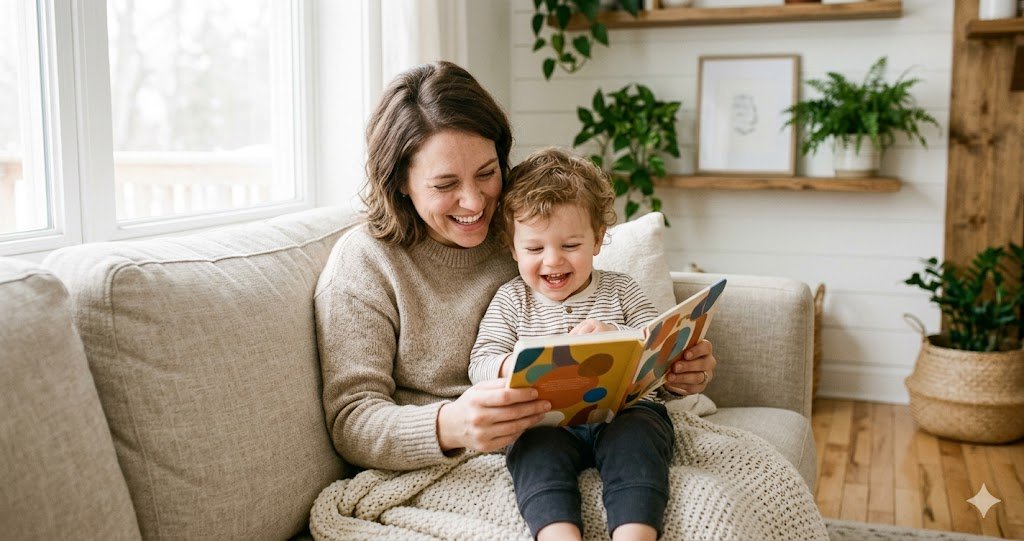
By the time my older son finally decided the potty was not, in fact, a toddler trap, I had read more books about pee than about any of my actual hobbies. That was round two of potty training in this house. Round one was my daughter, years ago, who treated the whole thing like a project she was managing. And now my youngest son has started following everyone into the bathroom like a tiny inspector, which means round three is coming whether I feel ready or not.
Here is what two rounds (and counting) have taught me: the right book does a job no pep talk can. It makes the potty feel boring and normal instead of new and suspicious. Toddlers are deeply conservative little people. They do not want a milestone. They want to see someone else go first, preferably someone in a board book who cannot rush them.
So this is my shortlist of the potty training books that are actually worth shelf space, including one pick that is just for you, the adult doing the laundry.
Why a book, of all things?
Reading about the potty is the lowest-pressure rehearsal there is. Your child gets to watch a character notice the urge, sit, wait, succeed, and get celebrated, all without anyone looking at them expectantly. Pediatricians call this kind of modeling a readiness builder, and the American Academy of Pediatrics is clear that readiness, not age, is what makes training stick. Many kids show interest somewhere between 18 and 24 months, while plenty of perfectly normal kids are not ready until closer to three. The AAP’s guide to toilet training readiness signs is worth ten minutes of your time before you buy a single tiny toilet.
How I picked these
I cross-referenced bestseller lists, pediatric guidance, and a frankly unreasonable number of parent reviews, then filtered everything through my own two-kids-trained, one-to-go lens. Every book here had to clear the same bar:
- One job, done well. A potty book exists to normalize. If it lectures, it loses.
- Short enough to finish mid-sit. A potty book that outlasts the sit defeats itself.
- Survives the bathroom. Sturdy pages matter, because this book will live next to the potty and be handled by damp hands.
- The kid sees themselves in it. Either through a beloved character or a kid (or animal) who hesitates the way real kids do.
Prices move around, but every children’s book on this list typically sits under ten dollars, which makes them one of the cheapest pieces of potty training equipment you will buy.
The quick list
- Best overall right now: Potty Time with Bean (Ms. Rachel)
- Best first potty book: Potty by Leslie Patricelli
- Best for flap-obsessed toddlers: P is for Potty! (Sesame Street)
- Best sound book: Daniel Tiger’s Potty Time!
- Best for poop anxiety: Everyone Poops by Taro Gomi
- Best step-by-step story: Let’s Go to the Potty! by Allison Jandu
- Best for parents: Oh Crap! Potty Training by Jamie Glowacki
1. Potty Time with Bean (Ms. Rachel)
If your toddler lights up at the sound of Ms. Rachel’s voice, this is the obvious place to start. The book follows Bean, her teddy bear sidekick, through potty time using the same songs and gestures kids already know from her videos, which is a clever bit of borrowed trust. The character your child already believes in is the one telling them the potty is fine.
It became a national bestseller almost immediately, and the parent reviews follow a consistent pattern: kids who know Ms. Rachel ask for this one on repeat. There are also practical potty training tips for grown-ups tucked into the back, which is a nice touch when you are the one who actually needs the strategy.
The honest caveat: the magic is strongest if Ms. Rachel is already part of your child’s world. If your kid has never seen her videos, this is simply a sweet, well-made potty book rather than a secret weapon. A few parents also note the steps are fairly detailed, so it reads better as a sit-and-follow-along book than a thirty-second flip.
Check Potty Time with Bean on Amazon
2. Potty by Leslie Patricelli
This is the minimalist classic of the genre, starring Patricelli’s famous bald baby and an internal debate every toddler recognizes: diaper, or potty? The text is so spare it barely exists, which sounds like a flaw and is actually the whole point. The story lives in the baby’s facial expressions, and toddlers shout their opinions at the pages like sports commentators.
Reviewers across more than a decade keep landing on the same word for it: relatable. The triumphant ending hits the exact emotional note you want a pre-trainer to absorb, that using the potty is something I did myself.
What to know going in: because the text is minimal, the read-aloud experience depends on you. Parents who like to ham it up adore this book. Parents who want a script to follow sometimes find it almost too quiet. There is no how-to here, just vibes, and for a very first potty book, vibes are honestly what you want.
Check Potty by Leslie Patricelli on Amazon
3. P is for Potty! (Sesame Street)
Some toddlers process the world through their fingers, and for those kids, a lift-the-flap book buys you something precious: a child who voluntarily stays seated. This Elmo title is absolutely packed with flaps, and it has quietly become one of the most-reviewed potty books on Amazon, with a rating that has held steady through years of toddler abuse.
Elmo walks little ones through potty routines with his usual unflappable cheer, and the flaps give wiggly kids a reason to sit a beat longer, which is half the battle in the early days.
The trade-off is that there is a lot of text per page, more conversation than story. Most parents end up paraphrasing rather than reading it word for word, and that is fine. Nobody is checking your fidelity to the script. You are running a flap-delivery service with a potty agenda.
Check P is for Potty! on Amazon
4. Daniel Tiger’s Potty Time!
Daniel Tiger has talked an entire generation of toddlers through their feelings, and his potty book brings the same energy plus sound buttons, which for a certain kind of kid is the difference between ignoring a book and demanding it hourly. Picture icons in the story prompt your child to press the matching button, so even pre-readers get to participate instead of just listening.
It comes with a chunky carry handle, and parent after parent describes the same scene: the book being lugged to the bathroom like a briefcase by a very serious commuter. If your household already sings the show’s potty song, this is a natural extension of something that is working.
Two things worth knowing. Sound buttons are a sensory jackpot for some kids and an overstimulating siren for others, and you know which child you have. And like every sound book ever made, the battery will one day die at the least convenient moment in your potty training timeline.
Check Daniel Tiger’s Potty Time! on Amazon
5. Everyone Poops by Taro Gomi
This one is doing a completely different job from everything else on the list. It is not a how-to. There are no steps, no celebration page, no potty at all really. It is a deadpan tour of the animal kingdom making the single point that pooping is what every living thing does, and it has been quietly doing that job for families since the late seventies.
That matters because a surprising number of potty training stalls are not about the potty. They are about poop itself, the fear of it, the withholding, the drama. For those kids, a book that makes the whole subject matter-of-fact and a little funny can unlock more progress than another book of steps ever would. If your child giggles at the word poop, congratulations, this book was written for your family.
Fair warning: it is blunt. That is the entire mechanism. A handful of parents find the directness a bit much, but the directness is precisely why it works on kids who have decided poop is scary.
Check Everyone Poops on Amazon
6. Let’s Go to the Potty! by Allison Jandu
Written by a professional potty training consultant, this is the most deliberately constructed book on the list, and it shows in the best way. It is one of the few potty books that actually teaches kids to notice the urge, that wiggly, gotta-go feeling, instead of skipping straight from playing to sitting. That gap, between feeling the signal and acting on it, is exactly where most early accidents happen.
It is gender neutral, so it works for any kid without a matching his-and-hers purchase, and it includes a short rhyming potty song that gives toddlers words for telling you they need to go. Parents consistently call out the song as the part that sticks.
One practical note: the standard edition is a paperback, and paperback pages and potty training toddlers have a complicated relationship. If your trainee is on the younger or more destructive end, there is a board book edition worth seeking out instead.
Check Let’s Go to the Potty! on Amazon
7. Oh Crap! Potty Training by Jamie Glowacki
Every book above is for your child. This one is for you, and in American mom circles it is less a book and more a rite of passage. Glowacki is a social worker who has guided an enormous number of families through training, and her method breaks the process into sequential blocks, starting with a bare-bottomed stretch at home that she argues teaches body awareness faster than anything else. She also makes the case that somewhere in the range of twenty to thirty months is the window where training tends to go smoothest, before toddler willpower fully unionizes.
Parents who swear by it keep pointing to the same thing: it hands you a sequence and a script for the hard moments, including the poop battles that the cheerful toddler books politely ignore. It is also worth making your partner read the block chapters, so the two of you are running the same playbook instead of improvising in shifts.
Know your tolerance, though. The voice is extremely casual and opinionated, which half of readers find hilarious and refreshing and the other half find grating. It is also a full-length book, not a pamphlet, so skimmers should head straight for the block chapters. If you want a clinical second opinion alongside it, the Mayo Clinic’s potty training guide is a calm, evidence-based companion read.
Check Oh Crap! Potty Training on Amazon
How to actually use a potty book (so it does not become shelf decor)
A few small moves make these books work harder. Keep one or two in the bathroom itself, not the bedroom, so the book and the location get linked in your child’s mind. Read during sits, since a book that lasts about as long as a reasonable sit gives a restless kid a reason to stay put without pressure. And narrate the character’s wins out loud, because toddlers absorb the celebration even when they pretend not to listen. If your child is in daycare, ask how the teachers handle potty breaks and borrow their wording at home. Consistency between the two bathrooms speeds everything up.
And rotate. One potty book is a prop. Two or three in rotation is a culture. When the potty shows up in different stories, with different characters, it starts to register as just a normal part of life, which is the entire goal.
If you are gearing up for the full potty training season, you might also want my notes on potty training without pressure and the gear side of things in my potty seat roundup, because the book is only one corner of the operation.
Quick answers
When should we start reading potty books?
A few weeks before you plan to start training, or as soon as your child shows curiosity about the bathroom. Books work best as a preview, not a rescue mission, though they help mid-training too.
Do potty books actually make a difference?
They are not magic, but modeling genuinely matters at this age. A character your child trusts demonstrating the routine lowers the stakes in a way adult explanations cannot. Think of books as readiness builders rather than training methods.
Do I need separate books for boys and girls?
Not anymore. Most of the strongest potty books today, including nearly everything on this list, are gender neutral, and that era of strictly his-and-hers potty books is fading fast. Pick based on your kid’s interests, not the cover color.
The bottom line
If you only buy one, match it to your kid: Ms. Rachel for the Ms. Rachel devotee, the Patricelli for a very first introduction, Daniel Tiger for the button-pusher, Everyone Poops for the poop-skeptic. Add the Jandu book when you want actual steps, and read Oh Crap! yourself before day one. None of them will potty train your child for you. But the right one will make your child walk into training already believing the potty is no big deal, and that belief is worth more than any reward chart in the house.