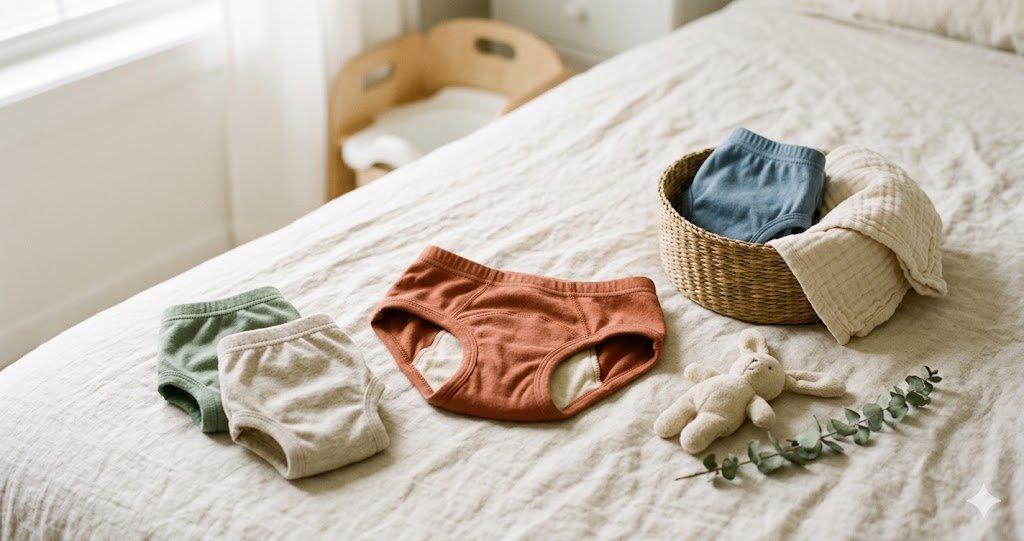
The first time I put my daughter in “big girl” underwear, she peed on the kitchen floor within four minutes, looked at the puddle, and announced “uh-oh” with the calm of a tiny weather reporter. That was three kids and a lot of laundry ago.
What took me longer to understand is that “potty training underwear” can mean three different things: washable padded underwear, disposable pull-ons, or ordinary briefs with no accident protection at all. They may sit next to one another in search results, but they do completely different jobs.
This guide narrows the choice to four currently verified options: two washable trainers for daytime learning and two disposable pull-ons for daycare or travel. The Easy Ups pick is also designed for day-and-night use; if sleep leaks are the main problem, compare a dedicated overnight product as a separate decision. The goal is not to crown one universal winner. It is to match the product to the moment your child is in.
Which type should you buy?
| Situation | Best starting type | Why | Watch-out |
|---|---|---|---|
| Daytime learning at home | Washable padded underwear | Your child can feel wetness, while the padded area buys you a little cleanup time. | It is not designed to hold a full bladder like a diaper. |
| Daycare or preschool | Ask the program first | Some programs accept cloth trainers; others require a disposable pull-on with easy-open sides. | Do not assume one policy fits every classroom. |
| Errands and travel | Disposable pull-on | More containment and simpler changes in public restrooms. | Pack a change of clothes anyway. |
| Naps and nighttime | Disposable or dedicated overnight option | Nighttime dryness develops separately from daytime toilet learning. | Do not treat a wet night as a training failure. |
| Mostly dry and ready for the next step | Regular underwear | No padding means the transition is clear. | Ordinary briefs do not belong in a training-pants ranking. |
Before daycare, ask these four questions
Policies and changing routines differ by program, so ask before choosing a training pant:
- Are washable trainers allowed, or are disposable pull-ons required?
- For a soiled change, must sides refasten, may they tear open, or is the pant removed like ordinary underwear?
- How many clothing changes stay on site, and how are wet items sent home?
- What is used for naps, and which toileting words and routine can you repeat at home?
Match the answer to this guide: If washable trainers are accepted and your child can pull them down and back up, compare the washable picks. If sides must refasten, compare Pull-Ups. If tear-away sides are acceptable, Easy Ups may fit the routine. Treat sleep protection separately. If none of these four products matches the program’s requirements, do not force a pick from this list.
The four picks at a glance
- Best washable starting point: MooMoo Baby 8-Pack Potty Training Pants
- Best washable option with a larger padded area: Skhls Thick Absorbent Training Pants
- Best disposable pull-on for day and night: Pampers Easy Ups
- Best disposable for easier standing changes: Pull-Ups Boys’ Potty Training Pants
We checked the current Amazon listing, locked each recommendation to a specific purchasable variant, and compared materials, sizing, construction, care details, and recurring parent feedback. Dynamic ratings and prices change, so they are not reproduced here. Products that were unavailable, fell below the current screening threshold, or were ordinary underwear rather than training pants were removed instead of being kept to preserve a larger number.
Best washable potty training underwear
1. MooMoo Baby 8-Pack Potty Training Pants
Exact linked variant: 2T, Dino · cotton fabric · six absorbent layers through the padded area · pull-on waist · machine washable
MooMoo Baby is the more straightforward washable starting point in this guide. The linked variant uses cotton fabric with six layers through the front and back padded area. That construction is meant to catch a small daytime accident and give a caregiver time to respond; it is not meant to perform like a disposable diaper.
The elastic waist and leg openings are designed for toddlers to pull up and down, and the brand recommends washing before the first wear. That first wash matters because absorbent cotton products often reach their intended performance after laundering.
Worth knowing: a larger accident can wet the outside and the child’s clothes. That is a normal limit of this product type, not a promise that floors will always stay dry.
2. Skhls Thick Absorbent Training Pants
Exact linked variant: 2T, 6-piece girls’ pack · listed materials: polyester, cotton, and TPU · adjustable or replaceable waist elastic · washable
Skhls is the more specialized washable choice. The current listing describes a thicker, larger padded area, so compare it if you want more daytime padding and can accept a bulkier feel.
The waistband includes an opening that lets a caregiver adjust or replace the elastic. That is useful when the waist and leg fit are not lining up neatly, although fit still needs to be comfortable rather than tight.
Worth knowing: more padding does not turn a washable trainer into a diaper. Follow the current listing’s wash instructions and inspect the garment periodically for damage.
Best disposable training pants
3. Pampers Easy Ups, Size 3T–4T, 66 Count
Exact linked variant: 3T–4T, 66 count · 360-degree stretchy pull-on waist · easy-tear sides · absorbent disposable construction
Easy Ups are the simpler disposable choice when you want a pull-on that behaves more like absorbent underwear for daycare, errands, naps, or sleep. The stretchy waist lets a child practice pulling the pant up and down, while the sides tear for a caregiver-led change.
The linked ASIN is the 3T–4T, 66-count pack. Character and packaging artwork may vary, so verify the size and count rather than relying on the design shown in one listing image.
Worth knowing: Easy Ups are built to absorb and lock away wetness, so they are not the pick here for cloth-like, immediate wetness feedback. That does not make disposables “bad”; it makes them a different tool.
4. Pull-Ups Boys’ Potty Training Pants, Size 3T–4T, 66 Count
Exact linked variant: boys’ 3T–4T, 32–40 lb, 66 count · pull-on fit · refastenable easy-open sides · disposable
The practical difference with this exact Pull-Ups pack is the refastenable side design. The current product page says its refastenable sides support quick checks and changes, including standing changes in a public restroom or classroom.
This exact current product includes Pull-Ups’ Learning Layer, which the brand says helps children notice wetness while the pant still provides leak protection. Do not generalize that feature to every Pull-Ups line, and do not treat this standard product as the brand’s dedicated Night*Time option.
Worth knowing: check the current weight chart rather than buying by birthday alone. A comfortable seal at the waist and legs matters, but red marks or restricted movement mean the fit is too tight.
How training underwear actually works
Washable trainers use a padded zone but generally leave more direct wetness feedback and still require a clothing change. Disposable pull-ons prioritize absorption and containment; some, including the current Pull-Ups pick, add a wetness-awareness feature. Regular underwear has neither padded accident protection nor disposable containment.
The American Academy of Pediatrics treats toilet learning as a readiness process rather than a race tied to a single birthday. Signs such as communicating the need to go, staying dry for a period, reaching the toilet, and helping with clothing matter more than pressure from a calendar. See the HealthyChildren toilet-training guidance.
Nighttime dryness is also a separate developmental step. The Mayo Clinic potty-training guide notes that many children need protection for sleep after daytime skills are progressing. A wet night is not evidence that daytime training has failed.
Fit, quantity, and laundry: the practical checklist
Try one pair before buying more
Use the exact variant’s size chart and care label, including any wash-before-wear instruction. Before buying another pack, check one clean, dry pair in ordinary movement: can your child pull it down and back up with usual trousers and shoes? Watch for sliding, open leg gaps, rolled edges, restricted movement, deep marks, or repeated tugging at tags, seams, or padding.
After a naturally occurring accident, change and clean your child promptly, then note what happened without treating one event as proof. Moisture near an open leg gap or shifted waistband may suggest fit or positioning; a soaked pad may mean the accident exceeded practical capacity or another product type may fit that situation better. Never pour liquid into the garment or delay a toilet trip to manufacture a result.
Use the result: choose washable when independent pull-down and direct wetness feedback matter most; choose disposable when stronger containment matters more. If daycare requires refastenable sides, compare Pull-Ups rather than assuming every disposable opens alike. Change size or construction—not merely tightness—if fit or feel is wrong. Buy another pack only after the first works in your routine. Treat sleep separately.
Start with enough washable pairs for your laundry rhythm
A full day of early training can use several pairs. An eight-pack is a reasonable starting point for many families, but the right number depends on how often you wash, whether daycare needs a separate supply, and how frequently accidents are happening. Buying a second pack before checking fit can leave you with many pairs your child will not wear.
Pack for the accident you hope will not happen
For trips, bring a complete clothing change, wipes, and a wet bag or sealed bag. A training pant reduces the mess; it does not eliminate the need for a backup plan.
Recheck rather than shame
Illness, a move, a new sibling, or a stressful schedule change can lead to temporary regression. Respond with neutral language, restore predictable potty opportunities, and talk with your child’s clinician if regression lasts, is accompanied by pain or constipation, or worries you. The AAP has a useful overview of toilet-training regression.
Frequently asked questions
Are washable trainers or disposable training pants better?
Washable trainers usually give more direct wetness feedback for daytime practice. Disposable pull-ons usually give more containment for daycare, outings, or sleep; check whether the exact product has a wetness cue or a day-and-night claim rather than assuming every disposable works the same way. Many families use both.
Will washable training underwear hold a full pee?
Usually not. It is designed to slow and contain a small accident, not replace a diaper. Product thickness varies, but no washable pick in this guide is recommended for overnight use.
How many pairs should I buy?
Start with one verified multipack and test the fit before buying more. Then calculate from your child’s typical number of changes plus your laundry schedule and any daycare supply requirement.
When should we switch to regular underwear?
Make the switch when your child is staying dry for meaningful daytime stretches, communicating the need to go, and reaching the potty with growing independence. Regular briefs are a graduation step, not an absorbent training product.
This article is for general information and is not a substitute for advice from your child’s pediatrician.