Updated July 27, 2026
On the way to the beach, the clothes are dry and the towels are fluffy. On the way home, one damp swimsuit somehow touches everything, the car keys disappear under a sandy towel, and the phone feels much too close to the wet pile.
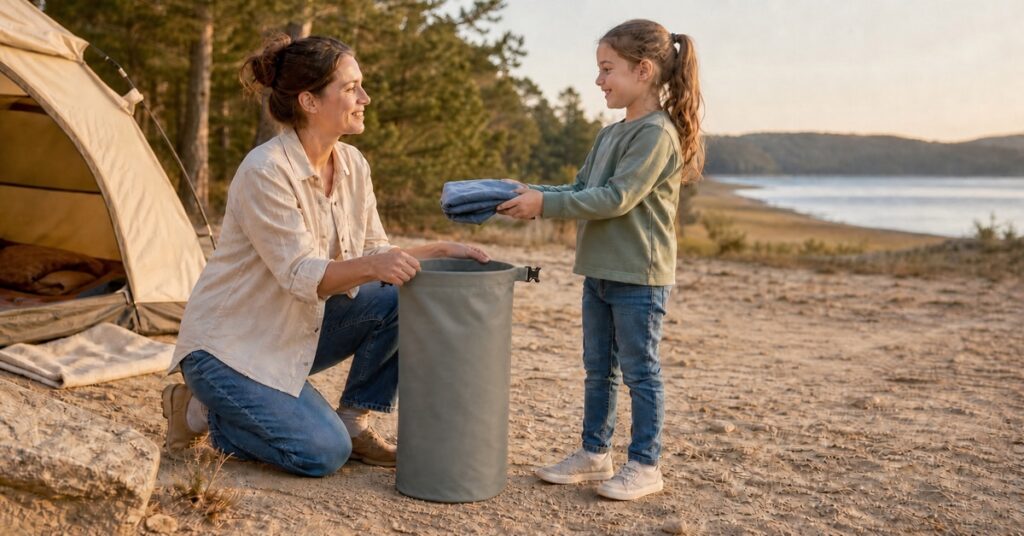
A dry bag gives that mess one clear boundary. It can protect a change of clothes during a rainy walk to camp, keep sand away from the small things you need to find quickly, and become a separate home for wet gear on the return trip. What it cannot do is turn every phone, camera or set of car keys into submersible equipment.
For most family day trips, I would start with a 20-liter roll-top bag rather than the biggest bag available. It is large enough to be useful without inviting the whole family to fill it until one parent is carrying a heavy plastic barrel. The right choice still depends on what must stay dry, how far you will carry it and whether you need one shoulder or both hands free.
This guide comes down to two practical choices. Choose the Earth Pak Original 20L for the stronger all-around package and a longer published warranty. Choose the HEETA 20L when the budget matters more and the walk from the car will be short. Both have limits that belong in the buying decision.
The Quick Picks
| Dry bag | Best for | Capacity | Carry style | Waterproof boundary | Main watch-out |
|---|---|---|---|---|---|
| Earth Pak Original | Family beach days, lake days and car camping | 20L | Single adjustable shoulder strap | Rain, splashes and a brief accidental dunk; not prolonged submersion | Unpadded single strap, no internal pockets and an official Proposition 65 material warning |
| HEETA Waterproof Dry Bag | Occasional use and short carries on a tighter budget | 20L | Two removable shoulder straps plus a side handle | Rain, splashes and a brief accidental dunk; not prolonged submersion | Unpadded straps, a clear view of the contents and stiff PVC in cooler weather |
My short answer: Earth Pak is the easier default for a reusable family day-trip bag. HEETA makes sense when you expect occasional beach, pool or boat use and will not carry a full load very far.
Start With Size, Not Brand
Dry-bag liters are useful for comparing bags, but they do not tell you exactly how many family items will fit. A thick beach towel can swallow more space than several lightweight shirts. You also lose some usable height when you leave room to roll the top correctly.
The following ranges are planning tools, not packing guarantees. SealLine calls 20L its most versatile size and uses a sleeping bag, a couple of clothing changes or other bulky gear as examples. For a family, I would translate the sizes this way:
| Capacity | A realistic family job | What can go wrong |
|---|---|---|
| 5L | Keys, wallets, a compact first-aid pouch and a few small essentials | Too small to serve as the main family beach bag |
| 10L | One child’s light change of clothes, a thin layer and small personal items | A towel or bulky sweatshirt uses the space quickly |
| 20L | A useful starting point for family day trips, dry clothing or one bulkier camp item | It becomes uncomfortable when filled with dense or wet gear |
| 30L | More clothing, larger towels or a weekend car-camping zone | A simple shoulder strap may no longer be enough |
| 40L+ | Bulky camp or boat gear that truly needs one protected compartment | The bag can become too heavy and awkward for one parent to manage |
Before choosing 30L or larger, pack the same gear into a reusable grocery bag and lift it with one hand. Then add the water a wet towel can hold. If that already feels awkward, two smaller bags or a proper dry-bag backpack will be more useful than one oversized roll-top.
Families who are still building a beach list can use this family beach-day packing guide to decide what truly needs dry storage. For camping, this camping guide for babies and toddlers can help separate must-stay-dry sleep gear from the things that can live in regular bins.
The Best Waterproof Dry Bags for Family Beach Days and Camping
Earth Pak Original 20L — Best Overall for Family Day Trips
If I wanted one 20L bag for ordinary family outings, I would choose Earth Pak. The Original is made from thick 500D PVC, closes with a roll-top buckle and has D-rings for securing it inside a boat or attaching it to other gear. Its single shoulder strap adjusts up to 36 inches, and the company publishes a five-year warranty.
That combination works well for the places most families actually use a dry bag: the walk from the parking lot to the beach, a lake day, a rainy campsite or a boat ride where splashes are more likely than a long underwater swim. The material is heavier and less packable than a thin nylon dry sack, but it is also better suited to being set on sand, a dock or the floor of the car.
The closure deserves as much attention as the fabric. Earth Pak instructs owners to roll the top three or four times, clip the buckle and leave some air inside. The company also says the bag is designed to float rather than remain underwater and should not be submerged for more than a few seconds. That is the honest boundary: good protection from weather, spray and a quick accident, but not an electronics vault.
Independent use supports that narrower promise. Pack Hacker’s test of the 10L version from the same Original line found that it handled heavy splashes and light rain. The reviewer also noticed that water caught around the rolled lip could drip into the bag when it was opened. Open it with the mouth facing away from the dry contents, especially after spray or rain.
There is no organization inside. A small bright pouch for keys and first-aid items will save you from digging to the bottom while a child waits. The single strap is also unpadded. It is fine for a short transfer, but a dense load will press into one shoulder and swing at your side. If your trip involves a longer walk while pushing a stroller or carrying another child, this is not the hands-free backpack you are looking for.
The included phone pouch should be treated as a bonus, not the safety plan. Its clips can be fiddly, and larger phones may not fit. Put important electronics in their own properly sealed inner pouch or an O-ring hard case before they go into the dry bag.
One material disclosure also belongs here. Earth Pak’s current product page links to a California Proposition 65 warning for DEHP and DINP. A warning is not the same as a recall or proof that normal use will cause harm, but families should be able to see it before buying. Keep unpackaged food in a separate food-contact-safe container, do not let children mouth the bag, and skip this model if you prefer to avoid flexible PVC products with that warning.
Best for: A family that wants one sturdy 20L bag for beach days, lake trips, boating and car camping, with short walks between the car and the activity.
Skip it if: You need comfortable backpack straps, fast access to several small items, prolonged-submersion protection or a bag without this Proposition 65 warning.
HEETA 20L Waterproof Dry Bag — Best Budget Choice for Short Carries
HEETA’s 20L bag makes sense when the dry bag will spend more time in the trunk, on the sand or inside a boat than on your shoulders. It uses a PVC body, a roll-top buckle and one large compartment. Two removable straps let it sit backpack-style, while a side handle is handy for moving it a few feet without putting it on.
The second strap sounds like an automatic win over Earth Pak’s single-strap design. It is not. There is no padded back panel, ventilation or padding on the straps. Whatever you place against the back of the bag becomes the back panel. A sunscreen bottle, shoe buckle or toy edge in the wrong spot can make even a short walk irritating.
Pack Hacker tested this 20L HEETA and found the straps uncomfortable under load, but useful for a short move from the car to the boat. Its brief dunk test kept water out, although the bag stayed underwater for only a few moments. OutdoorGearLab reached a similar limit: the heavy PVC can handle an accidental dunk, but it is not a choice for prolonged submersion.
HEETA prints closure directions on the bag: roll the top at least three times, then close the buckle. That means the advertised 20 liters is not a promise that you can fill the bag to the rim. Stop packing while enough soft material remains to make those rolls cleanly. A towel wedged into the closure can create a path for water.
The blue PVC is semi-transparent. That can help you spot a child’s shirt without emptying the bag, but it also lets other people see what is inside. Use a small opaque pouch for a wallet, medication or anything private. The same PVC becomes stiffer in cool weather, and this bag has no internal pockets. Those are acceptable compromises for occasional warm-weather use, but less pleasant for frequent camping or shoulder-season trips.
The included phone pouch feels like a budget accessory, which is exactly how it should be treated. Do not place a phone in it, clip it around a child’s neck and assume the job is finished. Keep the lanyard with the adult carrying the bag, and give important electronics a separate layer of protection.
HEETA is cheaper, but it is not a hiking pack. Buy it when the job is simple: carry dry clothes to the water, keep rain off camp clothing or isolate wet swim gear on the way home. If you want a bag that stays comfortable for a long walk, save for a true dry-bag backpack with a structured harness.
Best for: Occasional pool, beach, boat and car-camping days when the carrying distance is short and a basic 20L bag is enough.
Skip it if: You want padded straps, privacy, internal pockets, flexible material in cold weather or protection for long underwater exposure.
The Two-Bag System That Makes the Trip Home Easier
A single dry bag solves the trip out. Two zones solve the return trip.
Pack the main dry bag with the things that must remain dry: a change of clothes, a light layer, a small first-aid pouch and electronics with their own secondary protection. Keep sunscreen in a sealed pouch so a loose cap cannot coat the clothes you were trying to protect.
For the trip home, give wet swimsuits, damp towels and sandy water shoes their own washable bag or bin. A second dry bag can serve this job, but a sturdy wet bag or open plastic tub may be easier to clean. The goal is separation, not another expensive product.
- Dry zone: clothing, first aid and small essentials that cannot get wet.
- Protected valuables: phone, keys and wallet inside a sealed inner pouch or hard case.
- Wet zone: swimwear, towels and water shoes after the activity.
- Food zone: snacks and meals inside separate food-contact-safe containers.
Color helps. If the family uses more than one similar bag, keep the first-aid pouch in the same bright color every time and make sure an adult can reach it without unpacking towels. The family packing-cube guide uses the same “one job per container” idea for suitcase organization, and it works just as well at the beach.
What “Waterproof” Does—and Does Not—Mean
A roll-top bag works only when the top is rolled correctly, the closure is clean and the fabric is undamaged. It is not a sealed hard case. Different manufacturers also give different rolling instructions, so the directions on your bag win over a generic number from the internet.
For the two bags in this guide, Earth Pak says three to four rolls, while the HEETA instructions say at least three. More rolls are not useful if the bag is packed so tightly that the closure becomes lumpy. Leave enough empty material at the top to make even, full-width rolls.
Sea to Summit’s general roll-top guide recommends inspecting the fabric and inner coating before each use, keeping the seal taut and using secondary protection for electronics in very wet or submersion-prone conditions. That advice is useful even if your dry bag comes from another brand.
Do not use a dry bag as a life jacket. A bag that floats is carrying trapped air; it is not a personal flotation device and does not replace a properly fitted life jacket or close adult supervision near water.
Condensation can also make the inside feel damp even when water did not pass through the bag. Damp clothes, a cold bottle or humid air trapped at closure can all add moisture. If the contents must stay truly dry overnight, pack them dry, add their own inner barrier and air the bag out when conditions allow.
A Five-Minute Home Check Before the First Trip
- Inspect the bag. Look at the base, seams, fold lines, buckle and strap anchors. Do not use it for valuables if you find a puncture, crack or peeling interior coating.
- Use paper, not a phone. Put dry paper or a hand towel inside, close the bag exactly as directed and test it with controlled splashes. A brief shallow dunk is reasonable only if the manufacturer allows it. Do not hold a roll-top bag underwater to “prove” more than its instructions promise.
- Try the real load. Pack what you expect to carry, then walk around the home for a few minutes. Check whether the strap digs in and whether hard objects press into your back.
- Plan the opening. Decide where the keys, first aid and dry clothes will go. Small pouches keep one-compartment bags from becoming deep, dark tubes.
- Rinse and dry. After salt, sand or mud, follow the brand’s care directions, rinse away grit and let the bag dry fully before storing it open.
Family Safety Notes Worth Keeping Simple
- Keep long shoulder straps and phone-pouch lanyards away from children’s necks. Adults should manage the loaded bag.
- Never let a child climb inside, hide in or be enclosed in a large dry bag.
- Keep the bag away from campfires, stoves, hot vehicle surfaces, sharp tent stakes and fishing hooks.
- Store food in separate containers intended for food contact. Do not place loose snacks directly against a PVC bag interior.
- Do not depend on an outside accessory pouch for irreplaceable electronics unless its manufacturer gives a suitable waterproof rating and you have checked the seal.
- After each trip, look for damaged buckles, torn strap anchors, punctures and coating cracks before using the bag again.
If the outing includes a toddler near water, keep the equipment list separate from the supervision plan. A dry bag protects gear; it does not make the activity safer by itself. This toddler beach setup guide can cover age-appropriate equipment and shade while this page stays focused on choosing and using the bag.
Frequently Asked Questions
Is a 20L dry bag big enough for a family beach day?
It can be a good starting size if you use it for selected dry items rather than every towel, toy and snack. A change of clothes, a light layer, first aid and protected valuables are a more realistic job than the entire family load. Thick towels vary so much in bulk that no fixed towel count is useful.
Should I buy a 20L or 30L dry bag?
Choose 20L for shorter day trips, easier lifting and a bag you are less likely to overfill. Choose 30L when you truly need more clothing or bulky camp gear and the bag has a carry system that remains comfortable at the heavier weight. Two 20L bags can be easier to divide between adults than one packed 30L bag.
Can I put wet swimsuits and towels in a dry bag?
Yes, a dry bag can become a wet-gear container on the way home. Keep wet items away from electronics and dry clothing, rinse out salt and sand afterward, and let both the bag and its contents dry fully. Do not close damp items inside for long-term storage.
Are roll-top dry bags fully submersible?
Usually not. The two bags in this guide are suitable for rain, splashes and brief accidental dunks, not long underwater exposure. Follow the exact manufacturer instructions for your bag and use a suitable hard case or double barrier for important electronics.
Can a dry bag replace a regular beach tote?
Sometimes, but access is slower. A roll-top is helpful for dry clothes and valuables, while an open tote is easier for sunscreen, hats and toys you reach for all day. Many families will prefer a small dry zone inside a larger beach-carry system.
Is PVC, TPU or coated nylon better?
There is no universal winner. Thick PVC is durable and often affordable, but it is bulky, can stiffen in cool weather and may carry material warnings. TPU and coated nylon bags can be lighter and easier to pack, but construction, coating quality and intended use matter more than the material name alone. Read the exact product instructions and warning labels.
How many times should I roll the top?
Use the number in the bag’s directions. Earth Pak says three to four rolls for the Original, while HEETA’s 20L instructions say at least three. The roll must be smooth and complete, which is why overpacking weakens the closure.
How do I clean salt and sand from a dry bag?
Empty the bag, shake out loose sand and rinse it according to the manufacturer’s care directions. Pay attention to grit around the buckle and rolled lip. Let the inside and outside dry completely before storing it loosely rolled or open, away from high heat and direct sun.
The Simplest Way to Choose
Start with the job. If one 20L bag will protect dry clothes and a few important items on family day trips, the Earth Pak Original is the stronger all-around choice—provided its single strap and official material warning fit your comfort level. If the bag will come out only a few times a year and travel a short distance from the car, the HEETA 20L covers the basic job for less, with rougher straps and less privacy.
Whichever one you choose, leave room to roll it properly, give electronics their own protection and keep the wet ride-home pile separate. Give the dry bag one job: protect the things that cannot get wet. Let the beach tote carry the rest.