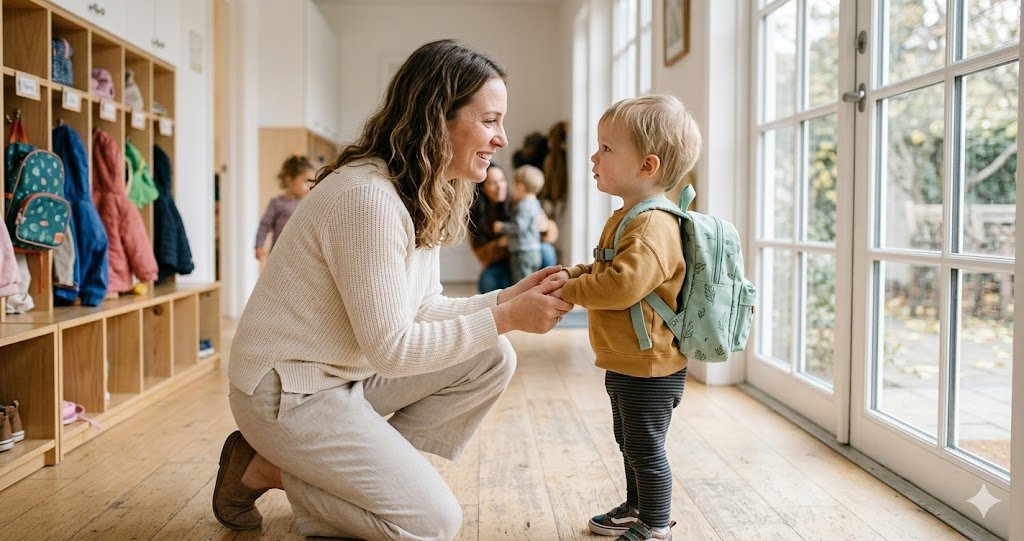
The first time I dropped a child off at daycare, I sat in the car afterward and cried harder than she did. The third time, my youngest toddled in, grabbed a toy truck, and waved me off like a tiny coworker who had a meeting to get to. Same mom, same general parenting philosophy, wildly different mornings.
So this is the guide I wish someone had handed me before round one. Not the cheerful brochure version, the honest one: yes, there will be tears (possibly yours). Yes, your child will get sick, probably within two weeks. And no, forgetting to label the water bottle is not a moral failure. It just means the water bottle now belongs to the classroom.
Before Day One: The Prep Week That Actually Matters
Most of the heavy lifting for a smooth start happens before the first morning. Three things made a real difference for each of my kids:
Visit together, more than once if you can. Walk the classroom, find the cubbies, meet the teacher whose name you’ll be saying four hundred times in the coming months. A room your child has already played in is not a scary room.
Practice being apart. Short, boring separations at home build the muscle. Leave your little one with grandma or a sitter for an hour, say a clear goodbye, come back when you said you would. The experts at Nemours KidsHealth also suggest timing departures for after naps and meals, because nobody handles goodbyes well while hungry. Honestly, that applies to adults too.
Shift the home schedule toward the daycare schedule. If lunch at daycare is at 11:30 and your kiddo currently eats at 1, start nudging a week or two ahead. The transition is hard enough without also being hungry at all the wrong times.
Then label everything. No, more than that.
Daycare is a place where eleven children own the same gray Old Navy hoodie. Whatever walks in unlabeled should be considered a donation to the class.
Name labels that survive the dishwasher: Bunny Badges Daycare Name Labels
After comparing a pile of label brands against what veteran daycare parents consistently report, the Bunny Badges personalized labels keep coming out on top for one unglamorous reason: they survive the dishwasher and the washing machine, again and again. The set mixes larger labels for bottles and lunch boxes with tiny ones that fit inside a sock cuff or on a clothing tag, and they’re made by a small US business.
Two honest caveats from the fine print and from parent reports: they don’t stick to silicone, so plan a different system for silicone snack cups and bibs (a permanent marker on the base, frankly). And stick them to the clothing tag, not the fabric itself, which is where they hold best through the laundry.
The Drop-Off: Surviving Separation Anxiety (Yours and Theirs)
Separation anxiety is not a sign that something is wrong. It’s a normal developmental stage that tends to show up in the later baby months, peak somewhere in toddlerhood, and fade as kids approach preschool age. It’s actually evidence of a healthy attachment: your child is upset because you matter. Cold comfort at 8:05 a.m., I know.
What works, according to both child development folks and every experienced daycare teacher I’ve ever talked to, is a goodbye that is short, warm, and identical every day. Ours was two hugs, one kiss, “Mommy always comes back,” and out the door. Pick your own script, but then actually leave. Hovering in the doorway tells your child there might be something to worry about after all.
Two rules I learned the hard way:
- Never sneak out. It feels merciful in the moment, but a child who turns around to find you vanished learns to keep one suspicious eye on you at all times. Crying at a goodbye beats panic at a disappearance.
- No second goodbye. If you go back in for one more hug, you’ve started the whole drop-off over from the top, except now everyone is more tired.
And for perspective: my daughter cried at drop-off for nearly three weeks. My youngest son was done with me by day two. Same family, same routines, completely different kids. Both outcomes are normal, and the teachers told me what they tell everyone, which turns out to be true: most kids stop crying within minutes of the parent leaving. If you don’t believe it, ask the teacher to text you a photo mid-morning. The first picture of your supposedly devastated child grinning into a bin of dinosaurs is a rite of passage.
The comfort item question
Many centers allow one small comfort object for nap time, and for a lot of toddlers it genuinely smooths the landing. The selection rules matter more than the specific animal: it has to be machine washable (daycare floors are what they are), and it has to be replaceable, because the day the only copy of a beloved lovey goes missing is a dark day indeed.
A lovey you can replace at 10 p.m.: Pro Goleem Security Blanket
The Pro Goleem elephant lovey shows up constantly in parent recommendations for exactly the reasons above: the fabric is independently certified to a recognized textile safety standard, it goes through the wash on gentle without pilling, and it’s inexpensive enough that buying an identical backup on day one is the obvious move, not a splurge. Rotate the two so they wear (and smell) the same. This is the kind of cynical veteran-parent logistics nobody tells you about until it’s too late.
The Inevitable Sickness (Yes, It’s Coming)
Here is the part the daycare tour glosses over: your child is going to get sick. Then better. Then sick again. The first months of group care are essentially a subscription service for colds, and it has nothing to do with the center being dirty. A room full of toddlers who lick toys and wipe their noses with their hands is simply the most efficient virus-exchange program ever designed. Pediatricians describe this as the immune system doing its job; I describe it as paying immune-system tuition.
In a multi-kid house, the math gets worse before it gets better. One child brings home a cold, and it tours the family like a tribute band, with my older son and the baby trading the same bug back and forth while my daughter, the seasoned veteran with three school years of antibodies, sails through untouched and mildly smug.
The practical question is when to keep your child home. The American Academy of Pediatrics offers a clear baseline in its guidance on when to keep your child home from child care: a child with respiratory symptoms plus a fever should stay home, and can return once they’ve been fever-free for at least 24 hours without fever-reducing medicine. Vomiting and diarrhea are stay-home territory too. Beyond the rules, the AAP’s common-sense test is whether your child can participate comfortably and whether they’d need more care than the staff can give. Your center’s own policy may be stricter, so read it before the first 6 a.m. judgment call, not during.
If you have a partner, agree in advance how you’ll split surprise sick days. Alternate, trade against work calendars, flip a coin, whatever works, but decide before the phone rings at 10 a.m., because that negotiation does not go well live.
The night-shift survival kit
Daycare colds are mostly managed at home, at night, by a parent who also has a cold. Two pieces of gear earn their shelf space in that first winter:
The famous Swedish snot sucker: Frida Baby NoseFrida
The NoseFrida SnotSucker is the gadget every parent group eventually recommends, usually with the phrase “I know how it sounds.” Yes, you suck the congestion out of your child’s nose through a tube, with your mouth. No, nothing reaches your mouth: a disposable hygiene filter sits in the path, and the design is specifically built to prevent mucus or germs from traveling up the tube. The tube only seals against the outside of the nostril, nothing goes inside the nose, which is why it’s considered safe even for the tiniest babies. A few drops of saline first makes the whole operation dramatically more productive, a sentence I never imagined writing before kids.
The honest downsides: the filters are a recurring consumable you have to keep stocked, and the long thin tube needs a wipe-down with rubbing alcohol rather than a trip through the dishwasher (the other parts can go in the top rack).
For the dry-air cough nights: Levoit Top-Fill Cool Mist Humidifier
A cool mist humidifier is the other half of the congestion night shift, and cool mist is the kind generally suggested for kids’ rooms, since hot-steam units carry a burn risk. The Levoit Classic top-fill model earns its spot through pure 2 a.m. ergonomics: you refill it by pouring water in the top instead of flipping and unscrewing a tank in the dark, it runs whisper-quiet through the night on one fill, and it shuts itself off when the water runs out. The wide opening also makes it genuinely easy to clean, which matters, because any humidifier in a child’s room needs regular cleaning to stay helpful rather than harmful.
One tip straight from the manufacturer: use distilled water if you can. Hard tap water in an ultrasonic unit leaves a fine white mineral dust on nearby furniture, which is harmless but annoying.
What Actually Goes in the Daycare Bag
Every center hands out a supply list, but the lists tend to be written by administrators, not by parents who’ve been paged at work about a pants shortage. Here’s the parent’s version, split the way daycare life actually splits:
- Goes back and forth daily: water bottle, any comfort item (if allowed), a weather layer, and whatever folder or app printout your center uses for daily reports.
- Lives at school: at least two complete spare outfits including socks, diapers and wipes if you’re in that era, nap bedding if required, and sunscreen in the warm months.
- Seasonal extras: hats, mittens, swim gear for water-play days, rain boots. Whatever the season is, assume it will happen at daycare.
The backpack
A backpack sized for the child, not the gear: Simple Modern Fletcher
For the daily back-and-forth, the Simple Modern Fletcher is the one that keeps topping the kids’ backpack charts, and after comparing the field for our full backpack guide, it’s easy to see why. It comes in a genuinely small size for the under-three crowd and a bigger one for preschoolers, has a name tag window sewn inside (one fewer thing to label), side pockets that actually hold a kid’s water bottle, and a chest clip so it doesn’t slide off tiny shoulders. The trade-off worth knowing: the polyester wipes clean easily but isn’t machine washable, and the licensed character prints cost noticeably more than the plain ones for the same backpack. We break down sizing and alternatives in detail in our full daycare backpack guide.
The spare clothes rule
Pack one more outfit than seems reasonable. If you think one spare is enough, send two. Include socks (the most-soiled, least-replaced item in any cubby), size up rather than down since cubby clothes sit there for months while your child grows, and do a seasonal swap before the weather turns, or your kiddo will be offered July shorts during the first October cold snap. Bundle each outfit in its own zip-top bag so a teacher mid-incident can grab one package instead of assembling an outfit from pieces.
For the clothes coming home: babygoal Wet Dry Bags
The dirty secret of the spare-clothes system is the return trip. Soiled clothes come home, and a plastic grocery bag tied in a knot is the traditional but grim solution. A washable wet bag like the babygoal three-pack fixes this for roughly the price of a takeout lunch: each bag has two zippered pockets so the incident pants stay quarantined from anything clean, a snap handle that hangs on a cubby hook, and the whole thing goes straight into the washing machine. The one limitation parents report: genuinely soaked items should be wrung out first, since the seams aren’t built for standing water.
The water bottle
The daycare classic: Thermos Funtainer Straw Bottle
Scroll any daycare parents’ thread about water bottles and one name comes up on repeat. The Thermos Funtainer has a push-button lid that covers the straw when closed, which matters in a room where bottles get handled by many small hands, a carry handle sized for toddler fingers, and stainless steel insulation that keeps water cold through the whole daycare day. Bonus that ties this article together: there are name stickers included right in the box. Know the limits, though: it’s for cold drinks only, and steel is heavier than plastic, so for the youngest one-and-two-year-olds a lightweight plastic straw bottle is the more realistic carry until they grow into it.
Snacks (read the policy first)
Snack rules vary wildly between centers, and allergy policies are the strictest rules in the building, with many classrooms fully nut-free. Before you stock up, read your center’s food policy, and if you need ideas that clear the common restrictions, we’ve got a full guide to allergy-friendly daycare snacks.
The First-Month Timeline: What’s Normal
Week one is either a honeymoon or a hostage situation, and neither predicts anything. Some kids are dazzled by the novelty; some are furious from minute one. Both are temporary.
Week two is the one nobody warns you about: the regression. The child who marched in happily on day three suddenly melts down at drop-off on day nine, and parents panic that something happened. Usually nothing happened. The novelty wore off and the permanence landed: oh, we’re doing this every day. It’s a completely normal part of adjustment, and the answer is the same boring consistency: same routine, same short goodbye, same pickup on time.
Weeks three and four are when most kids find their footing: a teacher they orbit, a friend whose name you’ll hear at dinner, a routine they start narrating to you. Some children settle in a week or two; others genuinely need a month or more, and a slower adjustment isn’t a verdict on your child or your choice.
If drop-offs are still escalating rather than easing after several weeks, don’t white-knuckle it alone. Ask the teachers what they see after you leave, and make a plan together. That conversation is normal, the staff have had it many times, and it works better than guessing.
Quick Answers to the 8 a.m. Questions
My child is crying. Should I stay until they calm down?
Counterintuitively, no. Long goodbyes prolong the distress. A warm, confident, short goodbye followed by an actual exit lets the teachers do the comforting, which is a skill they practice daily.
The teacher says the crying stops a few minutes after I leave. Is that real, or are they being nice?
It’s usually real. The crying is about the transition, not the place. If you want proof, ask for a mid-morning photo. Keep the first one; it’s good medicine on hard mornings.
Did I just rent a year of colds?
Sort of, yes. But the frequency drops noticeably after the first stretch, and you’re stocking the medicine cabinet either now or at kindergarten. There’s no toll-free route, only choosing when to pay it.
Want the whole system on one page? I’ve packed everything in this guide into a free printable first-month daycare checklist: the prep-week tasks, the label list, the cubby inventory, and the sick-day decision rules, all on one page you can stick on the fridge.