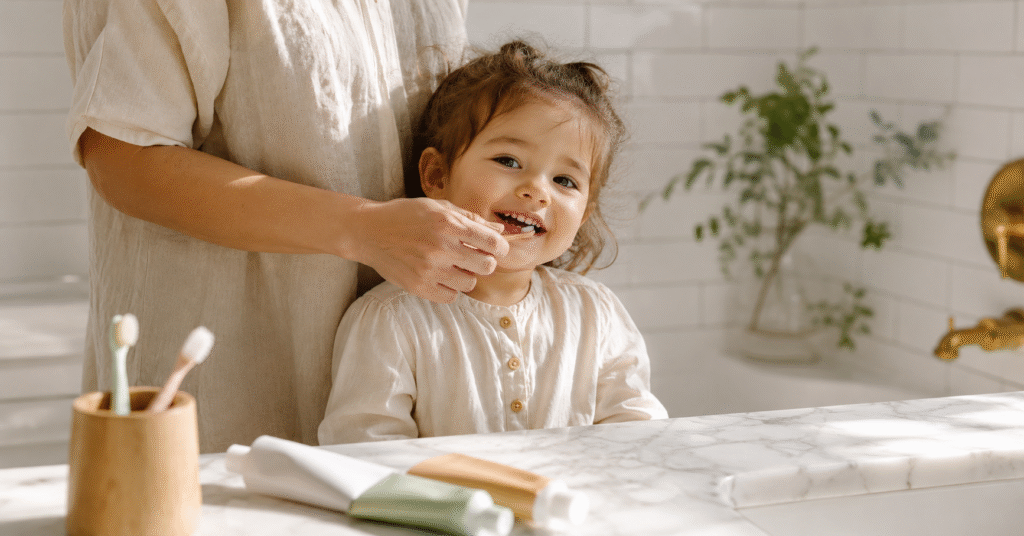
As a mom of three under six, I’ve spent the last five-plus years standing at toddler toothpaste shelves wondering what actually matters. My daughter is almost 6 and has been through every “no!” phase you can imagine. My older son, who’s 3, has strong opinions about which character is on the tube. My youngest is 19 months and currently treats toothpaste like it’s a snack. So the question of “which toothpaste should I buy?” is not theoretical for me — it’s a question I keep asking, and one I’ve spent hundreds of hours researching for this blog.
The hard part isn’t really the toothpaste. It’s the wrestling match at 7:45 PM when everyone is tired. But picking the right tube can absolutely tip the scales: flavor matters more than parents want to admit, and the fluoride question is more nuanced than the loudest voices on Instagram make it sound.
Below is the lineup I’d recommend a friend, based on weeks of cross-checking ingredient lists, pediatric dental guidance from the AAP, AAPD, and ADA, real-parent reviews on Amazon, and what mom communities are saying. I’ll also walk through what the AAP, AAPD, and ADA currently recommend, because that shapes everything else. (If you’re still sorting out the brush itself, I have a separate guide to the best toddler toothbrushes by age — the brush and the paste are a team.)
If your child is over 2, the AAP, AAPD, and ADA all recommend a small amount of fluoride toothpaste twice a day. If you’ve decided to go fluoride-free anyway, the most evidence-backed alternative is a kids’ formula with hydroxyapatite. Both choices are covered below. I’m not here to lecture, I’m here to help you pick the right tube for your family.
Does my toddler need fluoride toothpaste?
This is the question that turns the toothpaste aisle into a minefield. Let me give you the short version of where the major pediatric and dental organizations stand in 2026.
Since 2014, the American Academy of Pediatrics, the American Academy of Pediatric Dentistry, and the American Dental Association have all recommended brushing with fluoride toothpaste starting from the eruption of the very first tooth — not at age 2, not when your child can spit. From the first tooth.
The amounts are tiny on purpose:
- Under 3 years old: a smear (about the size of a grain of rice)
- 3 to 6 years old: a pea-sized amount
- Twice a day, with adult supervision until at least age 6
That rice grain is actually tiny. If you’ve been squeezing out a ribbon across the brush like a toothpaste commercial, you’re using a lot more than recommended. No shame: one study of parents found average doses were five to seven times the recommended amount, so if that’s you, you’re in the vast majority. Just scale back going forward. The reason fluoride works at these doses is that it sits topically on the enamel between brushings; it does not need to be swallowed to do its job.
The “concern” you may have read about, fluorosis, is what happens when young children swallow consistently too much fluoride during the years their adult teeth are forming. At the smear and pea amounts above, the risk is low and the cavity prevention benefit is well documented. The AAPD reviewed seventeen clinical trials before settling on these recommendations.
So why does fluoride-free toothpaste even exist for kids?
A few reasons, and they’re worth being honest about:
- Training phase (under ~18 months): Most babies this age will swallow whatever you put in their mouth — it’s developmental, not bad behavior. A fluoride-free training paste is a reasonable bridge while you teach the brushing motion, even though current guidelines say a rice grain of fluoride toothpaste is safe even with swallowing. Some pediatric dentists are flexible here; others insist on fluoride from tooth one. Ask yours.
- Parent preference: Some families avoid fluoride for personal or philosophical reasons. That’s their call to make. The most evidence-backed fluoride-free option for cavity prevention right now is hydroxyapatite, the same mineral teeth are made of. A 2019 randomized trial in children found a 10% hydroxyapatite toothpaste was non-inferior to fluoride toothpaste at preventing new cavities over an 18-month period. The research base is newer and the trials are smaller than fluoride’s seven decades of data, but the direction is real.
- Backup tubes: Many families I’ve heard from keep one fluoride-free flavored paste for the daycare bag and a fluoride paste for evening brushing at home. Two-paste households are extremely common and totally fine.
If your pediatric dentist hasn’t told you otherwise, fluoride is the cavity-prevention gold standard for children, used in tiny amounts. Hydroxyapatite is the most credible fluoride-free alternative we currently have. Everything else (xylitol-only “training pastes,” coconut oil pastes, etc.) is fine for cleaning but does not have meaningful evidence for cavity prevention. Brushing twice a day matters more than the brand.
The 6 best toddler toothpastes
Here’s the lineup. Two fluoride picks at the top, four fluoride-free picks underneath, each chosen for a specific job. I’ll go deeper on each below.
| Pick | Best for | Fluoride? | Ages |
|---|---|---|---|
| Colgate Kids Bluey (4-pack) | Best overall | Yes (ADA Accepted) | 2+ |
| Crest Kids Sparkle Fun | Best value | Yes (ADA Accepted) | 2+ |
| RiseWell Kids Mineral | Best fluoride-free (hydroxyapatite) | No | All |
| Dr. Brown’s Fluoride-Free Baby | Best first toothpaste (0–2) | No | 0–3 |
| Tom’s of Maine Toddler Training | Best natural / clean ingredients | No | 3–24 months |
| Jack N’ Jill Natural | Best for picky / sensitive brushers | No | 6 mo+ |
Colgate Kids Bluey Toothpaste with Fluoride (4-Pack)
Quick take: This is the one I’d recommend a friend with a toddler who’s hit the 2-year mark. It checks the boxes that actually matter: ADA Accepted, real cavity-fighting fluoride (sodium fluoride), and a Bubble Fruit flavor that’s mild enough that even a kid who claims to “hate mint” will tolerate it. The Bluey packaging is an unfair tactical advantage for parents whose toddlers know who Bingo is.
What I appreciate as a parent looking past the cartoon is the formulation. It’s sugar-free, gluten-free, free of artificial preservatives, and notably it skips sodium lauryl sulfate (SLS), which is the foaming agent some kids react to with mouth sensitivity. The fluoride dose is the standard cavity-protection level you’d expect from a major American brand. I’d point you to the 4-pack of 4.6oz tubes specifically — it’s Amazon’s Choice in this category, the per-ounce price is meaningfully better than buying single tubes, and a busy toddler household will go through them.
Use it if: Your toddler is 2 or older and you’re following AAP/AAPD/ADA guidance. This is the default. The other picks are for specific situations.
Crest Kids Cavity Protection (Sparkle Fun)
Quick take: If price-per-ounce is what’s on your mind, this is the answer. A three-pack of 4.6oz tubes costs roughly what a single tube of a “natural” brand does, and it’s the best-selling children’s toothpaste in the country for a reason: it works, it’s ADA Accepted, and kids actually like the sparkle gel.
The active ingredient is sodium fluoride at the standard 0.243%, the same protective dose as the more expensive options. Where Crest Kids loses points with crunchy-leaning parents is the inactive list: it does contain SLS, sodium saccharin, and a small amount of artificial colorant for the sparkles (mica, titanium dioxide, blue 1). None of these are unsafe at the doses used, but if “no artificial dyes” is a hard line in your house, you’ll want one of the picks below instead.
Use it if: You’re stocking the bathroom on a budget, or your child has flatly refused every milder flavor and you need the sparkly tube to win the war.
RiseWell Kids Mineral Toothpaste (Hydroxyapatite)
Quick take: If you’ve decided to go fluoride-free, this is the one that actually has science underneath it. RiseWell uses 10% micro-hydroxyapatite (the same mineral your child’s enamel is made of) combined with xylitol, in a Cake Batter flavor that, fair warning, tastes a bit like dessert. Many parents report their toddlers literally asking for it as a snack — so if “sweet enough to feel like a treat” is your goal, this nails it.
The formula is designed to be safe if swallowed, which is the practical reality of toddler brushing whether we want it to be or not. It’s free of fluoride, SLS, sulfates, artificial dyes, parabens, and propylene glycol. The brand was founded with input from pediatric dentists, and the hydroxyapatite is sourced from a clinical-grade supplier in Europe. Research on hydroxyapatite for pediatric cavity prevention is still relatively new compared to the decades-long fluoride evidence base, but a growing body of work suggests it’s a credible alternative for families opting out of fluoride.
Use it if: You and your pediatric dentist have decided to skip fluoride and you want a tube with actual remineralization chemistry, not just a “natural” label.
Dr. Brown’s Fluoride-Free Baby Toothpaste
This is the one I’d point a friend toward for the 8-to-18-month training phase. It’s not pretending to be a serious anticavity product. It’s a training paste, and that’s the right framing. Tiny tube, mild fruit flavors (strawberry, apple pear, and a mixed berry option, with strawberry being the most universally accepted in reviews), no SLS, no gluten, no parabens, no phthalates. The flip cap is one-handed openable, which matters when you’re holding a wriggling 14-month-old.
The xylitol in here is the only ingredient doing meaningful dental work. It’s a natural sugar alcohol that bacteria in the mouth can’t metabolize, so it doesn’t feed decay-causing organisms. That doesn’t replace fluoride or hydroxyapatite for cavity prevention, but during the training phase, the real goal is just getting your kid comfortable with the toothbrush. This paste makes that goal easier.
Use it if: Your baby just got their first few teeth and you want a kind-to-the-system paste to build the brushing habit before transitioning to fluoride or hydroxyapatite around age 2.
Tom’s of Maine Fluoride-Free Toddler Training Toothpaste
Tom’s of Maine has been making natural personal care products since the 1970s, and the trust they’ve built with parents shows. The toddler training paste is the cleanest ingredient deck of anything in this roundup: no artificial preservatives, no artificial colors, no artificial flavors, no SLS, no propylene glycol. The “Mild Fruit” flavor is what its name suggests, not bubblegum-sweet, not minty, just a gentle fruit gel that a 2-year-old will accept.
What I appreciate is that they don’t oversell it. Tom’s labels this one as “training,” meaning it cleans and freshens but isn’t doing serious anticavity work. The brand also makes a fluoride-containing kids’ paste (Silly Strawberry, mild mint, watermelon) for when your child is ready to make the switch, and you can stay within the same brand if that matters to you. Tom’s of Maine is also B Corp certified and the tubes are labeled as recyclable, which is one less guilt-thing for the environmentally minded among us.
The right pick if you want minimal ingredients during the training years, with a plan to switch when your child can spit.
Jack N’ Jill Natural Toothpaste
Quick take: If you have a child who has rejected three other tubes and you’re starting to lose your evening sanity, this is the one to try. Jack N’ Jill makes the same xylitol-based formula in something like nine flavors (strawberry, blueberry, banana, blackcurrant, raspberry, bubblegum, milkshake, “Berries n’ Cream”) plus a completely flavor-free option for kids who are sensitive to anything sweet. In Amazon reviews, banana and milkshake come up the most often as “the only flavor my picky toddler would accept” stories, while the flavor-free version is the go-to for sensory-sensitive kids.
The formula is 40% xylitol, meaningfully higher than most competitors, which is the active ingredient doing the dental hygiene work here. It’s organic-certified, BPA-free, COSMOS Natural certified, and designed to be safe if swallowed. Like the other fluoride-free training pastes, it’s not an anticavity product in the regulatory sense; it’s a clean-and-freshen paste with some bacteria-suppressing xylitol benefit.
Use it if: You’ve struck out with two or three other tubes and need the “throw flavors at the wall” approach to find one your child will accept.
How to choose between these (a 30-second decision tree)
If you read all six write-ups and still don’t know which to grab, here’s how I’d think through it:
- Is your child under 18 months? Start with Dr. Brown’s or Tom’s. Goal is habit, not cavities yet.
- Is your child 2 or older, and your dentist hasn’t said otherwise? Colgate Kids (Bluey) if you want the default. Crest Sparkle Fun if budget is the bigger constraint.
- Are you committed to fluoride-free? RiseWell Kids. It’s the only fluoride-free pick with cavity-prevention chemistry behind it.
- Does your child reject everything? Jack N’ Jill, and start with the flavor-free one. Then work up to fruit flavors.
- Do you want minimal ingredients above all? Tom’s of Maine training paste.
You can absolutely keep two tubes in rotation. Most of the families I’ve talked to do exactly this: a fluoride paste at the bathroom sink for evening brushing, and a fluoride-free flavored paste in the daycare bag for the day shift. (Speaking of the daycare bag, if your center has a snack policy, my guide to allergy-friendly toddler snacks covers what actually passes the drop-off test.)
Brushing tips that actually work with toddlers
The right tube only gets you halfway. Here’s what I’ve pulled from pediatric dental guidance and from years of comparing notes with other moms.
Let them brush first, then you brush
“You brush, then they brush” is a worse order than it sounds. When you go second, you can actually clean the molars they missed, and the kid feels in control. Many pediatric dentists call this “two-brush brushing,” and it’s a strategy that comes up repeatedly in toddler dental advice for under-5s.
Don’t rinse
This one surprised me. The AAPD and most pediatric dentists now recommend not rinsing after brushing, or rinsing very minimally, because rinsing washes the fluoride (or hydroxyapatite) right back off the teeth before it can do its job. Just have them spit out what they can and leave the rest. The benefit is topical: it sits on the enamel and works overnight.
Find the position that lets you see all four sides of every tooth
Some families like to brush face-to-face so they can talk and make eye contact. Others find it easier to sit behind their child with the head tipped back, like a mini dentist setup. There’s no single right answer. What matters is that you can actually see the chewing surfaces, the insides of the front teeth, and the gumline. If your current position has you guessing, change positions.
The molars are the cavity factory
If you only have 15 seconds of cooperation, spend it on the back molars. Front teeth get cleaned by the act of eating; molars do not. This is where pediatric cavities tend to show up first, especially the second molars that come in around age 2 to 3.
Songs, podcasts, anything
Many families use a 2-minute brushing song (Spotify and YouTube both have plenty), or a small sand timer from the dollar store. Whatever takes the focus off “you are brushing now” and onto something else is the right answer.
The AAPD recommends a first dental visit by the time your child’s first tooth erupts, or no later than age 1. If you haven’t been yet and your child is 2 or 3, schedule. They’ll tell you whether to use fluoride, hydroxyapatite, or a training paste based on your child specifically, your local water situation, and any visible enamel issues. A 20-minute appointment is worth a year of guessing.
Frequently asked questions
Is it safe if my toddler swallows toothpaste?
At the recommended rice-grain dose of fluoride toothpaste, yes. The amount is well below what would cause any acute issue. Fluoride-free training pastes are formulated to be even more permissive of swallowing. The bigger concern is chronic over-dosing across years, which is why the rice-grain amount matters. The “do not swallow” warnings on adult toothpaste apply to adults using adult quantities.
Can I use adult toothpaste on my toddler?
Pediatric dentists generally recommend against it, mostly because adult toothpastes contain higher fluoride concentrations and stronger flavors. The amount you’d actually put on a toddler’s brush is so small that the fluoride dose is roughly equivalent, but the mint burn is real, and kids reject it. Stick with kids’ pastes for the cooperation factor alone.
What about charcoal toothpaste for kids?
Skip it. Charcoal pastes are abrasive and can wear down enamel, which is especially a concern for the thinner enamel of baby teeth. There’s no pediatric dental benefit, and the ADA has not given the seal of acceptance to any charcoal toothpaste.
How often should I replace the toothbrush?
Every three months, or sooner if the bristles look frayed. Pediatricians also generally recommend swapping the brush immediately after any stomach bug or strep infection — cheap insurance against re-infection.
Is hydroxyapatite really “as good as” fluoride?
This claim gets oversold by some brands. The honest answer is that several clinical studies, including one in children, have shown hydroxyapatite formulations performing comparably to low-dose fluoride for cavity prevention and remineralization. But the fluoride evidence base spans more than seventy years and tens of thousands of patients; hydroxyapatite’s research base is newer and smaller. It’s a credible alternative if you’re opting out of fluoride. It’s not yet a 1:1 replacement that all pediatric dentists endorse.
What should I do if my child only drinks bottled water?
This is a real conversation to have with your dentist. Most municipal water in the US is fluoridated to a level that meaningfully contributes to cavity prevention; bottled water typically isn’t. If your child drinks mostly bottled, your dentist may recommend fluoride toothpaste (vs. fluoride-free) more strongly, or even a fluoride supplement in some cases. The CDC and the AAP both have specific guidance here. (If you’re already thinking about supplements, my guide to toddler multivitamins walks through what’s worth it and what isn’t.)
As an Amazon Associate, I earn from qualifying purchases. This costs you nothing and helps keep this blog running. I only recommend products that pass my research and fact-checking process — including cross-referencing pediatric dental guidance, ingredient lists, and real-parent reviews — and that I’d consider for my own family. Always consult your pediatric dentist for personalized advice. What works in one family may not be the right call for yours.