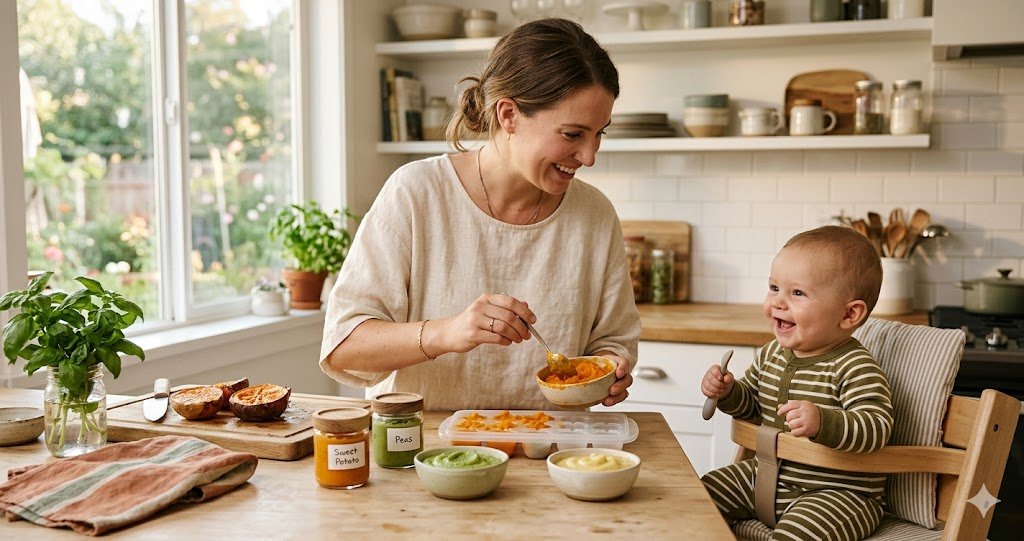
When my daughter started solids around six months, I had this tidy little vision of batch-cooking a rainbow of purees on Sunday and pulling out perfect portions all week. The reality was a fridge full of mismatched containers, a sweet potato puree that turned into a single freezer-burned brick, and me scraping food out of a regular ice cube tray with a butter knife. If you are anywhere near that stage, you do not need fancier recipes. You need the right containers.
So I went looking for the storage gear that actually solves the three problems that come up over and over with homemade baby food: freezing single servings cleanly, keeping a day or two of food in the fridge without it drying out, and getting a snack out the door without a leak in the diaper bag. To narrow it down, I cross-referenced product specs against parent reviews, checked the CPSC recall database, and leaned on what a decade of feeding three kids has taught me about which features matter and which are just marketing. Here is what rose to the top, sorted by the job you need it to do.
What actually matters in baby food storage
Before the picks, a quick filter, because the listings all sound identical. After comparing dozens of options, these are the things I think are genuinely worth caring about:
- Food-grade, clearly labeled material. Look for BPA-free plastic, food-grade silicone, or glass. Glass and silicone are easier to feel good about for repeated freezing and reheating.
- True portion sizes with markings. One-ounce cubes are gold early on. Trays with molded oz/ml lines save you from guessing.
- A lid that genuinely seals. This is the difference between a smooth puree and a sad, icy one. Freezer burn comes from air, so a tight clip-on or silicone-gasket lid earns its place.
- Pops out and stacks. Flexible silicone releases frozen cubes without a fight, and a flat, stackable shape is the only way a freezer survives meal prep.
- Easy to clean. Dishwasher-safe is non-negotiable in my house. Bonus if it is microwave-safe for reheating.
A quick safety note before you stock up. Homemade baby food is not pasteurized like the store-bought jars, so it spoils faster. Refrigerate fresh purees within two hours of making them, keep them in the fridge for only about one to two days, and freeze anything you will not use right away. The U.S. government’s food-safety guidance has a simple storage chart worth bookmarking at FoodSafety.gov.
Best silicone freezer trays for batch-freezing purees
If you are cooking in batches, a good silicone tray is the workhorse you will reach for most. The cubes pop out, you transfer them to a labeled bag, and the tray is ready for the next round.
WeeSprout Silicone Baby Food Freezer Tray — best overall
Best overall
This is the one I would point a friend to first. It pairs a flexible food-grade silicone base with a hard clip-on lid, which is the combination that actually keeps freezer burn out while still letting cubes release easily. It comes in a couple of section sizes (the ten 1.5-ounce wells and a larger six 3-ounce version), each well has a fill line, and it is BPA-free and dishwasher-safe. WeeSprout is a well-known, highly rated name in this category for a reason: the lid stays put and the trays stack flat. Expect to pay somewhere in the mid-teens for one.
KeaBabies Silicone Freezer Tray — best for portion tracking
Best for portions
If you are the kind of parent who likes to know exactly how many ounces your baby is eating (hi, it’s me), this one is built for you. It has ten individual two-ounce pods, each marked at both one and two ounces, with a wide no-spill base and a clear clip-on lid. It is food-grade silicone that is freezer-, dishwasher-, microwave-, and even oven-safe, so you can reheat a portion right in it. It also comes in soft, muted colors if you care about your freezer looking a little less chaotic. Pricing lands close to the WeeSprout.
PandaEar 3-Pack Freezer Tray — best budget pick
Best budget
When you want to freeze a lot at once without spending much, this three-pack is a smart buy. Each tray has seven one-ounce wells with a hard clip-on lid, the silicone is non-stick so cubes release cleanly, and it is BPA-free, dishwasher-safe, and even boil-safe for sanitizing. Three trays for the price most brands charge for one means you can keep a whole week’s worth of purees going at once. It is made by a small Virginia-based family company, which I always have a soft spot for.
Best glass jars for fridge storage and reheating
Trays are for freezing. For the food you will actually eat in the next day or two, or for reheating a thawed portion, small glass jars are hard to beat. They do not stain, they do not hold onto smells, and you can warm food right in them.
Béaba Glass Baby Food Jars — the premium choice
Premium glass
Béaba has been making thoughtfully designed feeding gear in France for over twenty-five years, and these 8-ounce jars feel like it. They are made from extra-resistant glass that handles heating, freezing, and sterilizing without deteriorating, topped with a soft silicone airtight lid that clips on easily. There are oz/ml graduation marks right on the glass for portioning, and they are freezer-, microwave-, and dishwasher-safe. They come in the kind of warm, calm colorways (terracotta, sage, sunrise) that you will not mind leaving on the counter. They are the splurge of this list, and if they happen to be out of stock, comparable 4-ounce glass jar sets from other brands do the same job.
DRKIO Glass Baby Food Containers — best value set
Best value glass
For most families this is the practical glass pick. You get a stack of leakproof 4-ounce glass jars (some sets pair 4- and 8-ounce sizes) with silicone-ring lids that seal well, plus a labeling marker so you can date them, a small touch that matters more than you would think when the freezer fills up. They have scale marks for portioning and are microwave-, dishwasher-, and freezer-safe. It is a top-selling option in its category, and the per-jar cost is a fraction of the premium sets.
Best reusable pouch for on-the-go
Simple Modern Joey Reusable Food Pouches — best for out and about
Best on-the-go
Once your baby is old enough to self-feed from a spout, refillable pouches are the thing that saves your sanity at the park and at daycare drop-off. The Simple Modern Joey pouches fill from a wide double-zip opening at the bottom (with a fill line so you don’t overdo it), seal leakproof, and have a twist-off spout your little one can sip from independently. They are BPA-free, freezer- and dishwasher-safe, and Simple Modern backs them with a limited lifetime warranty. Two honest notes from real reviews worth knowing: the usable capacity runs a touch under the stated five ounces, and stringy foods like spinach are easier to clean out with a bottle brush. A ten-pack runs around twelve dollars, which pays for itself fast versus single-use pouches.
How I actually used all three together
You do not need every category, but they work nicely as a system. The flow that finally stuck for me looked like this: cook and puree on the weekend, spoon everything into silicone trays, and freeze overnight. The next morning, pop the cubes out and drop them into labeled freezer bags by flavor, which frees the trays back up. Each evening I would move a day’s worth into a small glass jar in the fridge to thaw, and on busy mornings I would fill a refillable pouch to throw in the bag. If you would rather skip the chopping, a good baby food maker steams and blends in one step, and if pouches become your main move, our reusable pouch picks go deeper on the best ones. The whole point is that you cook once and feed many times, which, when you are also chasing a newly mobile baby, is the only version of meal prep that survives contact with real life.
Storing and thawing homemade baby food safely
This is the part most product roundups skip, and it is the part that actually keeps your baby healthy. A few rules I keep taped (mentally, at least) to the freezer door:
| Homemade puree | Refrigerator | Freezer |
|---|---|---|
| Fruits & vegetables | 1–2 days | 1–2 months |
| Meat, poultry & eggs | 1 day | 1–2 months |
| Meat & vegetable combos | 1–2 days | 1–2 months |
- Cool before you freeze. Let hot puree cool in the fridge for an hour or two first; food that goes straight from stovetop to freezer forms big ice crystals that wreck the texture.
- Thaw in the fridge, not on the counter. Move cubes to the fridge overnight, or run the sealed container under cold water. Thawed food keeps in the fridge for up to 48 hours, and you should not refreeze it.
- Never store the bowl your baby ate from. Saliva introduces bacteria, so spoon out a serving and refrigerate the rest separately.
- Freezing breast milk too? Those silicone trays work for that as well, and our full breast milk storage guide covers it if that is your main use. Per the CDC’s milk storage guidance, frozen breast milk is best used within six months and is acceptable up to twelve.
A few questions parents ask me
Can’t I just use a regular ice cube tray?
You can, and plenty of parents do. But standard trays do not come with a sealing lid, so you will want to cover them tightly and move the cubes to a bag once frozen. The baby-specific silicone trays release more easily and stack better, which is why I think they are worth the small upgrade once you are freezing regularly.
How long does frozen homemade baby food last?
Plan on one to two months for best quality (some sources stretch fruit and veggie purees to three). Label everything with the date, because you will not remember otherwise, I promise.
Glass, silicone, or pouches — which should I buy?
They do different jobs. Silicone trays are for freezing portions, glass jars are for fridge storage and reheating, and pouches are for travel and self-feeding. If you only buy one thing to start, make it a silicone freezer tray.
Can I reheat food right in the container?
Check the label. The KeaBabies tray and the glass jars here are microwave-safe; many freezer trays are not meant for reheating, so transfer those to a microwave-safe bowl first.
A note on how these picks are made: as a mom of three, I lean on a decade of real feeding-stage experience and then do the homework, comparing specs side by side, reading through hundreds of real parent reviews, and checking recall records, so the short list you get is genuinely useful and not just whatever ranks first. Prices and availability change quickly, so double-check current details before you buy.