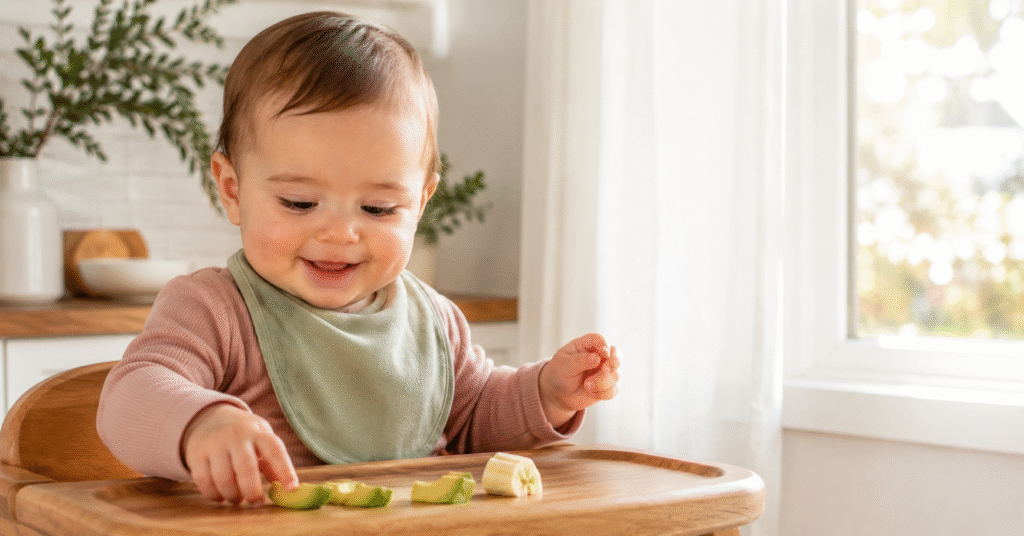
A bib for drool and a bib for messy meals solve different problems. This guide compares bandana, silicone, long-sleeve and disposable options by coverage, fit and cleaning needs.
This is a research-based guide, not a hands-on test of the listed products. Product research and recommendation checks are being updated; a listing, a positive rating or a customer report alone does not establish safety or suitability.
How I Chose These Bibs
The category is bigger than parents realize. A drool bib for a four-month-old has almost nothing in common with the long-sleeve smock you need when your toddler discovers spaghetti. Pick wrong and you’ll keep changing outfits all day. Pick right and one bib does the job of three.
The current review uses manufacturer information, current product listings, selected recent customer reviews and independent product coverage where it can be verified. Unresolved model, safety and evidence questions are recorded rather than treated as completed checks. Check the exact product instructions and the CPSC recall database before use; this guide does not certify product safety.
Best Bandana Bibs for Drooling and Teething (0–12 Months)
When my daughter started teething around four months, drool stopped being cute and started being constant. We were going through five bibs a day. The bandana style, triangular, snap-closure, layered for absorbency, was a small revelation. The shape stays put even when babies start grabbing, and the snap closure is far gentler on the back of a newborn’s neck than velcro that catches on fine baby hair.
1. KeaBabies Organic Bandana Bibs — Best Overall Bandana
These are the bandana bibs I’d buy first if I were starting over. KeaBabies uses dual-layer GOTS-certified organic cotton on the front, backed with soft polyester fleece, which matters because most “absorbent” bandana bibs are really just decorative scarves that wick drool straight onto the shirt. The fleece backing actually keeps the moisture off the clothing.
The other detail worth flagging is the three-stage snap system with nickel-free closures. Babies grow fast in the first year, and a bib that fits a three-month-old can be choking-tight on a thrashy nine-month-old. The adjustable snaps mean one set should genuinely last newborn through eighteen months or so.
Best for: Heavy droolers, parents who care about organic certifications, baby shower gifting (they come in a sustainable gift box).
Watch out for: Reviews note these don’t absorb breast milk or formula spit-up as well as they handle drool. If you have a heavy spitter-upper, pair these with a burp cloth at feeding time.
2. Konssy Muslin Baby Bibs — Best for Sensitive Skin & Teething
Muslin bibs are what I reach for when a baby has sensitive skin or develops drool rash, the kind of red, irritated patches that show up under the chin around month four. Muslin is breathable in a way that synthetic-backed bibs aren’t, and the fabric gets softer with every wash rather than stiffer.
Konssy’s version uses 100% cotton muslin on the front with a comfort fleece layer behind, which gives you absorbency without sacrificing breathability. The two nickel-free snaps adjust through about 36 months, and the muslin doubles as a burp cloth or impromptu washcloth when you’re caught short on the go.
Best for: Babies with sensitive skin, drool rash, or eczema. Also a good pick for hot summer months when synthetic-backed bibs feel sticky.
Watch out for: Muslin is breathable, not waterproof. If your baby is a fire-hose drooler and you need clothes underneath to stay completely dry, a fleece-backed cotton bib will outperform muslin. Manage expectations: muslin slows the drool, it doesn’t block it.
3. vuminbox Bandana Bibs + Teething Toys Bundle — Recommendation Paused
Safety review update, September 16, 2026: We have paused our recommendation and purchase link for the linked Pattern Girls bundle while we investigate reports of snaps detaching and leaving sharp metal exposed. These are customer reports for the current listed model, not a confirmed recall or an estimate of how often the problem occurs. We have not verified whether the reported units and current stock share the same production batch. We are not recommending this bundle while that safety question remains unresolved.
Best Silicone Bibs for Eating and Baby-Led Weaning (6–18 Months)
When my youngest son started solids at six months, I retired the bandanas for mealtimes within a week. They were absorbing avocado puree, getting it onto his chest anyway, and turning into a laundry headache. The silicone bib changed mealtime in our house, wipe it with a paper towel, hang it on the high chair hook, done. If you’re still in the bottle-to-solids transition, you might also be sorting out which baby bottles work best for that stage.
4. PandaEar Silicone Baby Bibs (Set of 3) — Best Overall Silicone
PandaEar is the silicone bib I’d hand a friend asking “just tell me what to buy.” It’s a Virginia-based small business founded by parents in 2016, and the bib does exactly what a silicone bib should: 100% food-grade silicone, BPA-free, with a deep spill pocket that actually stays open instead of collapsing inward (which is the failure mode of cheaper silicone bibs).
The linked Brown/Blue/Green set lists four neck-strap settings and an age range of 10–72 months. That listing range is sizing guidance, not a guarantee of fit for every child. Machine washable, dishwasher-safe, and rolls up reasonably well for the diaper bag, though silicone bibs are bulky no matter how you fold them, so manage expectations on travel.
Best for: Daily meals once the child is within the linked set’s listed age range and the bib fits correctly; for parents who want a wipeable bib that doesn’t add to the laundry pile.
Watch out for: Brand-new silicone often has a faint rubbery smell, totally normal, food-grade, and it airs out within a week or two of washing. If your baby refuses anything that touches their neck, silicone may not win the battle (a softer fabric alternative is below).
5. Eascrozn Silicone Bibs (Set of 3) — Best Budget Silicone
If the PandaEar is the safe pick, Eascrozn is the value pick. Same food-grade silicone, same BPA-free construction, same waterproof three-dimensional pocket, at a noticeably lower price per bib. The four adjustable snap sizes correspond loosely to 0–6, 6–12, 12–18, and 18–72 month ranges, which is honestly more granular than most silicone bibs.
The reason I’d still recommend the PandaEar as the overall pick is brand support and warranty. Eascrozn’s customer service is harder to navigate. For a budget-tier bib, that may not matter, but if you’ve ever had a snap fail at month two, it’s worth knowing what you’re trading away.
Best for: Stocking up on multiples for high-chair-only use, daycare extras you won’t cry over if one disappears, or testing the silicone format before committing to a premium brand.
Watch out for: Some reviewers note the pocket is slightly shallower than the PandaEar’s, fine for purees, occasionally inadequate for chunky BLW dropouts.
6. KeaBabies Presto Waterproof Bibs — Best Lightweight Alternative to Silicone
This is the bib I’d recommend if your baby refuses anything stiff around their neck. It’s not silicone, it’s KeaBabies’ proprietary PROtech fabric, a lightweight waterproof material that’s far softer than silicone but still wipes clean and stays stain-resistant. Hook-and-loop closure rather than snaps, which makes it easier to take off mid-meal when things get out of hand.
The key design choice here: the bib covers the upper chest and shoulders, not just the neck-down area. For babies who throw food at their own shirts (and they all do, eventually), the shoulder coverage saves a lot of laundry. There’s a wide food-catcher pocket at the bottom that doubles as a snack pouch on the go.
Best for: Babies who hate silicone, parents who want apron-style coverage, kids transitioning from puree to messier finger foods.
Watch out for: Hook-and-loop closures eventually wear out faster than snaps over many washes, it’s the trade-off for the easy on/off. Expect about a year of heavy use before the velcro starts losing grip.
Best Weaning Smocks with Long Sleeves (12–36 Months)
When my older sons hit the BLW stage, I figured out fast that a bib covering the chest is not enough. Toddlers, given a spoon and a bowl of pasta, will paint their forearms, their elbows, and on a really creative day, their hair. Long-sleeve smock bibs are the only thing that saved their clothes, and my sanity, through about two years of self-feeding chaos. Pair the right smock with a high chair that supports baby-led weaning, and mealtime gets noticeably less catastrophic.
7. Tiny Twinkle Long Sleeve Smock Bib — Best Overall Smock for BLW
Tiny Twinkle is a small baby brand based in Phoenix, Arizona, and their long-sleeve smock is the gold standard in this category for a reason. The fabric is 100% recycled polyester with a waterproof back coating, and the entire thing is OEKO-TEX Standard 100 certified, meaning it’s been tested free of PFAS, BPA, phthalates, and lead. For a product your baby will be wearing for an hour at every meal, the certification matters.
The sleeves have elastic cuffs that genuinely seal, food doesn’t crawl up the forearm, and the closure is a no-scratch hook-and-loop on the side, which keeps it from tangling in baby hair. Best detail: the whole bib rolls up into its own pocket and snaps shut for travel storage. This is the bib I see parents actually pack in the diaper bag rather than leave at home.
Best for: BLW from six to twenty-four months, daycare drop-off, restaurants where you don’t want a high-chair scene.
Watch out for: One bib per pack is fine for home, but for daycare you’ll want the two-pack, laundry turnaround matters when one is always in the wash.
8. Bumkins Sleeved Smock — Best Multi-Use Smock for Older Toddlers (3–5 Years)
Bumkins has been making waterproof baby gear out of Phoenix since 1989, over thirty years of refining the same fabric. Their Sleeved Smock is sized for the 3-to-5 age range and bridges a real gap in the market: it’s marketed as a paint smock for arts and crafts, but it works just as well at the dinner table for the messy-eater stage that doesn’t end at age two.
The construction is 100% polyester with embedded TPU waterproofing, a single-ply fabric (not layered), which Bumkins specifically chose so there’s no inner cotton layer for stains or mildew to soak into. Adjustable tie at the neck, generous front pocket. It’s a smock that wipes clean rather than getting washed every time.
Best for: Threes and fours who are still messy eaters, art projects, baking with a toddler, anywhere clothes need to survive a small tornado.
Watch out for: The tie closure at the neck is fiddlier than hook-and-loop for daily use, Bumkins did this deliberately for fit accuracy at this age range, but it’s a few extra seconds at every meal.
9. Accmor 5-Pack Long Sleeve Bibs — Best Budget Multipack for Daycare
If your kid is in daycare and the daycare requires fresh bibs daily, you do not want to send the Tiny Twinkle into rotation with eight other families’ laundry. Accmor’s five-pack is the workhorse, premium polyester with an EVA waterproof layer, certified free of lead, PVC, BPA, phthalates, and vinyl. Elastic cuffs at the wrists, hook-and-loop closure at the neck, and a generous catch-all front pocket.
They come in cute patterns that won’t make you sad if one disappears at the daycare swap. Five bibs at the price of one premium brand means you can stock the daycare bag, the diaper bag, and the grandma-house bag without thinking about it.
Best for: Daycare drop-off, travel, multi-location lifestyles where bibs scatter and never come back.
Watch out for: The fabric isn’t quite as durable as Tiny Twinkle’s recycled polyester. Expect maybe twelve to eighteen months of heavy use per bib rather than two-plus years.
Best Disposable Bibs for Travel, Daycare, and Restaurants
Disposable bibs are the category most American parents don’t realize they need, until they’re sitting on an airplane with a teething seven-month-old and a Goldfish situation that requires hazmat protocol. Or at a friend’s house for dinner. Or in a restaurant where pulling out a silicone bib from the diaper bag feels excessive. A small pack of disposables in the side pocket of the diaper bag has saved me more outfits than I can count, usually because my husband forgot to restock the cloth ones and I’m flying solo at Sunday brunch.
10. Glad for Kids Unicorn Disposable Paper Bibs — Best Overall Disposable
Yes, it’s Glad, the same brand behind the trash bags. They’ve extended into kids’ tabletop products, and the disposable bibs are genuinely well-made: three layers (quilted, absorbent, leak-proof), a built-in crumb-catcher pocket at the bottom, and an adhesive tab on the back that sticks the bib to the clothing so it doesn’t ride up.
Thirty bibs per pack, with playful unicorn or shark or dinosaur prints that toddlers actually want to wear. The adhesive tab is the design choice that separates these from the cheap disposables, without it, a wiggly toddler will have the bib pushed up under the chin within two minutes.
Best for: Plane travel, restaurant meals, daycare stash, kids’ birthday parties where you don’t want red dye on white shirts.
Watch out for: They’re disposable, so single-use creates more waste than a reusable bib. Save them for actual on-the-go situations rather than everyday home use.
11. KIIS Individually Packaged Disposable Bibs — Best for Travel & Restaurants
If you’ve ever pulled out a disposable bib from a multipack and noticed it’s gotten lint, crumbs, and who-knows-what on it from rattling around the diaper bag, the KIIS individually packaged version is the fix. Each bib is sealed in its own small wrapper, completely hygienic, easy to grab one without disturbing the others, and they take almost no space because they pack flat.
The bibs themselves are a bit heavier than competitors (about 7.3 grams each versus 5.7g for typical disposables), which translates to better absorbency. CPC certified for U.S. safety standards. Available in twenty- or sixty-piece packs, so you can scale to your travel frequency.
Best for: Frequent travelers, restaurant-heavy families, anyone who keeps a stash in the car or stroller for unplanned messes.
Watch out for: The individual packaging means more wrapper waste per bib. It’s a trade-off for hygiene, but worth noting if you’re trying to reduce single-use plastic.
Baby Bib Buying Guide: What Actually Matters
Match the Bib to the Age, Not Just the Brand
The single biggest mistake I see new parents make is buying one type of bib for the whole first year. A bandana bib designed for drool is the wrong tool for baby-led weaning purees, and a stiff silicone catcher is misery on a three-month-old who just wants to gnaw their hands. Match the bib to the developmental stage:
- 0–6 months: Bandana or muslin bibs for drool and teething. Look for adjustable snaps and soft, breathable fabric. Skip anything stiff.
- 6–12 months: Transition to silicone or waterproof fabric bibs when solids start. The food-catcher pocket isn’t optional; it saves the floor from purée bombs. Pair with the right plates, bowls, and utensils for self-feeding to set up a clean mealtime station.
- 12–24 months: Long-sleeve smock bibs for BLW, especially for messy finger foods like pasta, berries, and yogurt. Forearm coverage is the difference between one outfit change and three.
- 2–5 years: Sleeved smocks for the messiest meals, and double duty as art smocks for paint and play-doh. Don’t pack the long-sleeve bibs away too soon.
Closure Type: Snaps vs. Velcro vs. Hook-and-Loop
This is the detail I wish someone had told me with my first baby. Bib closures matter more than the fabric:
- Snaps: Last longest, gentlest on baby hair, hardest for babies to pull off themselves. Best for daily-use bibs you’ll wash a hundred times.
- Hook-and-loop (velcro): Fastest on and off, but wears out within twelve to eighteen months of heavy washing and tends to catch on fine baby hair. Better for smock bibs where speed of removal matters.
- Magnetic closures: Trendy and fast, but check the manufacturer’s safety statement. Small magnets are a documented choking and intestinal hazard if a bib breaks down, and the CPSC magnet safety center warns about serious internal injuries from accidental ingestion.
- Tie closures: Adjustable to any size, but slowest to use and can pose a strangulation risk if the ties are too long. Best for older toddlers (3+) under supervision.
How Many Bibs Do I Actually Need?
For a heavy-drool teething baby: plan on at least eight to ten bandana bibs in rotation, because you’ll change them three to five times a day and laundry can’t keep up. For mealtimes once solids start: two to three silicone or smock bibs is enough, they wipe clean between meals. For daycare: ask the daycare specifically. Most require five clean bibs sent every Monday, so a five-pack is exactly right.
Safety: Read the CPSC Disclosure Before Buying
Every reputable bib brand sold in the US should comply with CPSIA (Consumer Product Safety Improvement Act) standards for lead, phthalates, and BPA. Premium brands often add OEKO-TEX Standard 100 certification for textile chemical safety. According to the Consumer Product Safety Commission, bibs with detachable decorative pieces, long ties (over six inches), or fraying edges are all flagged risks, check before you buy.
Frequently Asked Questions
When does my baby need a bib?
Most babies start drooling consistently around two to three months as their salivary glands mature. That’s a fine time to introduce bandana bibs. The AAP notes that teething typically begins between four and seven months, and bibs become essential daily wear during this stretch.
Are silicone bibs safe for babies?
Yes, when made from 100% food-grade silicone and certified BPA-free. Silicone is non-toxic, non-porous (doesn’t harbor bacteria the way fabric can), and dishwasher-safe at high temperatures. Look for explicit BPA-free, phthalate-free, and PVC-free labeling on the packaging.
Can newborns wear bibs?
Newborns don’t need bibs in the strict sense, their drooling doesn’t ramp up until two or three months. But a small, soft bandana-style bib can protect their delicate skin from milk dribbles during feeds. Avoid anything stiff or with hard closures for the first eight weeks.
How often should I wash baby bibs?
Bandana and muslin bibs: wash after one full day of use, sooner if soaked through. Silicone and waterproof bibs: wipe with a damp cloth or rinse after every meal; deep-clean weekly in the dishwasher or washing machine. Smock bibs: machine-wash weekly with occasional wipe-downs between heavy meals.
Bandana bib vs. silicone bib: which do I actually need?
Both, they solve different problems. Bandana bibs handle drool between three and twelve months, when teething is the main mess. Silicone bibs handle food messes once solids start around six months. Most parents need both formats in their rotation by the time the baby turns six months.
Do disposable bibs really work, or are they a waste?
For daily home use, they’re not worth it because a reusable bib outperforms them on absorbency and cost. For travel, restaurants, daycare, and grandparents’ houses, they’re genuinely useful. Keep a small pack in the diaper bag and use them only when laundry isn’t an option.
How many bibs should I put on the baby registry?
Plan for eight bandana bibs (0–12 months), three silicone or waterproof fabric bibs (6–18 months), and two long-sleeve smocks (12+ months). A small pack of disposables for travel rounds out the kit. Don’t over-buy the smocks early; they’re age-specific and won’t fit until baby is on solids.
The Bottom Line
No single bib does every job. If you can only buy one bandana set, the KeaBabies Organic 8-Pack is the safest starting point. If you can only buy one silicone bib, check the PandaEar 3-set’s listed 10–72 month age range and neck fit before choosing it. For toddler dinner chaos and daycare drop-off, the Tiny Twinkle long-sleeve smock is the gold standard. And keep a small Glad disposable pack in the diaper bag for restaurants and travel days when laundry isn’t an option. Match the format to the developmental stage, prioritize safety certifications over cute prints, and you’ll spend a lot less time changing outfits this year.