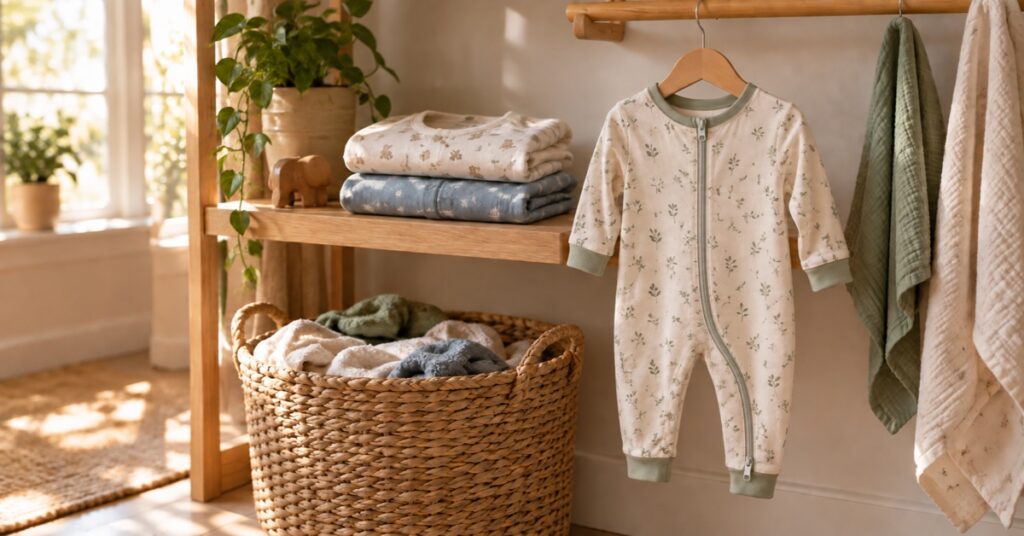
You open the drawer after a diaper leak. One sleeper is in the wash; another is still on the drying rack. The next outfit needs to fit your baby and make it back into that drawer before you need it again.
Start with the size you need now. For 0–3 months, the two cotton footies below offer a choice between a two-pack for rotation and a single organic-cotton outfit. The footless Kyte romper is linked in 6–12 months and belongs to a separate decision. It is not a substitute for either infant size.
If your current sleepers fit well, are in good condition, and leave you a clean change between washes, you may already have enough. This guide draws on product information, care instructions, and published owner feedback.
0–3 Months: Two Cotton Footies to Choose Between
Simple Joys by Carter’s: A Cotton Two-Pack for Rotation
The Simple Joys by Carter’s Cotton Footed Sleep and Play two-pack is where I’d start when the immediate problem is having something clean to reach for. The linked Purple Polka Dot/White Ducks set is the 0–3-month version. Two cotton footies give you a spare without buying two separate single outfits.
Both pieces are cotton, with enclosed feet, a full-length zipper and a tab at the chin. That is a straightforward combination for changing into a fresh outfit after a leak: unzip, change and dress again.
Fit is the reason I wouldn’t order several packs straight away. Buyers of this set have reported long sleeves, an overall roomy fit and shrinkage after washing. Those reports point in different directions, which is exactly why “size up” is not a useful blanket answer. A sleeper can be too long in the sleeves and still change shape after laundering.
Check how the first set fits your baby instead of assuming that another Carter’s line gives you the right answer. Look at the neckline and sleeves, then at the body length and space at the feet. If there is excessive loose fabric or it pulls tight, choose a different fit; don’t plan to fix a poor fit by shrinking it in the dryer.
The product information specifies machine washing. Follow the sewn-in label for drying, rather than borrowing a tumble-dry setting from another cotton sleeper. If you need more help deciding how many changes to keep, the newborn clothing quantities guide is the place to start.
View the Simple Joys two-pack on Amazon
Burt’s Bees Good Night Sky: An Organic Cotton Footie with a Relaxed Cut
Paying for the Burt’s Bees Good Night Sky Sleep & Play makes sense when you specifically want organic cotton and are considering a roomier infant cut. The Limestone version linked here is a single footed outfit in 0–3 months.
Burt’s Bees describes this style as relaxed and roomy. If you’ve been struggling to find a cut you like, that is worth a closer look at the size guide. You still need to check the fit on your baby; “roomy” doesn’t guarantee the right proportions for every baby.
The two-way zipper lets you open from the bottom for a diaper change while leaving the top closed. There is also a snap tab at the neckline. Fold-over hand cuffs are included on this 0–3-month size, so that detail matters when checking what you’re ordering; it isn’t a feature to assume on every larger size.
Written customer feedback for this particular version is limited, and parents differ on how soft it feels. If your current cotton footies fit well and organic cotton isn’t a priority, I wouldn’t replace them for this one.
There is a practical laundry difference worth knowing: the brand’s care instructions allow a cold gentle wash and low tumble drying. If your clothes normally travel straight from washer to dryer, that may matter more than an attractive print. It still means following the care label, not adding it to any hot cycle.
Keep the relaxed-fit advice attached to this infant style. It should not become a reason to buy loose sleepwear in larger sizes. Follow the sleepwear label on the garment you actually choose.
View Burt’s Bees Good Night Sky on Amazon
6–12 Months: A Footless Kyte Baby Romper
Before paying more for the Kyte Baby Dual Zipper Romper, picture where you would dry it. If everything in your laundry basket goes in the dryer, I’d skip this one. The plain Slate romper is for someone who wants uncovered feet and stretchy fabric enough to make room for a separate drying step.
The linked version is 6–12 months, made from rayon derived from bamboo with spandex. Your baby’s feet stay uncovered, so there is no enclosed foot section to fit. The body, leg length and ankle openings still need to fit properly.
The dual zipper opens from the top or bottom. For a diaper change, you can open the lower section without starting at the neckline. This size does not have the fold-over hand cuffs shown on some smaller Kyte sizes, so don’t rely on a newborn photo when choosing it.
Kyte calls for gentle washing and laying the romper flat or hanging it to dry. Think about the sleeper you need to reach for when this one is still damp. If that means buying extra clothes just to work around your laundry habits, the higher purchase price is only part of the decision.
Owners of the same romper line in other colors and sizes have reported pilling, holes and seam or zipper problems. Those reports concern other versions, so they don’t tell us how this particular Slate 6–12-month garment will wear. They do give me pause about spending more in the hope that this romper will outlast a cotton footie.
I also wouldn’t stretch the sizing advice into a promise of extra months of wear. Choose for your baby now, using Kyte’s current size guide and the garment’s sleepwear label. A stretchy outfit still has to fit properly for sleep.
View the Kyte Baby Slate romper on Amazon
Check the Fit and Care Label Before Buying More
Before filling a basket with several colors, check the current brand size guide against your baby’s measurements. Month labels are a starting point, not a promise that different brands have the same length or shape. Check the size and color selected in your basket too; choosing a different option can change details such as the cuffs.
When the clothing arrives, check the actual neckline, sleeves, body and feet. Follow the garment’s fit instructions, watching for excess fabric around the neck or face, pulling or constriction. Recheck after laundering. Stop using an outfit with damage or loose parts, and don’t cut off the feet or alter fasteners to keep using it.
Finally, count pajamas as part of everything your baby is wearing for sleep. No fabric name guarantees that a baby won’t get too hot. The American Academy of Pediatrics advises watching for overheating, including sweating or a hot chest, and keeping hats off indoors after coming home from the hospital. Keep loose blankets and weighted items out of the sleep space. For the separate decision about a wearable blanket, see the baby sleep sack guide.
Trying a new style? Start with one outfit or one pack, follow its washing instructions and see how it fits afterward before buying more colors. If the sleepers already in your drawer fit well and leave you a clean change between washes, you can close the shopping tab.