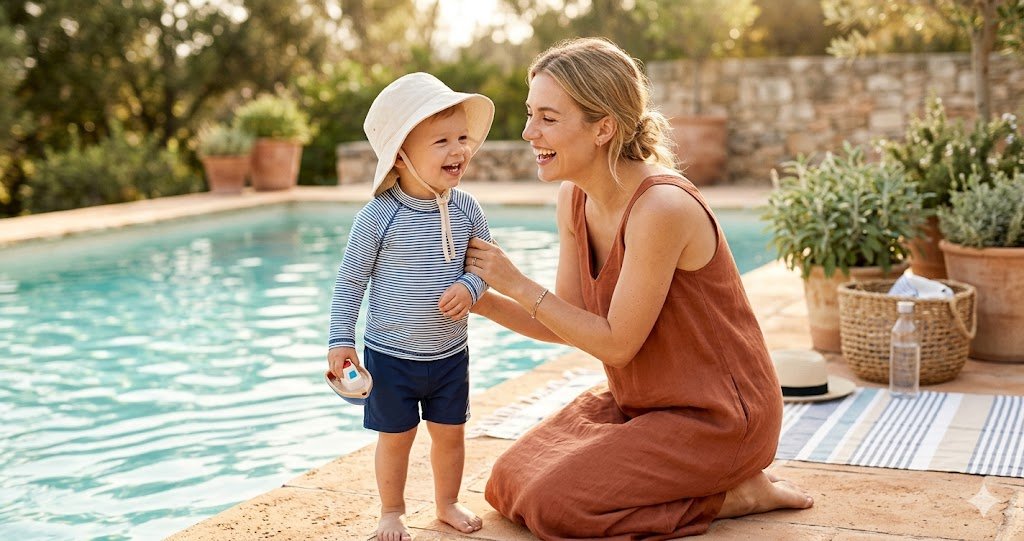
Between my daughter and her two little brothers, I have done the start-of-summer swim scramble more times than I can count: hunting down a suit that still fits, isn’t see-through after one season, and actually keeps small shoulders from turning pink by lunch. A good rash guard does the heavy lifting there. It covers the parts of a kid that are hardest to keep sunscreen on, it stays put while they cannonball, and it means I am not chasing a slippery toddler around the pool deck with a bottle of SPF every ninety minutes.
So I went deep on the toddler rash guard market the way I research everything for this blog: pulling current ratings and sales data, reading through hundreds of parent reviews, and cross-checking each suit’s sun-protection claims against what pediatric and dermatology groups actually recommend. Below are six I would feel good steering a friend toward, sorted by the kid and the situation they fit best.
Why a rash guard beats chasing sunscreen all day
Here is the thing nobody tells you before your first beach day with a one-year-old: sunscreen on a wiggly kid is a losing battle. It sweats off, rubs off on the towel, washes off in the water, and the spots you miss are exactly the spots that burn. Both the CDC and the AAP say the same thing in different words: clothing is the most reliable sun protection there is, because it does not wear off.
It matters more than you might think at this age. According to HealthyChildren.org, about a quarter of a person’s lifetime sun exposure happens in childhood and adolescence, and little kids spend a lot of those hours outside in summer. A long-sleeve suit turns “did I get behind his ears, his neck, both shoulders, the back of his arms” into one quick zip.
What actually matters when you’re buying (and what doesn’t)
After comparing a stack of these suits side by side, the differences that mattered to real families came down to five things:
- A real UPF rating. Look for a stated UPF 50+. A UPF 50 fabric lets through only about one-fiftieth of UV rays, so roughly 98% is blocked. “Long sleeve” alone is good physical coverage, but a tested UPF number is what you actually want for a sun suit.
- Coverage where it counts. Long sleeves and a higher neck protect the shoulders, upper back, and arms that burn first. For babies, full-leg coverage is a bonus.
- How you get it on and off. Zippers beat fighting a wet pullover over a cranky toddler’s head. For pre-potty kids, a crotch or full-front zipper makes diaper changes survivable.
- Quick-dry fabric. Polyester-spandex blends dry fast and resist sagging. A wet suit also protects less than a dry one, so quick-dry is a sun perk too, not just comfort.
- Fit and sizing honesty. A surprising number of these run small. When a listing says “size up,” believe it, especially for chunky baby thighs.
What did not turn out to matter much? The print. Sharks, dinosaurs, ruffles, rainbows. Buy whatever makes your kid willing to put it on, because the best suit is the one they will actually wear.
The 6 best toddler rash guard swimsuits
Best Overall · Boys
WAWSAM Two-Piece Shark Rash Guard & Trunks
This is the suit I would hand a first-time pool parent without overthinking it. It is the category’s best seller for a reason: a UPF 50+ long-sleeve top with raglan sleeves, flatlock seams, and a tagless collar to cut down on chafing, paired with coordinating trunks. The reviews are deep and consistently strong, the fabric holds up to repeated chlorine, and the two-piece cut means a quick potty break does not require peeling off the whole thing. The trade-off is that the lightweight polyester is on the thinner side, which is exactly why it dries so fast.
Best Overall · Girls
babygoal Long-Sleeve One-Piece with Zipper
If I were buying for a baby or toddler girl right now, this is where I would start. It carries a clearly stated UPF 50+ rating that blocks about 98% of UV, the long-sleeve one-piece cut covers the shoulders and torso, and the full front zipper makes getting a damp suit on and off genuinely easy. It is one of the highest-rated suits in the whole category and one of the best-selling, which tells you the fit and durability are landing for a lot of families. Reviewers do mention it runs a touch snug, so size up if your little one is between sizes.
Best Mix-and-Match
G Gradual Long-Sleeve Rash Guard Shirt
Sometimes you do not want a matching set; you want a sun shirt you can throw over swim trunks, layer at the splash pad, or use as an everyday cover-up. That is this one. It is a UPF 50+ shirt with quick-dry fabric, raglan sleeves, flatlock seams, and a tagless collar, and it spans a wide 12-month-to-5-year range so it can grow with a kid for a season or two. Because it is sold on its own, it is also the easiest way to build a swim wardrobe without buying a whole new set every time. Just note it is the top only, so you will pair it with bottoms.
Best for Babies
weVSwe Baby Rash Guard Set with Sun Hat
When my daughter was a baby, the part I always underestimated was her neck, ears, and the backs of her hands, the spots a regular suit leaves bare. This set was clearly designed by someone who has been there. It is a UPF 50+ suit that blocks about 98% of UV, with full sleeve and leg coverage, a front zipper plus a crotch zipper for diaper changes without a full undress, and a matching brimmed sun hat to cover the head and neck. The brand also notes the fabric protection comes from the weave itself, with no zinc or chemical additives in the cloth, and it is chlorine-resistant. It is the priciest pick here, but for the under-2 crowd the head-to-toe coverage earns it.
Best Budget
Achiyi Three-Piece Set with Swim Cap
For ten dollars you get three pieces: a UPF 50+ rash guard top, swim trunks, and an elastic swim cap, in cheerful dinosaur prints. It is the most coverage per dollar in this roundup, which makes it a smart grab for a kid who is still sizing up fast and a suit who-knows-where by August. The quick-dry fabric does its job, and the swim cap is a nice extra for swim lessons. The review count is smaller than my top picks, so it is more of a value play than a long-track-record buy, but for a backup suit or a quick beach-trip add-on, it is hard to beat the price.
Best Two-Piece · Girls
TATAKERI Long-Sleeve Two-Piece Swimsuit
This is a popular, well-reviewed two-piece for girls, a long-sleeve top with matching swim shorts in a big range of prints, and it stretches across a wide size range so it works for older toddlers and into the early school years. One honest caveat: TATAKERI does not publish a tested UPF number, so I would think of it as solid physical long-sleeve coverage rather than a lab-rated UPF 50+ suit. The full-sleeve cut still blocks far more than a tank-style suit, and plenty of parents love it. But if a verified UPF rating is a hard line for you, go with one of the UPF 50+ picks above. Reviewers also note it runs small, so size up.
How to pick the right one for your kid
If you just want me to tell you what to buy: for most toddlers, the WAWSAM two-piece (boys) or the babygoal one-piece (girls) are the safe defaults. Got a baby under two who is still in diapers? The weVSwe set with the crotch zipper and sun hat will save your sanity. Want flexibility for the whole summer? Buy a couple of the G Gradual shirts and mix them with bottoms you already own. Stretching a budget across multiple kids? The Achiyi three-piece is your friend.
One more piece of hard-won advice: buy a hair big. Kids grow, suits shrink in the wash, and a slightly roomy rash guard that lasts two summers beats a perfect-fit one you replace in July. We learned to keep the next size up in the closet, because my youngest is 18 months and somehow outgrows things between the time I order and the time it arrives.
Sun safety the swimsuit can’t do alone
A rash guard covers the trunk and arms, but the face, neck, ears, hands, and feet still need backup. Here is what the AAP and CDC recommend rounding out your kit with:
- A wide-brim hat. HealthyChildren.org suggests an all-around brim of about 3 inches to shade the face, ears, and back of the neck. A baseball cap leaves too much exposed — see our picks for the best kids sun hats with UPF 50+.
- Shade and timing. UV rays are strongest between 10 a.m. and 4 p.m. Plan water time around the edges of that window when you can, and keep an umbrella or pop-up tent at the beach.
- Sunscreen on what’s left bare (6 months and up). For babies over 6 months, a broad-spectrum mineral sunscreen with zinc oxide or titanium dioxide, SPF 30-ish, on the exposed bits. Reapply every two hours and after swimming. For babies under 6 months, the guidance is shade and clothing first, with a small amount of sunscreen only where you can’t cover up.
- Remember clouds and water. UV comes through on overcast days, and water and sand bounce it back up, so a cloudy beach day still calls for protection.
Frequently asked questions
Is a rash guard really better than sunscreen?
They do different jobs and work best together. Clothing is the more reliable barrier because it does not rub or wash off, which is why pediatric and dermatology groups call covering up the first line of defense. Sunscreen is for the skin the suit and hat leave exposed.
Does my toddler need UPF if it’s cloudy?
Yes. A large share of UV rays still reach the skin on overcast days, and it reflects off water and sand. Sun protection is a cloudy-day habit too.
One-piece or two-piece for a toddler?
One-pieces (especially with a zipper) give the best coverage and stay put on babies and young toddlers. Two-pieces are easier for potty breaks and for kids who are particular about getting dressed. Either is fine as long as the top is long-sleeve.
How do I keep a rash guard lasting more than one season?
Rinse it in cool water after every pool or beach day to get chlorine and salt out, skip the dryer, and lay it flat to dry. Heat is what breaks down the stretch and the protective weave fastest.
Are darker colors better for sun protection?
Slightly, yes. The CDC notes that darker, tightly woven fabrics tend to block more UV than light, loosely woven ones, and a dry suit protects better than a soaked one. A stated UPF 50+ rating matters more than color, though.