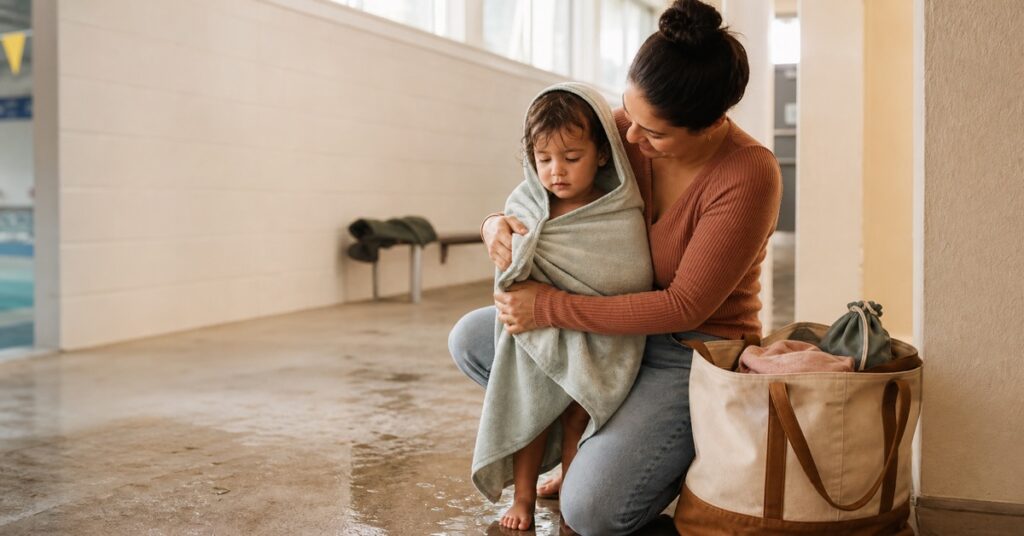
The hard part of toddler swim lessons often starts after the last splash. Your child is wet and chilly, the changing area is busy, and the one clean pair of pants you need is somehow underneath a dripping towel.
A giant pool bag will not fix that. Pack one ordinary tote in the order you will use it: swim items together, dry clothes protected, and an empty place waiting for everything wet. That small change turns the post-lesson scramble into a routine you can repeat next week.
Use this checklist as a starting point, then remove anything your pool provides or your child never uses. The goal is not to prepare for every possible pool emergency. It is to get one wet toddler dry, changed, and on the way home without soaking the rest of the bag.
Save or screenshot this
Toddler Swim Lesson Packing Checklist
Pack every week
- Swimsuit or rash guard
- One child towel or hooded towel
- One complete, easy-on dry outfit
- Fresh diaper or underwear
- Sealable bag for wet gear
- Parent swim kit if you join the class
Check with your pool
- Required swim-diaper layers
- Goggles or swim cap policy
- Pool-deck footwear rules
- Shower supplies and changing space
- Locker, lock, or coin needs
- Whether an adult enters the water
Only if needed
- Second towel for a participating adult
- Warm layer, dry socks, and winter hat
- Brush, hair ties, or moisturizer
- Water bottle and post-lesson snack
- Small comfort item for a first lesson
Before buying anything: ask about diaper layers, goggles, caps, footwear, showers, lockers, and whether the adult joins the class.
Before You Pack, Check These Five Pool Rules
Swim schools do not all run the same way. A short email or phone call can save you from buying gear your instructor does not want—or arriving without an item the facility requires.
- Swim-diaper policy. Ask whether a child who is not fully toilet trained needs one reusable layer, a disposable swim diaper under a reusable cover, or a specific school-approved system.
- Adult participation. Parent-and-toddler classes often put the caregiver in the water. If yours does, your own dry clothes are not optional.
- Goggles and caps. Some instructors welcome goggles; others begin without them so children learn to open their eyes and respond calmly. Caps may be required, optional, or unnecessary.
- Deck footwear. Check whether pool shoes are allowed on deck and where outdoor shoes must come off.
- Showers and lockers. Find out whether the facility supplies soap, has family changing rooms, and requires a lock or coin.
Use a Three-Zone Swim Bag
You do not need a bag with three built-in compartments. Three pouches—or even two reused shopping bags inside one tote—can do the same job. What matters is that dry clothes never share loose space with wet gear.
Zone 1
POOL-READY
- Swimsuit or rash guard
- Required swim-diaper layers
- Goggles or cap only if requested
Zone 2
DRY-FIRST
- Towel on top
- Fresh diaper or underwear
- Loose, easy-on outfit in dressing order
Zone 3
WET-RETURN
- Empty wet bag, waterproof pouch, or thick sealed bag
- Nothing else—leave it ready to receive wet gear
Zone 1: Pack only what goes to the pool
If your child travels in regular clothes, place the swimsuit and required diaper system here. If your toilet-trained toddler arrives already wearing a swimsuit under easy-off clothes, this zone may hold only a cap or goggles. Keep those conditional items together so you can stop at one pouch before class.
Zone 2: Protect the first dry things you will reach for
Put the towel at the top, then stack clothing in dressing order: fresh diaper or underwear, bottoms, top, socks, and warm layer. Choose a roomy outfit with few fasteners. A perfect-looking outfit that requires a wrestling match on damp skin is the wrong pool outfit.
A hooded towel can be useful because it stays around a moving toddler while your hands handle clothes. Look for absorbent fabric you have washed and tested, enough coverage for your child, no drawstrings, and no loose snaps or trim. A regular bath towel is completely fine if it wraps securely and you can manage it easily. If you still need the swim layer underneath, use our toddler rash guard guide to compare coverage and closures.
Zone 3: Start with an empty wet-return container
The wet-return zone does not need to be a special purchase. A reliable wet bag, waterproof inner pouch, or thick sealable plastic bag works. Test the closure at home and keep this zone empty until class ends. Putting a water bottle, phone, or dry socks in it “just for now” defeats the system.
The Dry, Change & Go Routine
Pack in this order, then use the bag in the same order every week. The routine is meant to reduce decisions, not promise a five-minute exit with a tired toddler.
- Wrap first. As soon as class ends, place the towel around your child before sorting bags or chatting. A hood can help with dripping hair, but the main job is warm, dry coverage.
- Choose quick rinse or home bath. Follow pool rules and use the option that fits your travel time and child. You do not need to unpack a full bathroom if a simple rinse works for your family.
- Remove every wet layer. Take off the swimsuit and swim diaper rather than covering them with dry clothes for a long trip home.
- Dress from the dry-first pouch. Fresh diaper or underwear goes on first, followed by the loose outfit already stacked in order.
- Seal the wet gear immediately. Swimsuit, swim-diaper layers, and wet towel go straight into WET-RETURN—not beside the spare socks.
- Clean hands, leave the wet zone, then refuel. Wash and dry hands after diaper changes. Offer water and a snack only after you are away from the wet deck and where facility rules allow food.
Pick the Version That Matches Your Lesson
If the parent stays dry
One child towel is usually enough. Keep your hands free and make the child’s dry-first pouch the first thing you can reach. A crossbody pouch for phone, keys, and locker token can keep small essentials off a wet bench.
If the parent gets in
Add your swimsuit, towel, underwear, and complete dry outfit. Keep the toddler’s dry-first pouch separate from your wet clothing. Get your toddler dry and settled within reach; then change yourself as the space and supervision allow.
If the parking lot is cold
Add dry socks, a warm layer, and a hat. Focus on stopping drips and replacing the wet swimsuit before leaving; save an elaborate hair routine for home. A second towel is useful only if the first will be soaked before you reach the door.
If one adult brings two children
Give each child a labeled or color-coded dry-first pouch and share one large wet-return bag. Pack both pouches in the same dressing order. Do not duplicate toiletries, toys, or other items the children can safely share.
In every version, keep your toddler within reach in the changing area. Wet floors, benches, doors, and other families’ bags create more hazards than a neat packing system can solve on its own.
What You Can Usually Skip
- Water wings, swim rings, or personal teaching floats unless the instructor specifically asks for them. They are not substitutes for adult supervision.
- A bag of pool toys. The class supplies its teaching equipment.
- Multiple backup outfits. One complete spare handles the normal change.
- Two child towels by default. Start with one; add another only if your real routine needs it.
- Full-size toiletries. Use what the facility supplies or bring small amounts only when showering there.
- A dedicated wet bag. A sturdy, well-sealed bag you already own can work.
- Goggles, cap, or pool shoes until the coach or facility says they help or are required. Once the facility confirms footwear is allowed, compare our toddler water-shoe guide.
Worth repeating
A Short Water-Safety Note
The American Academy of Pediatrics describes appropriate swim lessons as one layer of drowning prevention—not a way to make a child drown-proof. Stay close and attentive around water before, during, and after class, even when a lifeguard is present.
The CDC says swim diapers do not keep diarrhea-causing germs from contaminating the water. Do not swim when your child has diarrhea. Check swim diapers often, make changes in the designated changing area rather than poolside, and wash hands afterward.
Inflatable water wings and rings are toys, not safety devices. Follow your instructor’s equipment plan and maintain the close supervision your child’s ability requires. If the instructor does recommend goggles, our kids’ swim-goggle guide explains fit and strap comfort.
Toddler Swim Lesson FAQ
Should my toddler wear a swimsuit to the pool?
A toilet-trained toddler can often wear a swimsuit under loose clothes if the facility allows it. A child who still uses diapers should usually travel in a regular diaper and change into the required swim-diaper system at the pool, because swim diapers do not absorb urine like everyday diapers.
Do toddlers need goggles for swim lessons?
Not automatically. Ask the instructor before buying them. Some classes introduce goggles early; others begin without them. If goggles are allowed, they should fit gently without needing an extremely tight strap, and the child should be able to remove them with help.
How many towels should I pack?
Start with one absorbent child towel. Add a second only when the participating parent needs one, the trip to the car is very cold, or your first towel consistently becomes too wet to finish the routine.
What should I bring if I have to get in the pool too?
Bring your swimsuit, towel, underwear, complete dry outfit, and any shower item you truly use. Keep your child’s dry-first pouch separate so your wet suit cannot soak their clothes.
Do I need a special swim bag or wet bag?
No. Any comfortable bag can work if it holds three clearly separated zones. A waterproof pouch or thick sealable bag you already own can serve as WET-RETURN. Replace it if the closure fails or the material develops holes.
For the first lesson, pack the checklist—not the whole bathroom. Afterward, remove one thing nobody used and fix the one part of the sequence that made you dig. A reliable swim bag is not the fullest bag. It is the one that gives you the towel, dry clothes, and wet-return bag exactly when you need them.